Incredible Facts About the World’s Largest Animals
There’s something about size that stops people in their tracks. Whether it’s a whale breaking the surface of the ocean or a towering giraffe grazing from a treetop, the sheer scale of some animals is hard to process — even when you’re standing right in front of one.
The planet is home to creatures so big they seem almost impossible, and the facts behind them are often stranger than anything you’d expect.
The Blue Whale Outweighs Every Dinosaur That Ever Lived

The blue whale is the largest animal to have ever existed on Earth — not just today, but in all of recorded history. A fully grown blue whale can reach 100 feet in length and weigh up to 200 tons.
To put that another way, its heart alone is roughly the size of a small car, and you could crawl through its aorta. Even the largest dinosaurs, like Argentinosaurus, are estimated to have weighed around 70 to 80 tons.
The blue whale beats them all. And yet, this enormous animal survives almost entirely on tiny shrimp-like creatures called krill, consuming up to 4 tons of them in a single day.
A Giraffe’s Heart Has To Work Twice As Hard

Giraffes are the tallest land animals alive, reaching up to 18 feet. That height creates a serious engineering problem: the heart has to pump blood all the way up a neck that can stretch over six feet long.
To manage this, a giraffe’s heart is roughly 25 pounds — two feet long — and generates blood pressure nearly twice as high as a human’s. When a giraffe lowers its head to drink, a special system of valves prevents all that pressurized blood from flooding its brain.
It’s one of the more elegant biological solutions in the animal kingdom.
The Colossal Squid Has Eyes Bigger Than Dinner Plates

The colossal squid lives in the deep Southern Ocean and is the largest invertebrate on the planet. Adults can weigh over 1,000 pounds and reach lengths of around 45 feet.
But the most remarkable thing about them might be their eyes, which can measure up to 11 inches across — the largest eyes of any living creature. Those giant eyes are built for detecting the faint bioluminescent glow of predators like sperm whales in near-total darkness.
Very few colossal squids have ever been seen alive. Most of what scientists know comes from examining the stomach contents of sperm whales.
The African Elephant Can Hear With Its Feet

African elephants are the largest land animals on Earth, with bull elephants reaching over 13 feet at the shoulder and weighing up to 14,000 pounds. Their trunks alone contain around 40,000 muscles, making them capable of lifting heavy logs or picking up a single blade of grass.
What’s less well known is that elephants can detect low-frequency sound vibrations traveling through the ground. Special nerve endings in their feet and trunks pick up these seismic signals, which other elephants produce by stomping or rumbling.
This allows herds to communicate across distances of several miles, even when they’re too far apart to hear each other through the air.
The Saltwater Crocodile Is Older Than Most Continents In Terms Of Design
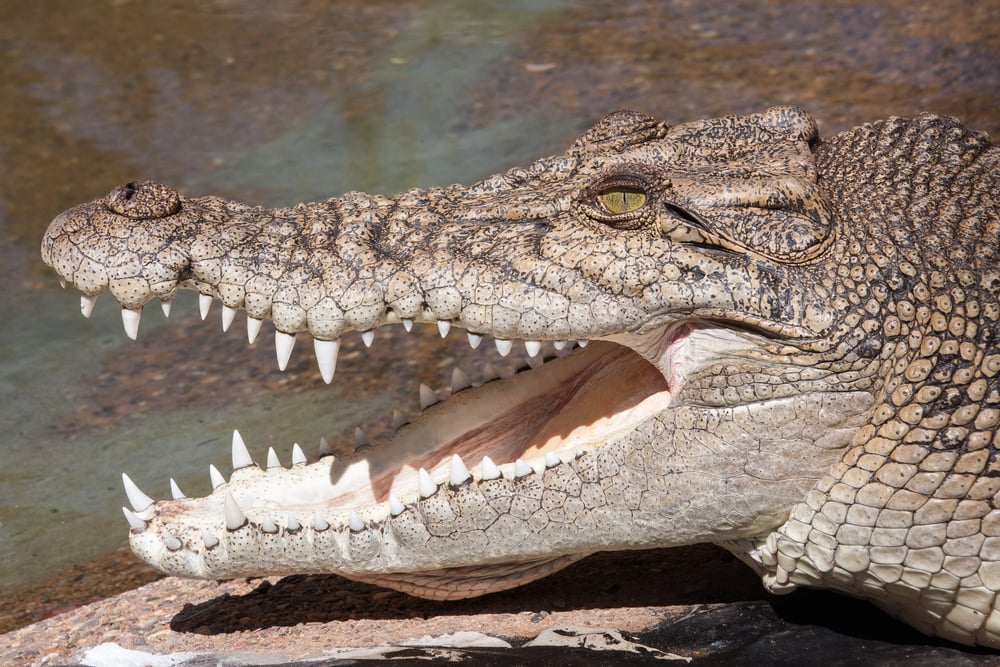
Saltwater crocodiles are the largest living reptiles, with males sometimes exceeding 20 feet in length and 2,200 pounds. They’re found across Southeast Asia, northern Australia, and the eastern coast of India, and they’re capable of swimming hundreds of miles into open ocean.
Their basic body plan has barely changed in over 200 million years. Crocodilians survived the same extinction event that wiped out the non-avian dinosaurs.
The saltwater crocodile biting down today exerts a force of around 3,700 pounds per square inch — the strongest bite force ever measured in a living animal.
Whale Sharks Are Filter Feeders With 3,000 Tiny Teeth

The whale shark is the largest fish in the ocean, growing up to 40 feet long and weighing as much as 20 tons. Despite its size, it poses almost no threat to people.
Like the blue whale, it feeds by filtering enormous quantities of water through its gills, catching plankton, small fish, and fish eggs. What’s surprising is that whale sharks still have teeth — around 3,000 of them, arranged in hundreds of rows.
Those teeth are only about 6 millimeters long and serve no known function in feeding. Scientists still aren’t sure exactly what they’re for.
The Ostrich Can Outrun A Horse Over A Short Distance

Ostriches are the largest living birds, standing up to 9 feet tall and weighing over 300 pounds. They can’t fly, but they can run at speeds of up to 45 miles per hour, with strides spanning 10 to 16 feet at full sprint.
They also lay the largest eggs of any living bird — each one weighing around 3 pounds, which is roughly equivalent to 24 chicken eggs. A single ostrich egg can take up to 90 minutes to hard-boil.
The Sperm Whale Has The Largest Brain Ever Recorded
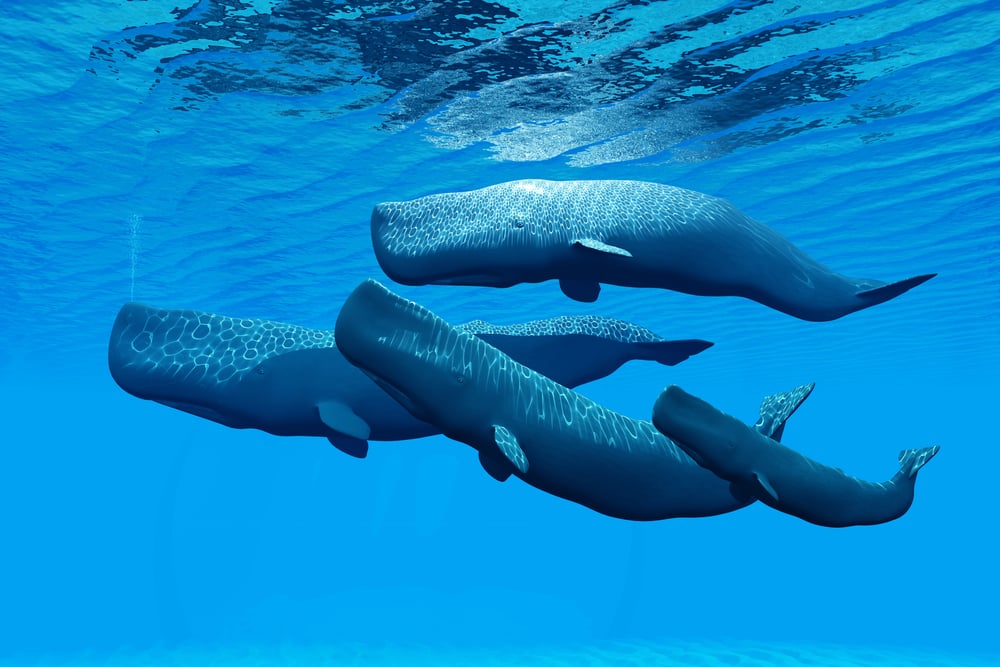
Sperm whales can grow up to 67 feet long and weigh around 57 tons, making them the largest toothed predator on Earth. Their brains weigh around 20 pounds — more than five times heavier than a human brain, and the heaviest brain ever recorded in any animal.
They’re also remarkably deep divers. Sperm whales regularly descend to depths of over 3,000 feet in search of giant squid, and they can hold their breath for up to 90 minutes.
Their clicks — used for echolocation — are among the loudest sounds produced by any animal, reaching around 230 decibels.
The Kodiak Bear Is A Brown Bear That Grows Larger Than Most

Kodiak bears live only on the Kodiak Archipelago in Alaska and are the largest subspecies of brown bear, and one of the two largest land predators on Earth alongside polar bears. Males can weigh up to 1,500 pounds and stand around 10 feet tall when upright.
Their size comes largely from diet and isolation. The islands are rich in salmon, berries, and other food sources, and with no competing large predators, the bears have had thousands of years to grow without the pressure of being prey themselves.
A Reticulated Python Can Swallow A Deer Whole

What hides in the wet forests of Southeast Asia can stretch longer than a school bus is wide. Some have been measured past twenty feet, coils thick as tree trunks.
Rumors whisper of thirty-foot giants, though none proven. These serpents wrap their bodies tight – deer vanish, pigs crushed without warning.
Muscle moves slow, then strikes like water pulled through reeds. Length means power here, silence their second weapon.
Snake mouths do not come apart like people sometimes say. The real trick lies in how their lower jaw parts link together with stretchy tissue, letting them open extremely wide.
This opening fits animals bigger than the snake’s skull seems able to handle. Following a big meal, eating stops completely for weeks at a time, often stretching into months.
The Manta Ray Boasts The Biggest Fish Brain

Floating through deep waters, giant oceanic mantas stretch nearly 29 feet across, their bodies tipping scales at 6,600 pounds. These are the biggest of all rays, yet instead of vanishing into shadows, they drift close to divers – often lingering, watching, almost wondering.
While most massive ocean dwellers keep their distance, these gentle giants tilt toward interaction, moving with a kind of quiet intrigue. Their standout feature?
A brain size relative to body mass that beats most other fish. Mirror tests reveal manta rays recognizing themselves – a rare skill shared with just elephants, dolphins, and apes.
Returning again and again to cleaning spots hints at memory for places, maybe even route planning.
The Capybara The Largest Rodent On Earth And Highly Social

Sure, capybaras won’t rival a blue whale or an elephant in size – yet they still claim the title of biggest rodent on Earth. One full-grown individual might stretch out to four and a half feet, tipping the scales around 150 pounds.
Found across South America, these animals stick close to water – think slow rivers, quiet lakes, damp marshlands. You’ll rarely spot just one; they travel in packs, usually ten to twenty moving together.
Out of nowhere, birds hop onto their backs looking for bugs. A quiet trust grows when small monkeys clean their fur.
Raised together, cats and dogs act like they belong in the same circle. Even rabbits seem to relax nearby without reason.
What it is about capybaras, no one fully knows – just that others settle down around them.
The Giant Tortoise Ages More Slowly Than Nearly Any Other Creature
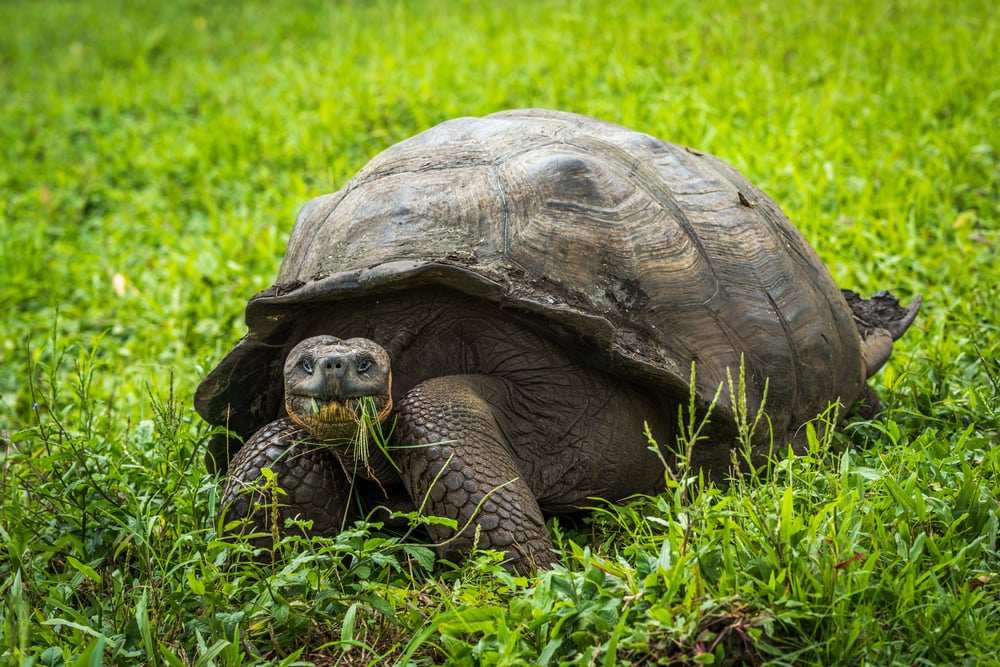
Not just big, Aldabra and Galapagos tortoises stretch past four feet, tip scales above five hundred pounds. Still, what stands out isn’t bulk or weight – instead, think decades upon decades of slow walking moments.
While many creatures rush through life, these reptiles measure years like tree rings, quiet, steady. Their real marvel hides in how they move through time.
Outliving most creatures by far, giant tortoises often reach beyond a century in age – records show certain ones surpassing 180 years. Moving at their own quiet pace through time, they run on very low energy needs, pulling sustenance from stored fat when meals or water vanish for long stretches.
Take Jonathan, found on St. Helena; he quietly marked roughly 190 trips around the sun by 2024, standing as Earth’s eldest confirmed land-dwelling animal alive today.
When Size Shifts Outcomes

Every time you hear how big some creatures grow, they start feeling less real somehow. You could stand near a whale and actually hear its heart beat – so slow, you might check your watch just to be sure.
Back when your great-grandparents were kids, there was already a tortoise crawling around – and still going now. Elephants sense rumbles made by others miles off, places humans would need weeks to reach on foot.
What matters goes beyond mere bulk. How something moves through moments, distances, things nearby – this shifts with scale.
At the outer edges of smallness or vastness, living runs on separate terms.
More from Go2Tutors!

- The Romanov Crown Jewels and Their Tragic Fate
- 13 Historical Mysteries That Science Still Can’t Solve
- Famous Hoaxes That Fooled the World for Years
- 15 Child Stars with Tragic Adult Lives
- 16 Famous Jewelry Pieces in History
Like Go2Tutors’s content? Follow us on MSN.



