Luxury Trains With Extraordinary Journeys
Train travel used to be the only way to cross continents. Then planes showed up and made everything faster, cheaper, more efficient.
But something got lost in that efficiency—the journey itself stopped mattering. Now luxury trains bring back what air travel stripped away.
These aren’t just ways to get from point A to point B. They’re destinations that move, experiences that unfold slowly enough to actually notice what you’re passing through.
The windows become frames for landscapes that shift every few minutes, and the rhythm of the rails replaces the anxiety of airport terminals.
The Venice Simplon-Orient-Express

This train doesn’t just travel through Europe. It travels through time.
The carriages date back to the 1920s and 1930s, restored to their original Art Deco glory. Polished wood panels, brass fixtures, and plush upholstery create spaces that feel more like a museum than transportation.
The route from London to Venice takes you through the Swiss Alps and the Brenner Pass. You wake up to mountain peaks outside your window, then fall asleep as Italian villages glide past.
Dinner happens in a dining car where servers wear white gloves and the menu changes based on which country you’re rolling through.
But the real draw isn’t the destination. People book this train to live inside a different era for a few days.
Your cabin becomes a small world where bellboys deliver newspapers and afternoon tea arrives on silver trays.
The Maharajas’ Express

India sprawls too wide to see from a plane window. This train solves that problem while adding layers of luxury that seem almost excessive until you’re actually on board.
The journey covers different routes through Rajasthan, Gujarat, Maharashtra, and Uttar Pradesh. Some itineraries focus on the Golden Triangle.
Others wind through tiger reserves and ancient fortresses. Each route stops at carefully chosen spots where you disembark for guided tours, then return to the train for dinner.
Your cabin includes a personal butler. The dining cars serve Indian and international cuisine that actually tastes good, which matters when you’re spending several days on board.
Between stops, you can watch rural India pass by—villages, farmland, markets that appear and disappear before you fully register what you saw.
The Rocky Mountaineer

Glass-domed observation cars turn the ceiling into another window. This matters when you’re crossing the Canadian Rockies and the scenery rises straight up on both sides.
The train only runs during daylight hours. You board in the morning, spend the day watching mountains and valleys and rivers from your seat, then get off at night to sleep in a hotel.
Next morning, you board again and continue. This setup means you never miss anything important.
Every mountain peak, every glacier, every bear that wanders near the tracks—you see it all without having to wake up at odd hours or strain your neck looking backward.The route from Vancouver to Banff or Jasper takes two days.
Some people find that too slow. But slowness becomes the point when the alternative means seeing these landscapes from 30,000 feet up or through a car windshield while trying to watch the road.
The Ghan
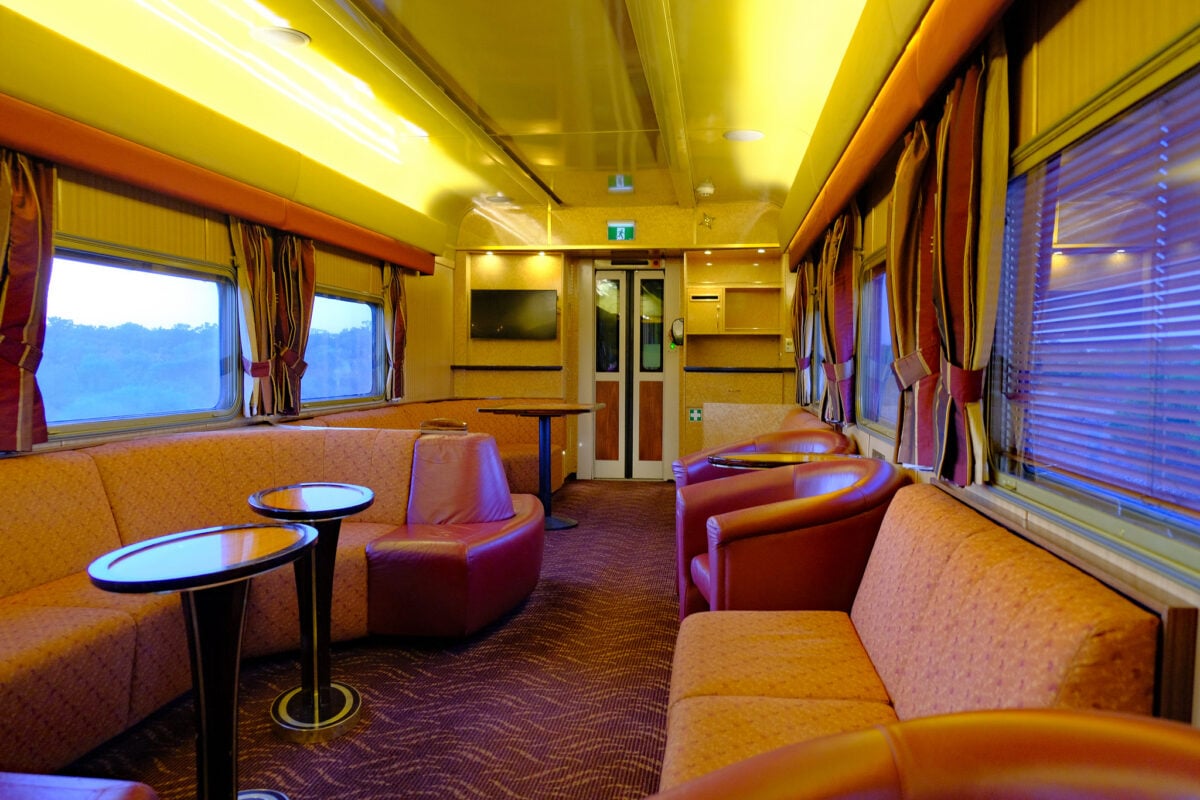
Australia’s outback looks empty from a distance. Three days crossing it by train reveals otherwise.
The Ghan runs from Adelaide to Darwin, cutting straight through the country’s red center. The train stops in Alice Springs and Katherine, where you can take excursions to Uluru or Nitmiluk Gorge.
But the real show happens between stops, when the landscape shifts from farmland to desert to tropical north.
Your cabin stays comfortable while outside temperatures swing wildly.
Dining cars serve regional dishes that connect you to wherever the train happens to be passing through at that moment. And the observation car becomes a gathering spot where strangers trade stories about everything they’ve seen so far.
The journey takes long enough that you adjust to train time—a slower rhythm where arrival doesn’t matter as much as the hours spent watching Australia change shape outside your window.
The Eastern & Oriental Express

Southeast Asia from a train window looks nothing like Southeast Asia from a tour bus. The train moves slowly enough to catch details—rice paddies, wooden houses on stilts, monks walking single file along dirt roads.
This route connects Singapore, Malaysia, and Thailand. The train stops in Kuala Lumpur and Penang, but the real appeal lies in the stretches between cities where the landscape shifts from urban to rural without warning.
The dining car serves Thai, Malay, and Western cuisine, depending on your mood. The observation car features open sides that let in the humid air and the sounds of whatever region you’re passing through.
Your cabin includes everything you need without trying to replicate a hotel room—this train remembers it’s a train.
Belmond Andean Explorer
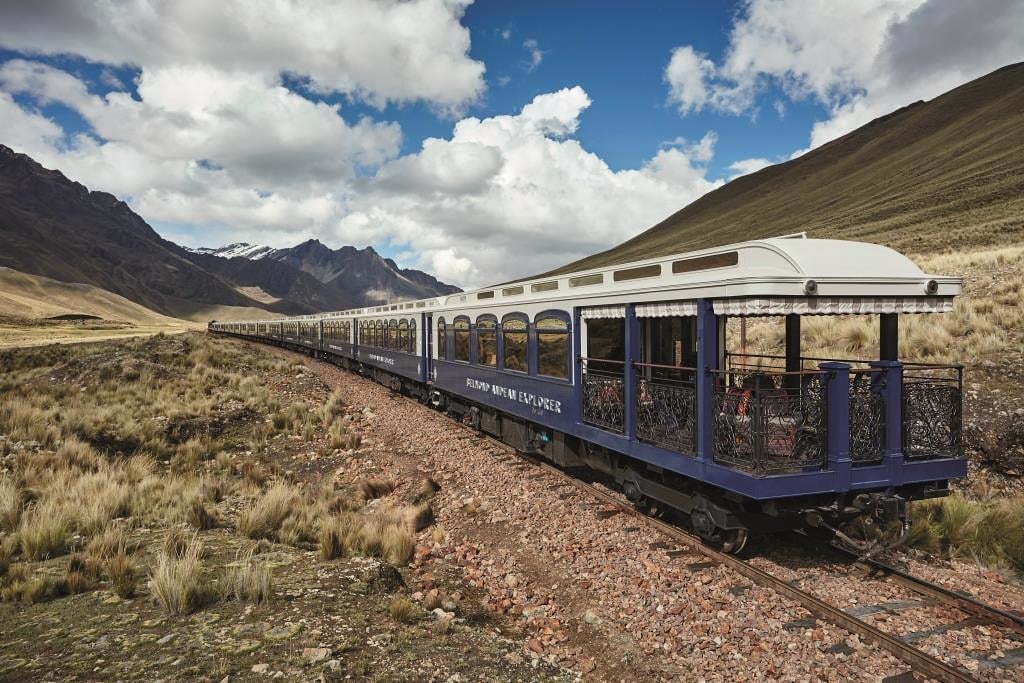
The Peruvian highlands sit too high for most people to handle comfortably. This train comes with oxygen supplies in every cabin, just in case.
The route runs from Cusco to Puno, crossing some of the highest plains in South America. The train climbs to 14,000 feet, where the air gets thin and the views stretch for miles in every direction.
You pass through communities that still herd alpacas and speak Quechua. The observation car opens to the outside air, which feels sharp and cold even when the sun shines bright.
The dining car serves Peruvian cuisine that adapts traditional dishes into something more refined without losing their essential character. Each cabin includes heated floors and thick blankets, necessary when nighttime temperatures drop.
The train makes this extreme landscape accessible without forcing you to rough it.
The Blue Train

South Africa’s luxury train runs between Pretoria and Cape Town. The journey takes roughly 27 hours, which sounds long until you realize how much ground that covers.
The train crosses the Karoo desert, where the landscape looks stark and endless. Then it winds through mountain passes and wine country before reaching the coast.
Each section reveals a different side of South Africa’s geography. Your suite includes a full bathroom with a bathtub, which seems almost ridiculous until you’re actually soaking in hot water while watching the sunset through your window.
The dining car serves meals that shift based on regional ingredients, and the observation car stays open late for people who can’t stop watching the stars.
The Royal Scotsman

Scotland’s landscapes work better at train speed than car speed. The narrow roads force you to watch the pavement.
The train lets you watch everything else. This journey covers the Scottish Highlands, stopping at castles, distilleries, and historic estates.
The train itself holds fewer than 40 guests, which keeps the atmosphere quiet and personal. Each cabin features large windows that frame lochs, mountains, and moors.
The dining car serves Scottish cuisine that actually tastes like Scotland—game, fish, whisky-infused desserts. And the observation car becomes the social center where guests gather to discuss the day’s sights over drinks.
The train runs on various routes, some focusing on the west coast, others exploring the northern Highlands. Each route reveals landscapes that look ancient and untouched, even though people have lived here for thousands of years.
The Danube Express

Eastern Europe still feels less traveled than Western Europe, which makes this train journey feel more like discovery than tourism. The routes vary, but most include Hungary, Romania, Bulgaria, and Turkey.
The train stops in cities like Budapest and Bucharest, then continues through countryside that looks straight out of another century—villages with Orthodox churches, hills covered in forest, valleys where farmers still use horse-drawn plows. Your cabin features wood paneling and vintage fixtures that reference the golden age of rail travel. The dining car serves Central and Eastern European dishes that change as the train
crosses borders. And the bar car stays open late for passengers who want to talk about everything they saw that day.
The Seven Stars in Kyushu

Japan’s luxury trains look nothing like European luxury trains. The design emphasizes natural materials—wood, paper, bamboo—instead of gilt and velvet.
The route circles Kyushu, Japan’s southern island. The train stops at hot springs, volcanic landscapes, and traditional villages. Between stops, you watch rice paddies, coastal cliffs, and small cities glide past.
Each suite includes large windows and minimal decoration. The dining cars serve kaiseki-style meals that turn dinner into a multi-course experience.
And the observation car features an open-air platform where you can feel the wind and smell whatever region you’re passing through. The train runs on a fixed schedule with limited departures, which makes booking difficult but keeps the experience exclusive.
The Deccan Odyssey

This Indian luxury train covers routes that the Maharajas’ Express doesn’t, focusing on Maharashtra and the western coast. The journey includes stops at UNESCO World Heritage sites, ancient cave temples, and wildlife sanctuaries.
The train also visits Mumbai and Goa, giving you urban experiences between stretches of rural landscape. Your cabin includes large windows and modern amenities that blend with traditional Indian design elements.
The dining cars serve regional cuisine that shifts based on which state you’re traveling through. And the lounge car features live music in the evenings.
Between stops, you watch India’s diversity unfold outside your window—coastal villages, mountain ranges, plateaus that seem to stretch forever.
The Golden Eagle Trans-Siberian Express

Crossing Russia by train takes time. This journey takes two weeks, covering Moscow to Vladivostok with stops in Mongolia and possibly China, depending on your route.
The Trans-Siberian Railway ranks as one of the longest rail journeys on Earth. This luxury version adds comfort without removing the essential experience—you still watch Siberia roll past for days at a time, still cross eight time zones, still feel the scale of what you’re traversing.
Your cabin includes everything you need for two weeks on rails. The dining car serves Russian, European, and Asian cuisine as the train crosses borders.
And the lounge car becomes a community space where passengers bond over the shared experience of crossing a continent at rail speed. The train stops in cities like Irkutsk and Ulan Batar, but the journey matters more than the destinations.
You spend hours watching forests, steppes, and mountains pass by, and the repetition becomes meditative rather than boring.
The Pride of Africa

Rovos Rail operates several routes through southern Africa, but they all share the same approach—slow travel through landscapes that deserve your full attention. The routes include South Africa, Zimbabwe, Zambia, and Tanzania.
Some journeys visit Victoria Falls. Others stop at game reserves where you can watch elephants and lions. Each route combines wildlife, landscape, and history.
Your suite includes a private bathroom and large windows. The dining car serves meals that reference both African and European cuisine.
And the observation car stays open all day for people who can’t stop watching the scenery. The train moves slowly enough that you notice details—birds, plants, the way light changes throughout the day.
And the slow pace means you arrive at each stop feeling rested rather than exhausted.
The Canadian

VIA Rail’s cross-country trip isn’t quite as fancy as some others on this list – yet where it falls short on high-end comfort, it wins big on sheer scale. The trip goes from Toronto to Vancouver, cutting through flat grasslands, then rugged Rocky peaks, followed by steep coastal ranges.
It lasts nearly four days, yet views transform constantly – sometimes within just a couple hours. The dome cars give full panoramic sights. In the dining section, meals are pretty good – also, they’re filling.
Your sleeping space is small but has all essentials instead. What this ride cares about is the trip itself – not extras – so scenery beats luxury every time.
You ride alongside everyday travelers, not only visitors – this gives the trip a unique feel. In the viewing cabin, you could strike up a chat with someone going to school or another person making their way to a far-off workplace.
Where Distance Becomes the Destination

Planes make the globe feel smaller, since everywhere’s just a flight away. Whether it’s two hours or twelve – the distances shift, yet how it feels? Always identical.
Stuck inside an aluminum can, touch down, then finally begin. These trains act unlike any other. Because they pull moments longer, making space feel wide again.
So the ride isn’t just a wait anymore – instead, it’s where meaning happens. Now getting there is the point.
Once you get off after several days at sea, you’re not simply in a fresh place. Instead, you’ve shifted – shaped by moving across miles without rushing, truly sensing each part of the way.
More from Go2Tutors!

- 16 Historical Figures Who Were Nothing Like You Think
- 12 Things Sold in the 80s That Are Now Illegal
- 15 VHS Tapes That Could Be Worth Thousands
- 17 Historical “What Ifs” That Would Have Changed Everything
- 18 TV Shows That Vanished Without a Finale
Like Go2Tutors’s content? Follow us on MSN.