Most Successful Broadway Shows in History
Broadway has been producing theatre on a large scale since the early 1900s, and in that time a handful of shows have done something most productions never manage — they’ve outlasted trends, survived cast changes, weathered recessions, and kept selling tickets year after year while everything around them changed. Success on Broadway gets measured in different ways: total gross earnings, number of performances, Tony Awards, cultural staying power.
The shows on this list have earned their place by most of those measures, and in some cases by all of them.
The Phantom of the Opera — The One That Ran for 35 Years
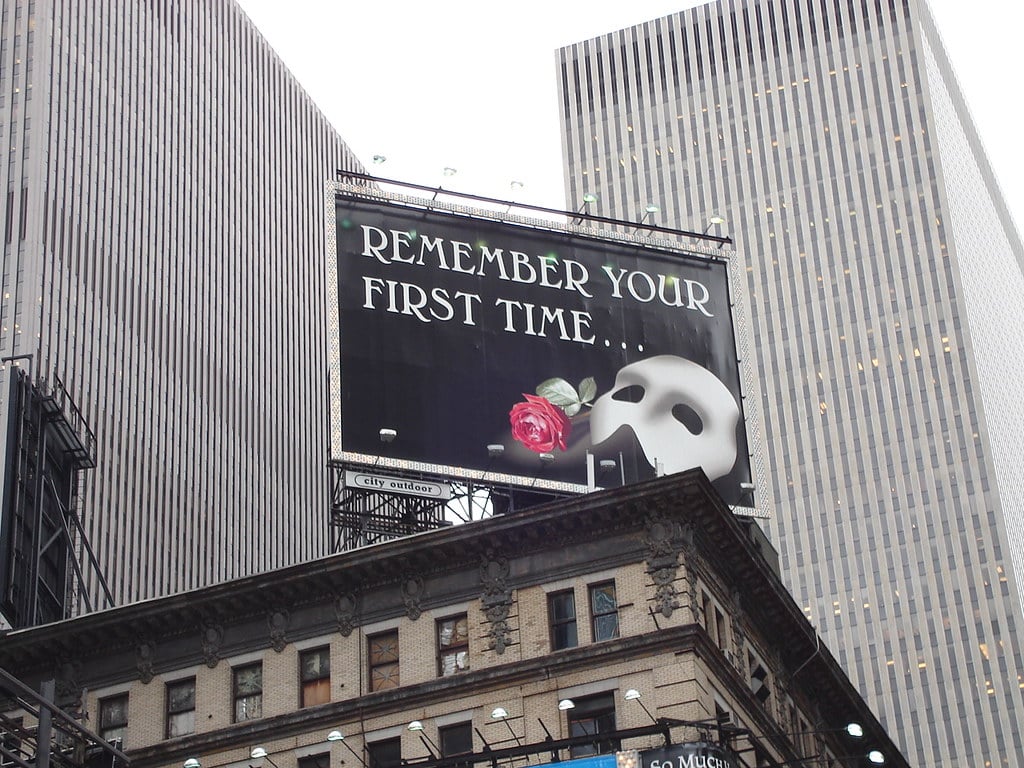
No Broadway show has run longer than The Phantom of the Opera. Andrew Lloyd Webber’s musical opened at the Majestic Theatre in January 1988 and closed in April 2023 after 13,981 performances — a record that may stand for a very long time.
The story follows a disfigured musical prodigy who haunts the Paris Opera House and becomes obsessed with a young soprano named Christine. The combination of sweeping orchestration, gothic romance, and spectacular staging proved irresistible to audiences for three and a half decades.
The show earned over a billion dollars in New York alone and spawned productions in more than 30 countries. When the final curtain fell in 2023, fans who had seen it dozens of times packed the Majestic to say goodbye to something that had been part of the city’s cultural furniture for longer than many of them had been alive.
Chicago — The Revival That Refused to Stop
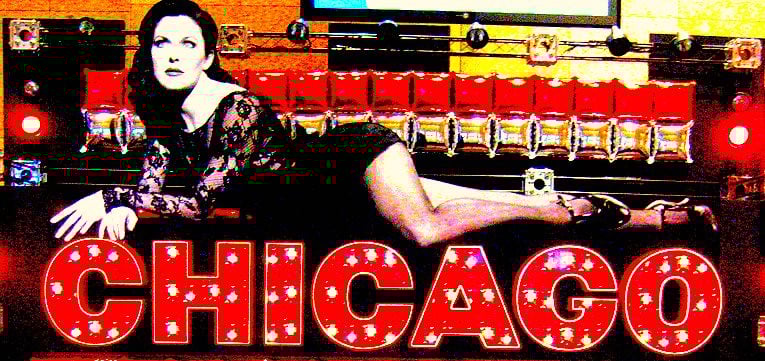
Chicago opened in 1975, closed after a decent but unspectacular run, and then came back in 1996 as a stripped-down revival that changed the conversation entirely. The revival — performed without elaborate sets, with the orchestra on stage and the dancers performing in black practice clothes — became the longest-running musical revival in Broadway history.
It passed 10,000 performances, earned six Tony Awards in its original run, and is still playing. The story of Roxie Hart and Velma Kelly — two women in 1920s Chicago navigating murder charges, corrupt lawyers, and an insatiable press — turned out to be more relevant in the late 1990s than it was in 1975.
Bob Fosse’s choreography, reimagined by Ann Reinking in the revival, gave the show a physical language that audiences responded to immediately. The 2002 film adaptation won the Academy Award for Best Picture and sent a new wave of people to the theatre.
The Lion King — Broadway’s Biggest Earner
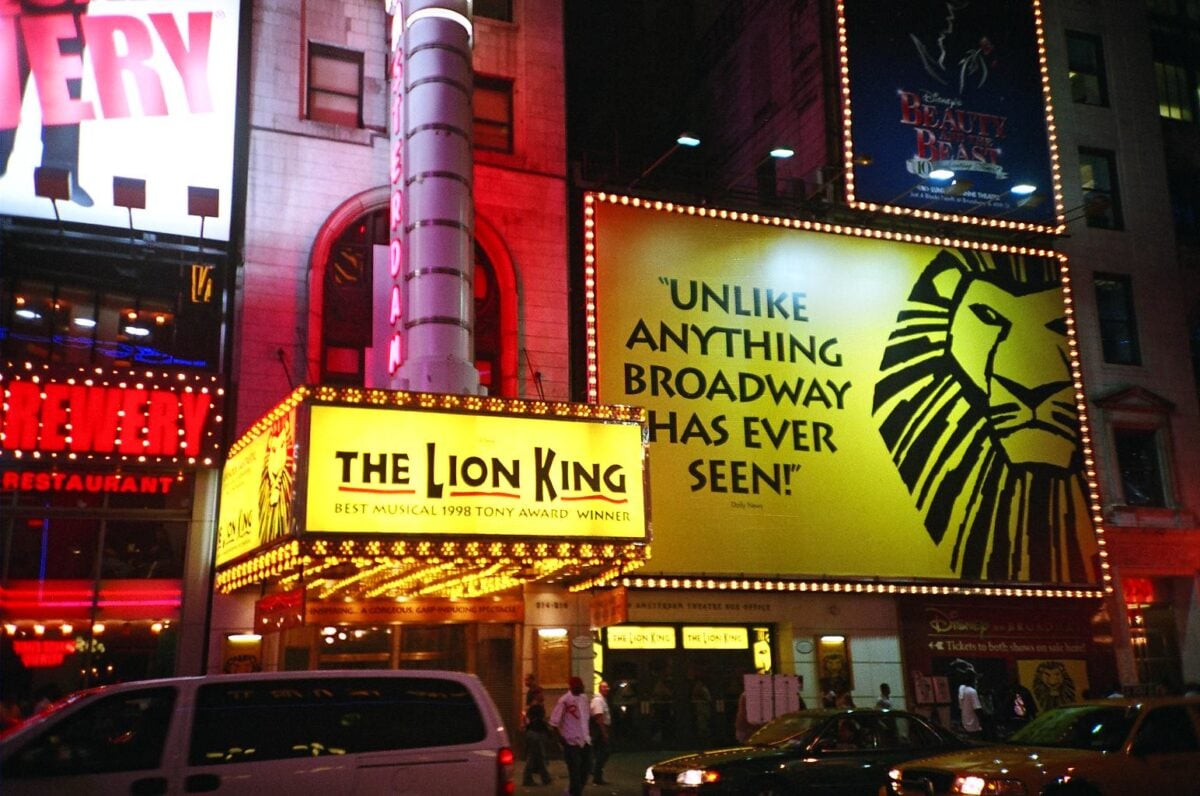
By total gross revenue, The Lion King sits at the top of Broadway history. The show has earned well over $1.7 billion on Broadway alone since it opened in 1997, making it the highest-grossing production in the history of the American theatre.
Julie Taymor’s direction and design transformed a Disney animated film into something that felt unlike anything Broadway had seen before. The puppetry, the African musical influences woven through Elton John and Tim Rice’s songs, and the visual spectacle of the opening sequence — the sun rising over the Pride Lands as animals flood the stage — created a show that worked for children and adults in completely different ways.
Parents who brought their kids in 1998 have since brought their grandchildren. The Lion King is currently playing its 27th year.
Hamilton — The Show That Changed Everything

Hamilton arrived at the Richard Rodgers Theatre in 2015 and became a cultural phenomenon within weeks. Lin-Manuel Miranda’s musical about the founding fathers, told through hip-hop, R&B, and musical theatre, sold out immediately and stayed sold out.
Tickets entered a secondary market where prices reached thousands of dollars for top performances. The original cast recording went platinum.
Politicians, celebrities, and ordinary theatregoers competed for the same seats. The show won 11 Tony Awards, including Best Musical, and transferred to the West End, toured internationally, and was filmed for Disney+ during the pandemic when the physical production went dark.
What Hamilton did to Broadway’s audience demographics — bringing in younger, more diverse crowds who had never paid much attention to musical theatre — reshaped how producers and writers thought about what the form could do.
Cats — Eighteen Years of Jellicle Curiosity
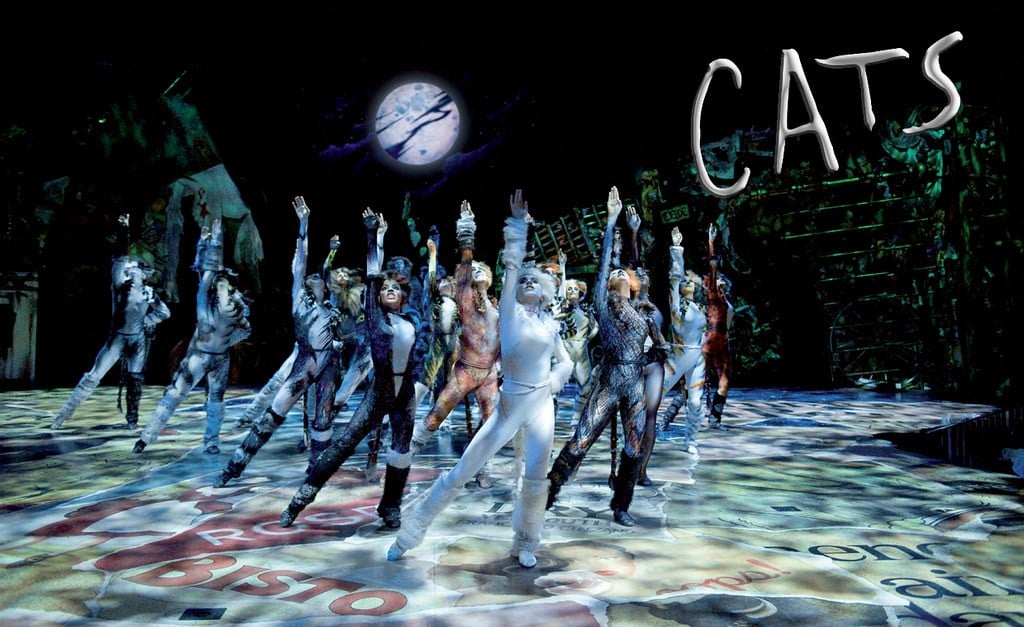
When Cats opened on Broadway in 1982, critics weren’t entirely sure what to make of it. The show is based on T.S. Eliot’s poetry collection about a group of cats gathered for an annual event at which one of them will be chosen to ascend to a new life.
There is no conventional plot. There are barely any scenes.
It’s essentially a revue built around character songs, athletic dancing, and elaborate feline costumes. And it ran for 7,485 performances over 18 years, closing in 2000 as the longest-running show on Broadway at the time.
The song “Memory,” sung by the aging cat Grizabella, became one of the most recognised pieces of musical theatre writing in history. The show’s longevity puzzled some critics almost as much as the show itself did, but audiences clearly found something in it worth returning to.
Les Misérables — The Show That Makes Everyone Cry

Les Misérables opened on Broadway in 1987 and ran for 6,680 performances over 16 years, winning eight Tony Awards. Based on Victor Hugo’s 1862 novel, it follows Jean Valjean — a man released after 19 years of imprisonment for stealing bread — as he tries to rebuild his life while being pursued across decades by the relentless Inspector Javert.
The scale of the story, the density of the score, and the emotional weight of its themes — justice, redemption, sacrifice, revolution — gave audiences a theatrical experience that felt genuinely epic. The turntable stage, the barricade sequence, the staging of the sewers: the original production turned technical theatre craft into storytelling.
A successful revival ran from 2006 to 2008, and the show tours constantly. It has played in 44 countries and been seen by over 130 million people worldwide.
Wicked — The Prequel That Became the Institution
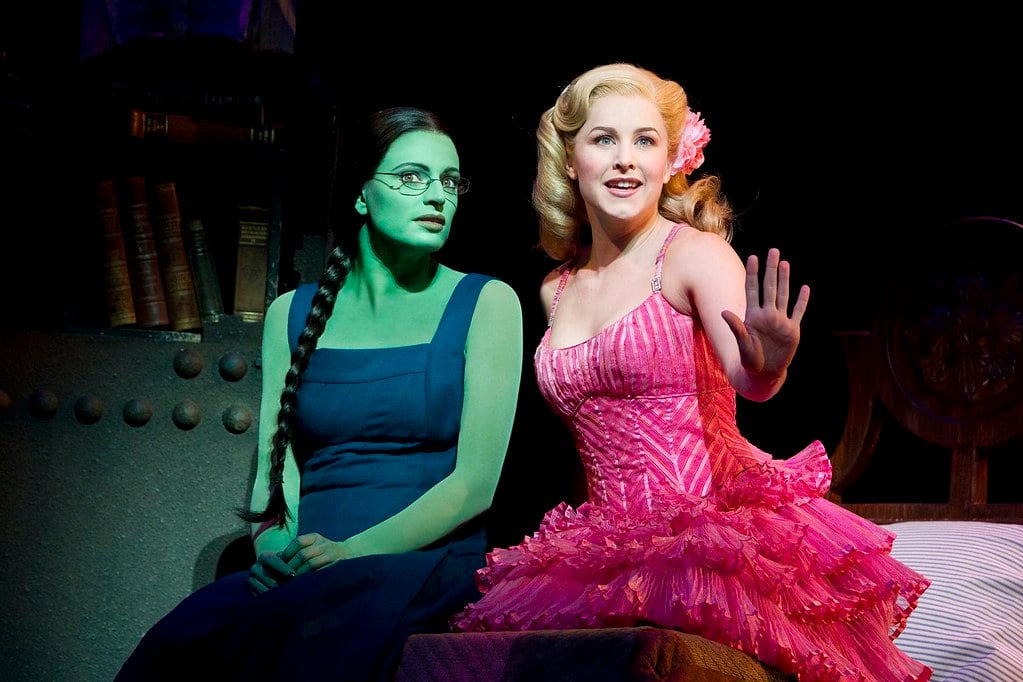
Wicked opened in 2003 and has been running at the Gershwin Theatre — Broadway’s largest — ever since. Based on Gregory Maguire’s novel that reimagines The Wizard of Oz from the perspective of the witches, the show follows the unlikely friendship between Elphaba and Glinda before the events of the original story. The score by Stephen Schwartz produced songs that became standards almost immediately.
“Defying Gravity” closed Act One and sent audiences into intermission buzzing. “Popular” became a comedy touchstone.
The show has grossed over $1.6 billion on Broadway and has played in 100 cities across 16 countries. A film adaptation arrived in 2024 to enormous anticipation.
Wicked is one of the rare cases where a show both dominates commercially and maintains genuine critical respect decades into its run.
A Chorus Line — The Show That Came From Nothing
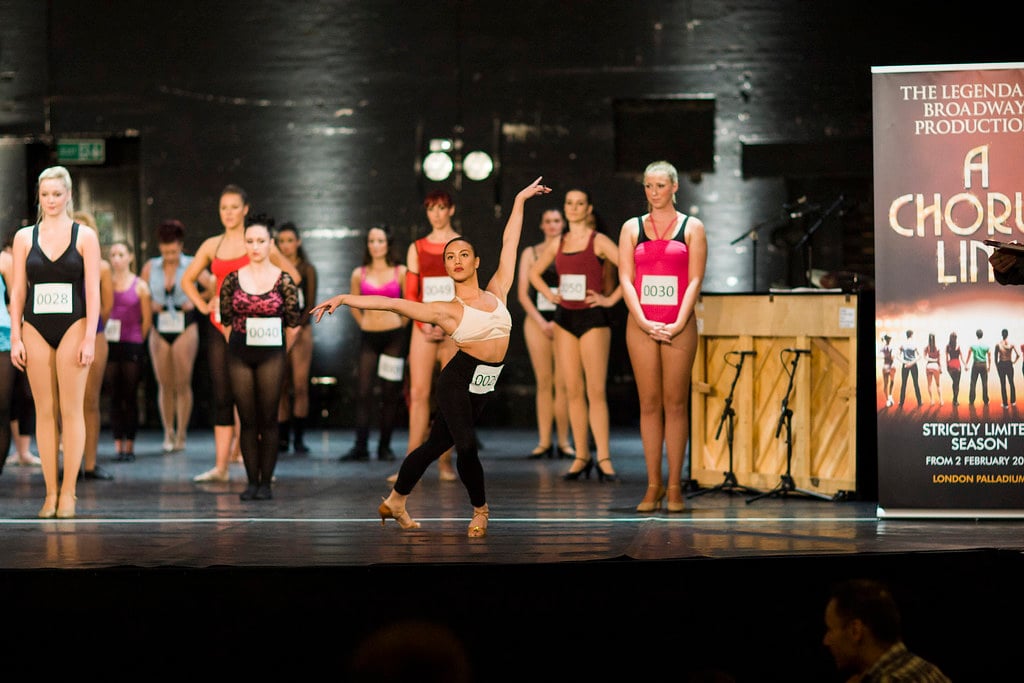
A Chorus Line holds a specific place in Broadway history that numbers alone don’t capture. It originated from a series of workshop sessions in 1974 where choreographer and director Michael Bennett gathered Broadway dancers to talk about their lives and experiences.
He recorded hours of conversation, then shaped what he heard into a musical about the very people who had spoken to him. The show opened in 1975, transferred from the Public Theater to the Shubert Theatre on Broadway, and ran for 6,137 performances over 15 years — breaking every record at the time. It won nine Tony Awards and the Pulitzer Prize for Drama.
The dancers who contributed their stories to the original workshops received royalties for the rest of the show’s run. A Chorus Line is one of the few Broadway productions that genuinely came from the ground up — no stars, no movie source material, no pre-existing fan base.
Just a group of working performers telling the truth about what their lives were actually like.
Rent — When Broadway Felt Urgent Again
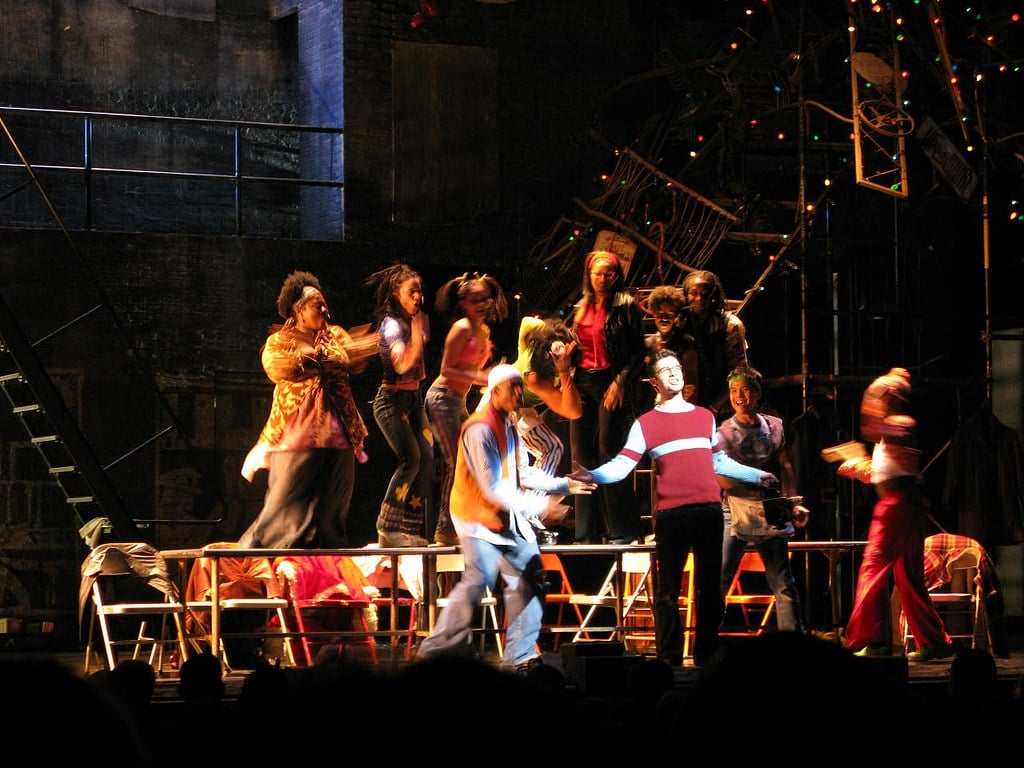
Jonathan Larson’s Rent opened Off-Broadway in January 1996. Larson died of an aortic aneurysm the morning of the final dress rehearsal, at 35, before he could see the response to his work.
The show transferred to Broadway in April, won the Tony for Best Musical and the Pulitzer Prize for Drama, and ran for 5,123 performances over 12 years. Rent updated the story of Puccini’s La Bohème to 1990s New York — bohemian artists in the East Village, dealing with poverty, addiction, HIV, and the collision of creative ambition with real-world hardship.
The show spoke directly to a generation that felt underrepresented by mainstream theatre. Its “RENT-heads” — fans who camped outside the Nederlander Theatre for rush tickets priced at $20 — became part of the show’s identity. Larson never saw any of it.
That absence remains one of the sadder facts in Broadway history.
The Book of Mormon — Satire That Somehow Became a Family Recommendation
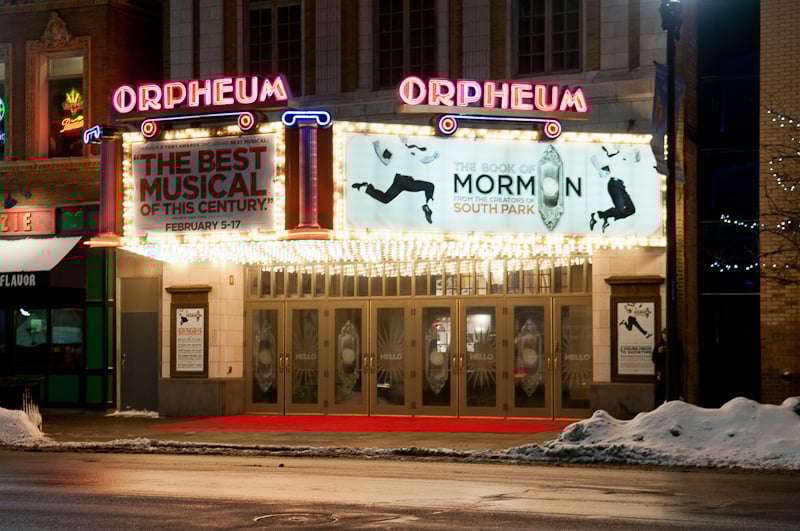
South Park creators Trey Parker and Matt Stone collaborated with Avenue Q’s Robert Lopez to write The Book of Mormon, which opened in 2011 and immediately became the hardest ticket on Broadway. The show follows two young Mormon missionaries sent to Uganda, and it handles religion, naivety, and cultural collision with a level of irreverence that most producers would have considered commercially risky.
It won nine Tony Awards including Best Musical and ran for over 2,500 performances in its Broadway run before continuing to tour. The curious thing about The Book of Mormon is who ended up seeing it.
The show was recommended by parents, churchgoers, and people who would normally avoid anything edgy. The craft underneath the provocation — the songs are genuinely well-constructed, the storytelling is tight — earned it respect from quarters that might have written it off based on reputation alone.
Mamma Mia! — ABBA Songs Find Their Logical Home
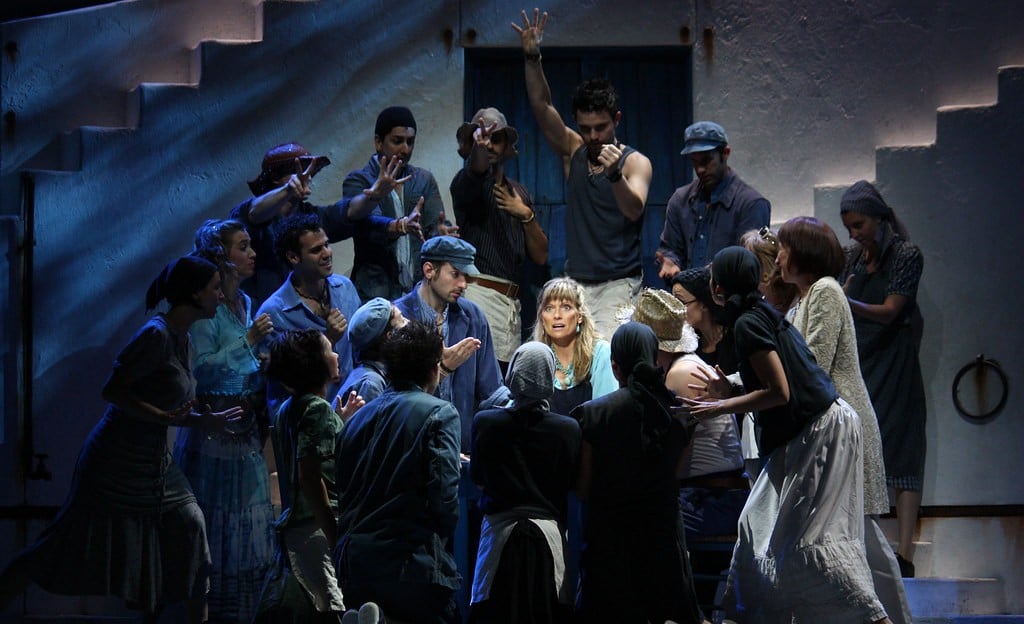
Mamma Mia! opened on Broadway in 2001 and ran for 5,765 performances, closing in 2015. The show uses 22 ABBA songs to tell the story of a young woman trying to figure out which of three men is her father before her wedding.
The plot is thin. The emotional mechanics are broad.
And none of that mattered, because the songs are irresistible and the show delivers exactly what it promises from the moment the curtain goes up. Mamma Mia! tapped into an audience that Broadway had historically struggled to reach — people who weren’t regular theatregoers but who had a deep connection to the music and wanted an excuse to spend an evening with it.
The 2008 film brought Meryl Streep and a generation of new fans. A sequel followed in 2018. The stage show has toured continuously and remains one of the most produced musicals in the world.
Jersey Boys — When Jukebox Musicals Earned Serious Respect
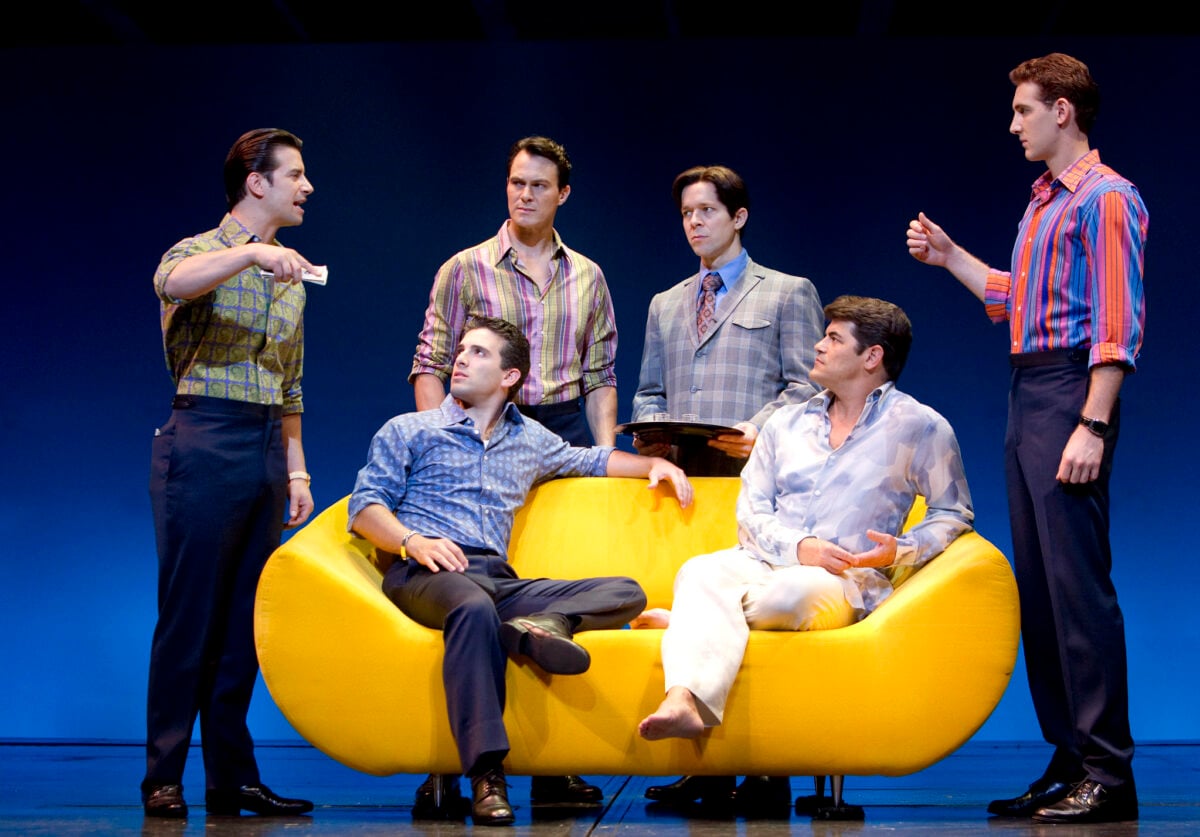
Jersey Boys told the story of Frankie Valli and The Four Seasons — how four working-class kids from New Jersey built one of the most successful pop groups in American history, and the complicated personal and financial fallout that followed. It opened in 2005, won four Tony Awards including Best Musical, and ran for 4,642 performances.
What separated Jersey Boys from most jukebox musicals was its dramatic honesty. The show didn’t pretend the story was uncomplicated. Mob connections, debt, estranged family members, and the slow unravelling of friendships between the band members all shared the stage with the hits. The songs landed harder because of the context built around them.
Audiences who came for “Big Girls Don’t Cry” and “Sherry” left having watched a story about ambition and loyalty that had real weight to it.
Miss Saigon — Spectacle and Heartbreak in Equal Measure

Miss Saigon opened on Broadway in 1991 and ran for 4,092 performances, winning three Tony Awards. The show is loosely based on Puccini’s Madama Butterfly, transposing the story to the fall of Saigon in 1975 and its aftermath.
A Vietnamese woman named Kim falls for an American soldier named Chris, and the consequences of that relationship play out across years and continents as the war ends and the world moves on without acknowledging the people left behind. The production was famous for its staging — particularly a scene involving a helicopter landing on stage — and for the emotional commitment it demanded from its cast.
A West End revival in 2014 brought a significantly updated production to Broadway in 2017. The show’s willingness to sit in genuine tragedy, without resolving its moral questions neatly, gave it a staying power that more comfortable shows don’t always achieve.
Oh, What a Night — How Long-Running Shows Reshape the Street Around Them
There’s a specific effect that long-running shows have on the blocks they occupy. The Majestic Theatre on 44th Street became synonymous with The Phantom of the Opera in a way that made the building feel different after the show closed — like a space that had lost its purpose.
The Gershwin on 51st Street has housed Wicked for so long that regular theatregoers can’t quite picture what might replace it. The Shubert, the Nederlander, the Richard Rodgers — these theatres accumulate identity through the shows that define decades of their existence.
What the most successful Broadway productions share, beyond their numbers, is that they changed the atmosphere of the places they inhabited. They made people plan trips to New York around them.
They put specific songs in the heads of strangers who never saw the show. They became shorthand for something — for romance, for grief, for joy, for the specific feeling of sitting in a dark room with a thousand other people and watching something that seems impossible happen live in front of you.
That’s what theatre promises, and the shows on this list are the ones that kept that promise longer than anyone expected.
More from Go2Tutors!

- The Romanov Crown Jewels and Their Tragic Fate
- 13 Historical Mysteries That Science Still Can’t Solve
- Famous Hoaxes That Fooled the World for Years
- 15 Child Stars with Tragic Adult Lives
- 16 Famous Jewelry Pieces in History
Like Go2Tutors’s content? Follow us on MSN.