Must Know Facts About Ancient Civilizations
Ancient civilizations built the foundation for everything we consider normal today. From the way we tell time to the materials we write on, these early societies created systems and innovations that still shape modern life.
They weren’t just surviving—they were inventing, experimenting, and pushing boundaries in ways that would make any modern engineer jealous. Here’s a list of 15 must-know facts about ancient civilizations that reveal just how clever our ancestors really were.
Mesopotamians Created the 60-Second Minute

The Mesopotamians developed a mathematical system based on the number 60, called the Sexagesimal system, which originated in the 3rd millennium BC. This might seem like a random choice, but 60 is actually brilliant for division—it can be split evenly by 1, 2, 3, 4, 5, 6, 10, 12, 15, 20, 30, and 60.
That’s why your clock has 60 seconds in a minute and 60 minutes in an hour. Next time you’re watching the clock at work, you can thank ancient Mesopotamia for making time so neatly divisible.
Egyptian Pyramid Workers Got Paid in Beer

The laborers who built the Great Pyramids of Giza were often paid in beer, which was considered both a refreshment and a form of nutrition. Forget modern paychecks—ancient Egyptian construction crews received their wages in liquid form.
Beer wasn’t just a treat; it was thick, nutritious, and safer to drink than water. The phrase ‘working for beer money’ takes on a whole new meaning when you realize these workers literally built one of the Seven Wonders of the World for their daily brew.
The Sumerians Recorded Beer Recipes 4,000 Years Ago

The Sumerians loved beer so much that they wrote down its recipe on a 4,000-year-old clay tablet. This ancient brew was a barley-based drink that would probably taste pretty different from what you’d get at a bar today.
The fact that people were so serious about documenting their beer recipe thousands of years ago shows that some priorities never change. Craft beer enthusiasts might think they’re innovative, but the Sumerians were keeping detailed brewing notes when most of the world was still figuring out basic agriculture.
Chinese Invented Paper Around 105 CE

The Chinese invented paper around 105 CE during the Han Dynasty, providing a lighter and cheaper alternative to bamboo, wooden strips, and expensive silk. Before this invention, writing was expensive and cumbersome.
The process of making paper from wood pulp eventually spread to the Islamic world and then to Europe, completely changing how information was recorded and shared. Without this Chinese innovation, books would still be rare luxury items, and your grocery list would be carved into wood.
Ancient Egyptians Invented Toothpaste

The Ancient Egyptians invented toothpaste made of rock salt, pepper, mint, and dried iris flowers. While it might not have had the minty-fresh appeal of modern brands, this ancient dental care product shows that people have always cared about oral hygiene.
The combination sounds rough—rock salt would be pretty abrasive—but at least they added mint to make the experience slightly more pleasant. It beats having nothing at all when your teeth start hurting from all that ancient bread.
The Mayans Predicted Eclipses Without Telescopes

The Mayans had an advanced understanding of astronomy and could predict solar and lunar eclipses with a calendar more accurate than the Julian calendar, all without a single telescope or computer. Their astronomical knowledge was so precise that they tracked celestial movements over centuries using only observation and mathematics.
The Long Count calendar they developed showed an understanding of time that rivals modern systems. Imagine doing complex astronomical calculations by hand and getting them right consistently—that takes serious dedication and brainpower.
Romans Used Urine to Clean Clothes

Romans used urine to clean their clothes because it contains ammonia, which was a common cleaning agent. Workers at Roman laundries, called fullonicae, would stomp on clothes soaked in urine to clean them.
This sounds disgusting by today’s standards, but it was actually effective chemistry in action. The ammonia broke down oils and stains, making garments cleaner. Roman laundries even collected urine from public toilets for this purpose. It’s a reminder that ‘ancient wisdom’ sometimes involved processes we’d definitely skip today.
The Indus Valley Had Private Bathrooms and Sewers
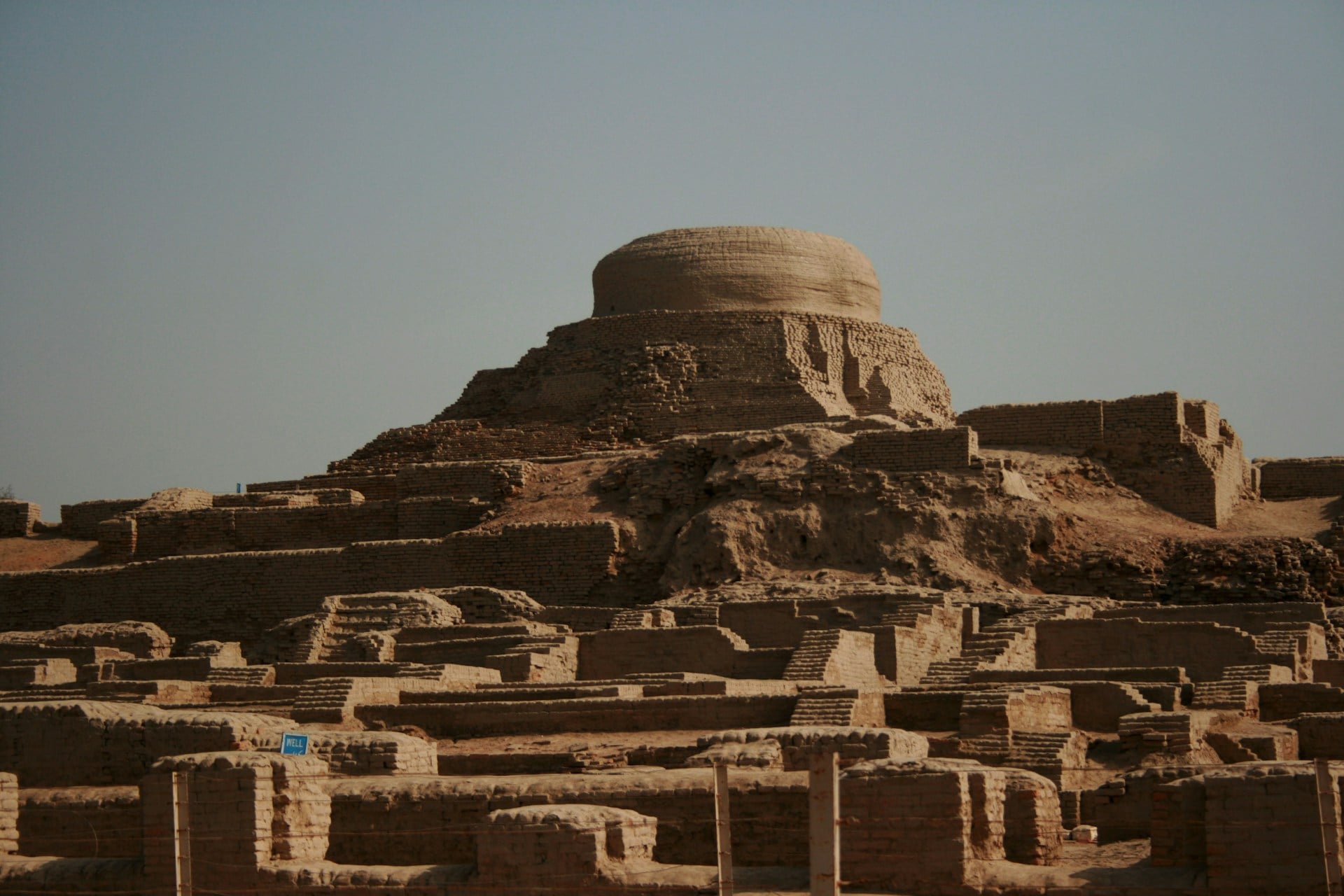
The Indus Valley Civilization had a sophisticated sewage and drainage system, with houses having their private bathrooms connected to a well-planned sewer system. While other ancient societies were still figuring out basic sanitation, the people of Mohenjo-Daro and Harappa had urban planning that wouldn’t look out of place in a modern city.
This indicates an incredibly high level of organization and engineering knowledge. Many medieval European cities, built thousands of years later, didn’t have sanitation systems this advanced.
Cleopatra Lived Closer to the Moon Landing Than the Pyramids

Cleopatra actually lived closer to the time of the Space Race and the historic Moon landing than she did to the construction of the ancient pyramids. The Great Pyramid was built around 2580 BC, while Cleopatra lived around 30 BC—a gap of about 2,550 years.
She died roughly 2,000 years before humans landed on the moon in 1969. This fact completely shifts how we think about ancient Egyptian history. The pyramids were already ancient history when Cleopatra was ruling Egypt.
Ancient Greeks Had Analog Computers

The Greeks had automated figures known as automatons that could perform simple tasks. One famous example is the Antikythera mechanism, an ancient Greek analog computer used for astronomy.
Discovered in a shipwreck in 1901, this intricate device featured a complex system of gears and dials that tracked celestial movements and predicted astronomical events. It’s been called the world’s first computer, and its sophistication raises questions about what other Greek technological knowledge has been lost to history.
Babylonians Created the Seven-Day Week

The Babylonians were keen astronomers and chose to divide the week based on the seven celestial bodies visible to the unaided eye. This system was later adopted by the Jews and, eventually, the rest of the Western world.
The seven-day week feels natural now, but it’s actually a Babylonian invention based on their observations of the sun, moon, and five visible planets. Different cultures throughout history have tried other week lengths, but the Babylonian version stuck. Every time you say ‘thank goodness it’s Friday,’ you’re following a calendar structure that’s thousands of years old.
Ancient Egyptians Shaved Their Heads and Wore Wigs

Egyptians shaved their heads to avoid lice and other pests. They wore wigs made of human hair, wool, or palm-leaf fibers to protect their scalps from the sun.
This was a practical solution to multiple problems—no hair meant no lice, but Egypt’s brutal sun made head protection necessary. Wigs became status symbols, with wealthy Egyptians wearing elaborate styles while working people had simpler versions. It’s an early example of a fashion meeting function, where a health solution became a style statement.
The Great Wall of China Cost 400,000 Lives

As many as 400,000 people died during the construction of the Great Wall of China in the third century BC. Many of these workers were convicts and soldiers, and were buried within the wall itself.
The wall stretches over 13,000 miles and stands as a testament to both human ambition and human cost. Workers used innovative building methods, including bricks made from rice flour and lime, but the project required enormous sacrifice.
Writing Developed Independently Five Times

Writing developed separately in five different locations in human history: Mesopotamia, Egypt, India, China, and Mesoamerica. Each civilization created unique systems without influence from the others—cuneiform in Mesopotamia around 3400 BC, hieroglyphs in Egypt by 3200 BC, Indus script by 2800 BC, Chinese characters during the Shang dynasty, and Mesoamerican writing by 600 BC.
This shows that once societies reached a certain level of complexity, the need to record information became universal. Written language wasn’t borrowed or copied; it was independently invented multiple times because it was simply that necessary.
Phoenicians Invented the Modern Alphabet

The Phoenicians invented the Phoenician alphabet, the forerunner of the modern alphabet still in use today. This ancient civilization, centered along the coastal regions of modern-day Lebanon, Syria, and Israel, created a writing system that was simpler and more adaptable than previous scripts.
Their maritime trading culture spread this alphabet across the Mediterranean between 1550 and 300 BC. Every letter you’re reading right now traces its ancestry back to this Phoenician innovation, making it one of the most influential inventions in human history.
The Thread That Connects Then and Now

These ancient civilizations weren’t primitive societies stumbling through history—they were sophisticated cultures solving complex problems with remarkable ingenuity. Their innovations in timekeeping, writing, engineering, and urban planning didn’t just serve their own needs; they laid groundwork that modern society still builds upon.
The gap between then and now isn’t as wide as it seems. We’re still using Mesopotamian mathematics, writing with Phoenician-derived letters, and organizing our weeks according to Babylonian astronomy. Understanding what these ancient peoples accomplished reminds us that human creativity and problem-solving have always been our greatest strengths, regardless of the technology available.
More from Go2Tutors!

- The Romanov Crown Jewels and Their Tragic Fate
- 17 Halloween Costumes Once Considered Taboo
- Famous Hoaxes That Fooled the World for Years
- 15 Child Stars with Tragic Adult Lives
- 16 Famous Jewelry Pieces in History
Like Go2Tutors’s content? Follow us on MSN.