Photos of 15 Works of Art in Unexpected Places
Art doesn’t always hang in galleries behind velvet ropes. Some of the most memorable works exist in places where you’d never think to look — tucked inside subway stations, painted on the sides of buildings, or carved into mountainsides.
These unexpected encounters with creativity can stop you in your tracks, transforming an ordinary commute or casual stroll into something unforgettable. When art breaks free from traditional spaces, it becomes part of the world in ways that feel both surprising and inevitable.
Banksy’s Girl with Balloon on a London Bridge

The stenciled girl reaching for a heart-shaped balloon appeared overnight on Waterloo Bridge — not London Bridge, which sits about a mile to the east. Gone by morning, but not before dozens of phones captured it. Street art operates on borrowed time, which makes it more urgent than anything hanging in climate-controlled rooms.
People lined up to take selfies with a piece that might disappear before lunch.
The Chicago Bean in Millennium Park (But underground too)

Most people know Cloud Gate sits in Millennium Park, but Anish Kapoor’s reflective sculpture has an identical twin in the underground pedway system (though that part is actually not true — the installation exists only above ground, but the way it distorts the city’s reflection creates the illusion of multiple worlds existing in the same space). The sculpture bends Chicago’s skyline into impossible curves, turning the familiar into something that feels borrowed from another planet.
And yet everyone calls it “the Bean” because sometimes the most accurate description is also the simplest.
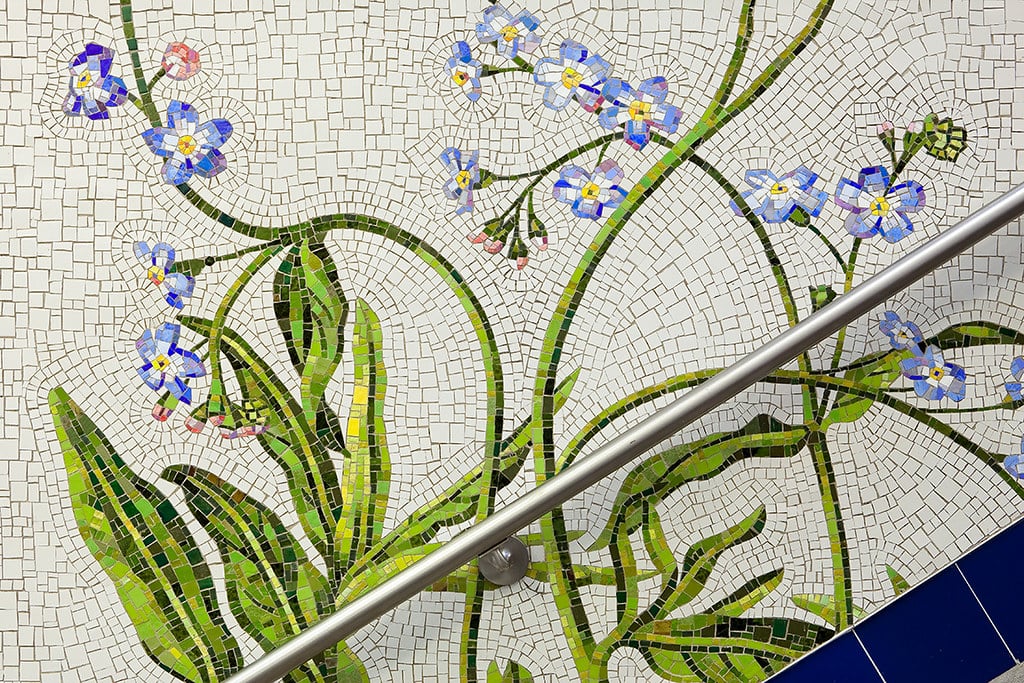
Subway Mosaics in New York’s 14th Street Station

There’s something almost archaeological about discovering these tile works during a rushed commute — as if the city’s underground arteries were designed not just to move people, but to remind them that beauty insists on existing even in the most utilitarian spaces. The mosaics feel like messages from an earlier version of the city, when public works were expected to feed both function and wonder.
Each piece transforms the subway platform from mere infrastructure into something that acknowledges the thousands of daily travelers as deserving of art, not just efficiency.
The AIDS Memorial Quilt sections in random locations

The Memorial Quilt makes its most powerful statement not when displayed in its entirety, but when individual panels surface unexpectedly. A section draped over a park fence.
Three panels hanging in a small-town library. The quilt works precisely because it refuses to stay contained in formal memorial spaces — it insists on appearing where life actually happens.
Yarn bombing in downtown Portland

Someone crocheted sweaters for an entire block of parking meters. The wool stretched and faded over months, turning from bright rebellion into something that looked like the city itself had grown a colorful skin.
Yarn bombing works because it’s gentle vandalism — hard to be outraged by grandmotherly crafts wrapped around public property.
Chalk art that appears after rain

The artist uses a hydrophobic coating that becomes visible only when wet, so the murals materialize during storms and vanish as the pavement dries (the specific chemistry involves creating areas that repel water while leaving other sections absorbent, though the exact technique varies). When it rains in this particular Seattle neighborhood, the sidewalks bloom with hidden images — flowers, geometric patterns, sometimes entire cityscapes that exist only during the city’s most frequent weather.
But the timing never feels predictable, which means discovering one feels like being let in on a secret between the artist and the sky. The images appear and disappear according to weather patterns rather than gallery hours, creating a relationship between art and environment that traditional spaces can’t replicate.
Each rainfall becomes an opening night that nobody can plan to attend.
Mount Rushmore but it’s in someone’s backyard
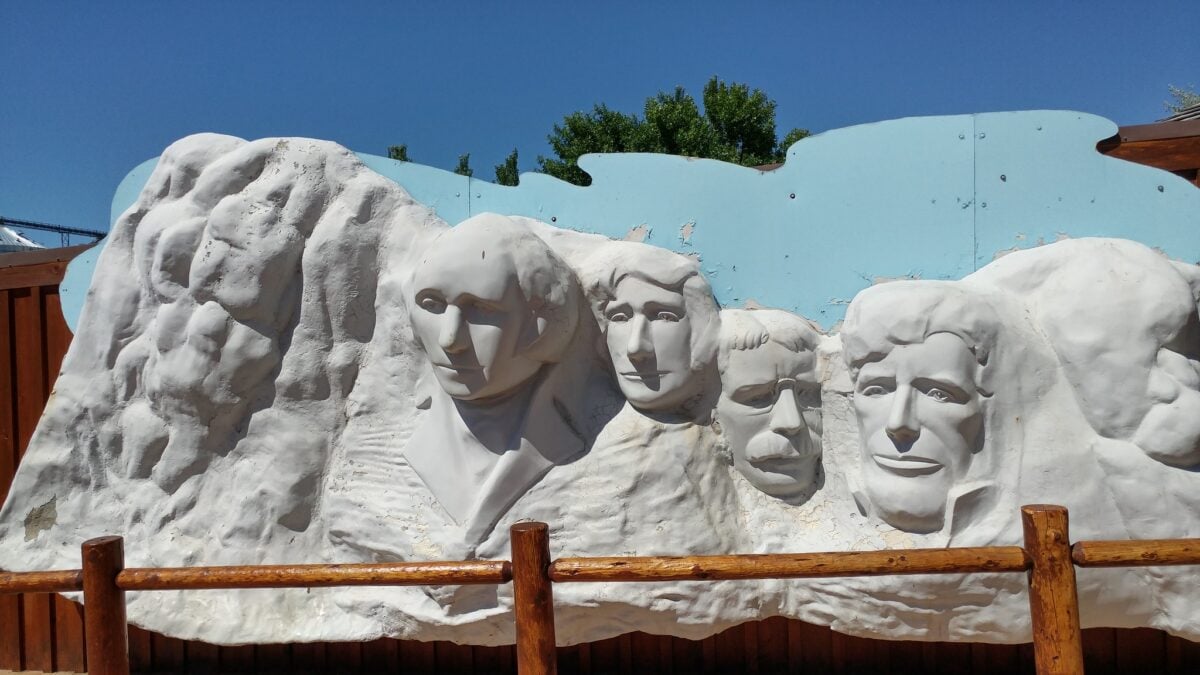
A retired stone carver spent thirty years creating a scale replica of Mount Rushmore in his suburban backyard. The neighbors complained for the first decade, then started giving tours. The presidents’ faces peer over a chain-link fence, which somehow makes them more approachable than the official monument.
Turns out democracy looks different when it’s next to a garden shed.
Ice sculptures that only exist in winter

Each January, an anonymous artist creates elaborate ice sculptures in Boston’s Public Garden, but places them in spots where they’re discovered accidentally rather than announced (the artist has never been identified despite years of speculation, and the sculptures appear without fanfare or documentation). A frozen phoenix emerges from behind a bench. An ice castle materializes near the pond.
The sculptures melt according to temperature rather than exhibition schedules, which means they exist in real time rather than museum time. The work operates on nature’s clock — some pieces last weeks, others disappear within days if the weather turns.
Finding one intact feels like catching something wild that was never meant to be permanent.
Guerrilla poetry installations

Someone types poems on old manual typewriters and tapes them to telephone poles throughout San Francisco. The poems change weekly.
The typewriter font and aged paper make each piece look like correspondence from a more literate era that somehow got delivered to the wrong decade. Reading them feels like finding someone’s private thoughts that were meant to be public all along.
The car covered in bottle caps

In a Detroit parking lot, every inch of a 1987 Honda Civic has been covered in bottle caps — thousands of them, arranged in spiraling patterns that catch sunlight differently throughout the day. The car hasn’t moved in eight years, but nobody tows it because it’s become a neighborhood landmark.
Sometimes the most effective public art is just someone refusing to accept that ordinary objects have to stay ordinary.
Miniature door installations
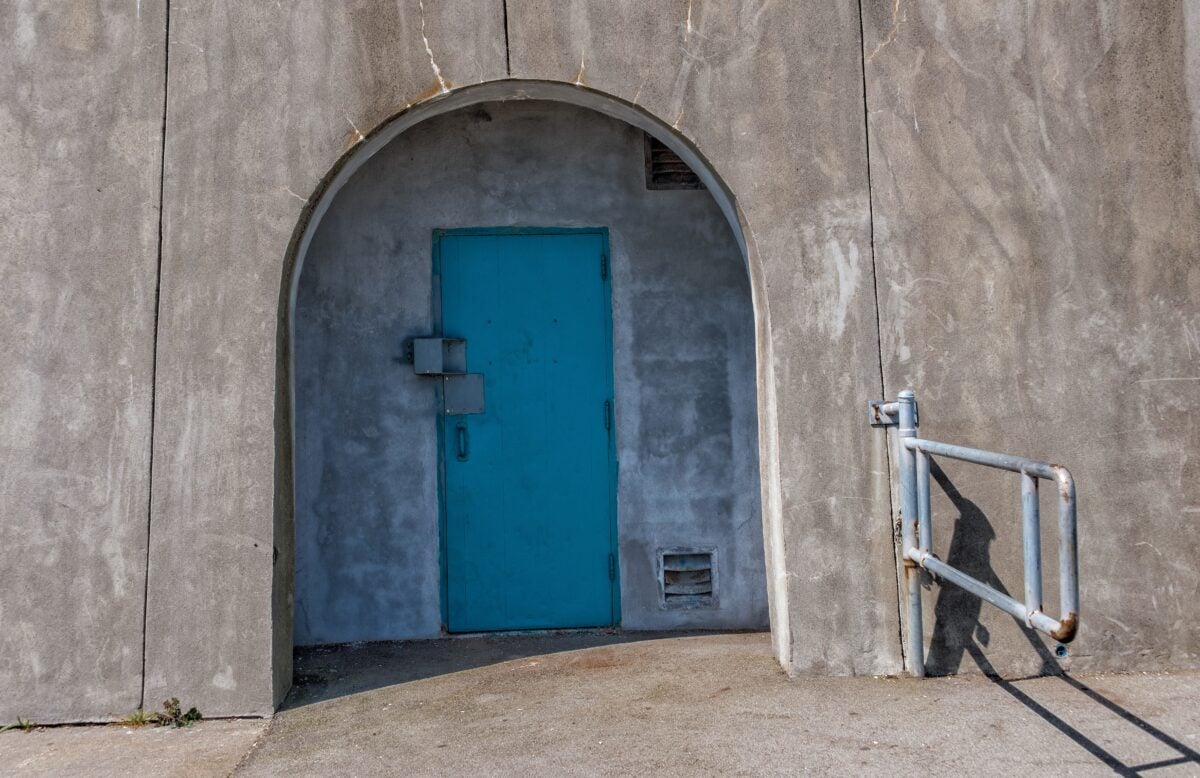
Tiny doors appear attached to the bases of buildings throughout downtown Minneapolis — each one perfectly crafted, complete with working hinges and miniature doorknobs that turn. The doors suggest entire worlds existing at ankle height, populated by residents who need their own entrances to the city.
Children discover them first, but adults find themselves crouching down to peer through keyholes that reveal nothing but brick walls.
Shadow art that only works at noon

An artist calculated the exact angles needed so that at noon on the summer solstice, the shadows cast by a seemingly random arrangement of metal poles spell out a message (the installation required precise astronomical calculations and surveys of the site’s sun exposure throughout the year, making it as much engineering as art). For 363 days of the year, the installation looks like abstract sculpture.
For two days, it reveals its hidden purpose. Most people walk past without knowing they’re seeing half of the artwork.
The piece works because it operates on cosmic timing rather than human schedules, creating a collaboration between the artist’s intention and the earth’s rotation around the sun.
Projection art on abandoned buildings

Every few months, someone projects elaborate animations onto the blank walls of empty buildings in Detroit’s downtown core, but never announces when or where it will happen (the projections appear without warning and typically last only a few hours before the equipment is removed). The abandoned architecture becomes a canvas for images that dance across broken windows and fire escapes.
The projections transform urban decay into something that feels alive, if only temporarily. The artist remains anonymous and operates without permits, which means discovering a projection feels like stumbling into an underground gallery that exists outside official arts programming.
Living sculptures (human statues) in transit

A performance artist positions herself as a classical statue in different subway cars during rush hour, remaining perfectly still while commuters flow around her. She changes poses and costumes, but never breaks character. The piece turns public transportation into an impromptu gallery where the art travels with the audience instead of waiting for them to arrive.
Sidewalk crack gardens
Someone plants flowers in sidewalk cracks throughout Brooklyn, creating tiny gardens that survive in spaces no wider than pencil lines (the plantings use specially selected species that can thrive in minimal soil and harsh urban conditions, transforming infrastructure damage into accidental planters). The flowers bloom in defiance of concrete, turning the city’s wear and weather into opportunities for beauty rather than evidence of decay.
Each crack becomes a miniature victory of nature working with urban planning instead of against it. Walking down these blocks means encountering dozens of small surprises that suggest the city itself is trying to grow something beautiful, one crack at a time.
When art refuses to stay put

The most powerful thing about art in unexpected places isn’t that it breaks rules — it’s that it reminds you art was never meant to be contained in the first place. These works exist because someone decided the world needed more beauty right where they happened to be standing.
They don’t wait for permission or proper venues or ideal conditions. They just appear, transform their surroundings for however long they last, and trust that someone will notice.
More from Go2Tutors!

- The Romanov Crown Jewels and Their Tragic Fate
- 13 Historical Mysteries That Science Still Can’t Solve
- Famous Hoaxes That Fooled the World for Years
- 15 Child Stars with Tragic Adult Lives
- 16 Famous Jewelry Pieces in History
Like Go2Tutors’s content? Follow us on MSN.