Photos of Breathtaking Library Ceilings From Around the World
Walking into certain libraries feels like stepping inside a cathedral dedicated to knowledge rather than faith. The architects who designed these spaces understood something fundamental: when people look up from their books, what they see above should inspire rather than distract.
These library ceilings transform the simple act of reading into something closer to worship, where every glance upward reminds visitors that they’re surrounded by centuries of human thought and creativity. From hand-painted frescoes that took decades to complete to modern installations that play with light and shadow, these ceilings prove that libraries have always been more than repositories for books — they’re monuments to the life of the mind.
Library of Congress Jefferson Building
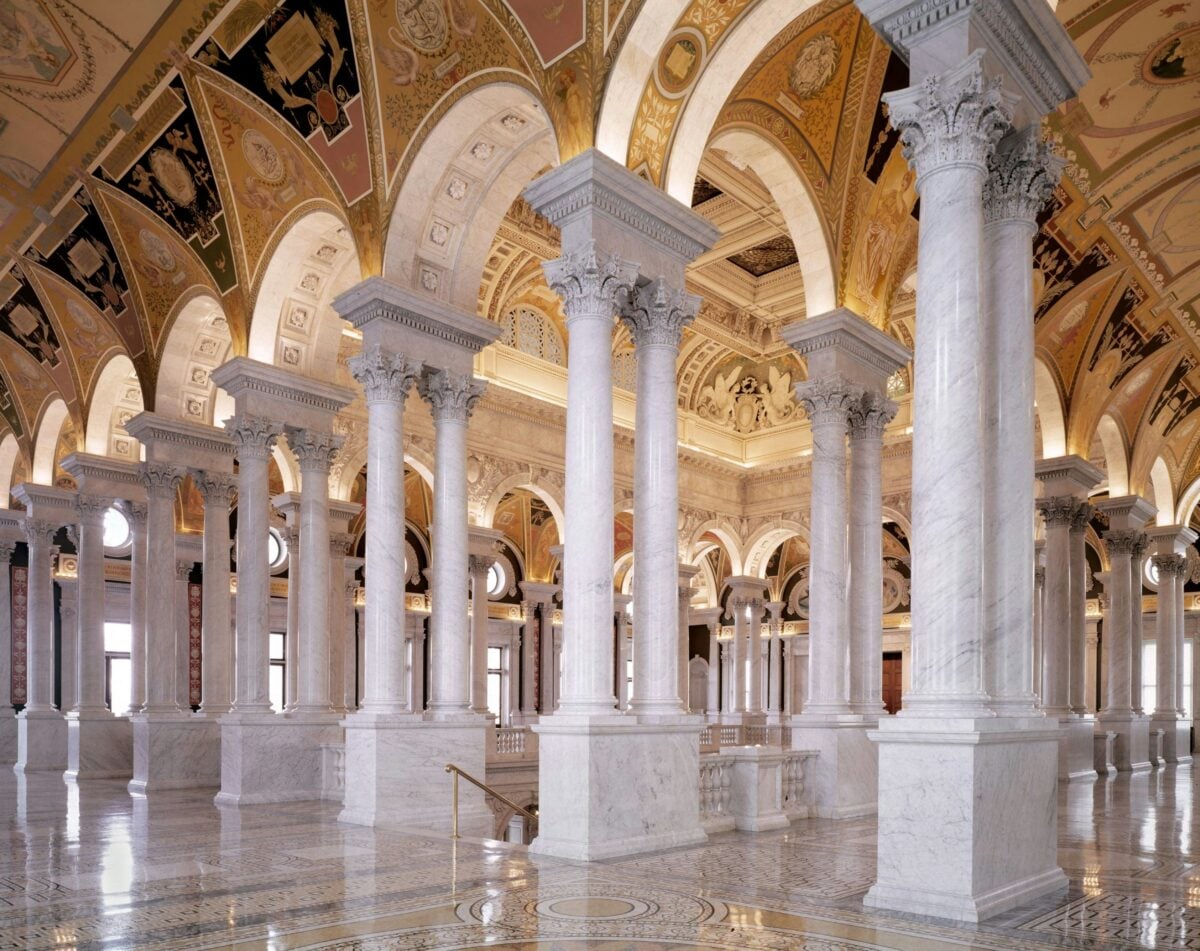
The Thomas Jefferson Building doesn’t mess around. Gold leaf, murals, and coffered details that took armies of craftsmen to complete. The main reading room ceiling soars 160 feet above marble floors, decorated with allegorical figures representing human knowledge.
Every inch was designed to make scholars feel the weight of intellectual history pressing down on them.
Trinity College Old Library
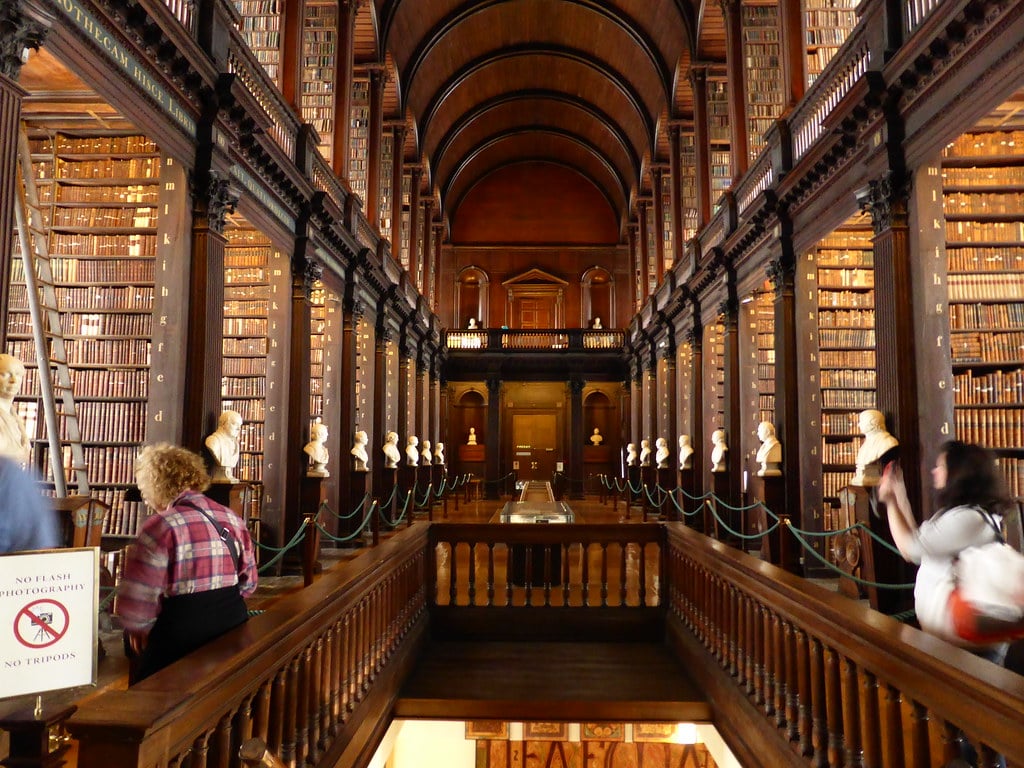
Something strange happens when you enter the Long Room at Trinity College. The oak shelving reaches toward that curved wooden ceiling in what feels less like architectural ambition and more like a physical manifestation of how knowledge accumulates.
The oak shelving reaches toward that curved wooden ceiling in what feels less like architectural ambition and more like a physical manifestation of how knowledge accumulates: slowly, deliberately, with each book added creating subtle shifts in the whole structure. So when you stand in that 200-foot hall, surrounded by 200,000 of the library’s oldest books, the ceiling doesn’t just shelter the collection — it completes it.
Vatican Apostolic Library
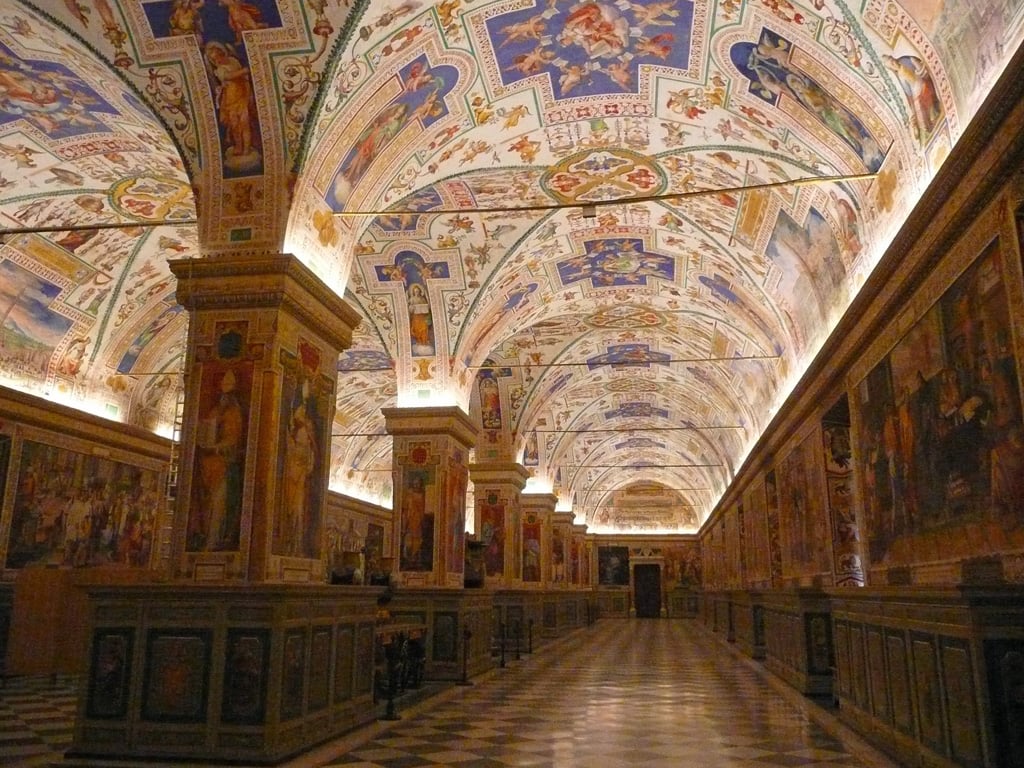
Libraries are meant to humble visitors, and the Vatican’s approach borders on intimidation. The Sistine Hall stretches endlessly under a ceiling that depicts the invention of writing, the Tower of Babel, and various saints who devoted their lives to preserving texts.
Frescoes cover every surface like an overwhelming argument for the importance of the written word. The message is unmistakable: you are small, books are eternal, act accordingly.
Beinecke Rare Book Library
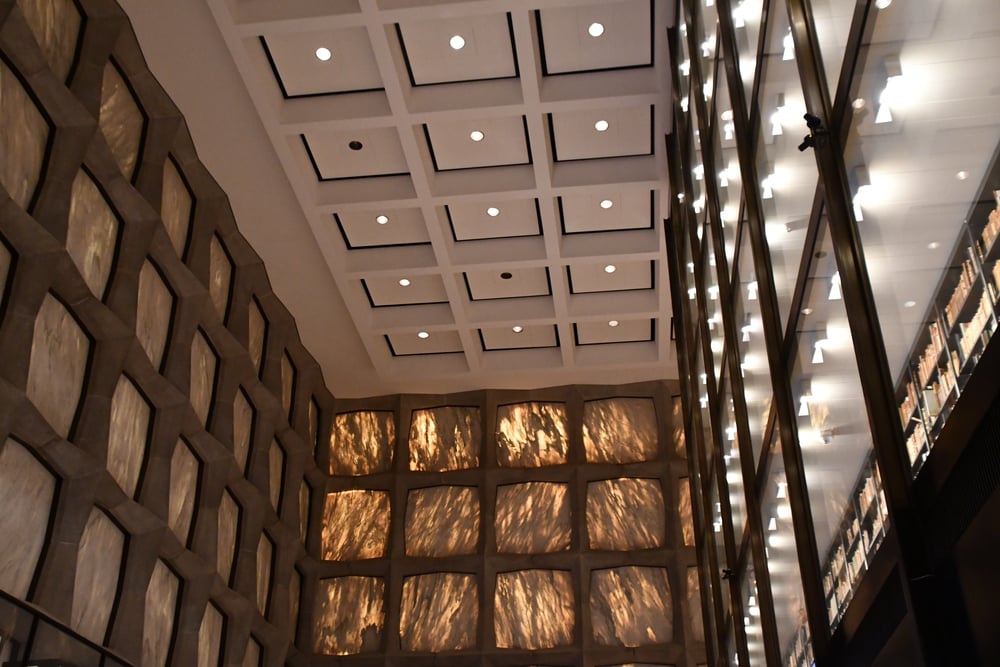
The most honest thing about the Beinecke Library is that it doesn’t pretend books and natural light get along well. Instead of windows, the building uses translucent marble panels that filter daylight into a soft, even glow — the kind of light that makes ancient manuscripts feel less fragile and more eternal. The ceiling becomes part of this careful choreography of illumination, where every surface seems designed to make you forget there’s a world outside.
Which makes sense, really. Rare books demand that kind of focused attention, and distractions have no place in a building designed around preservation rather than comfort.
George Peabody Library
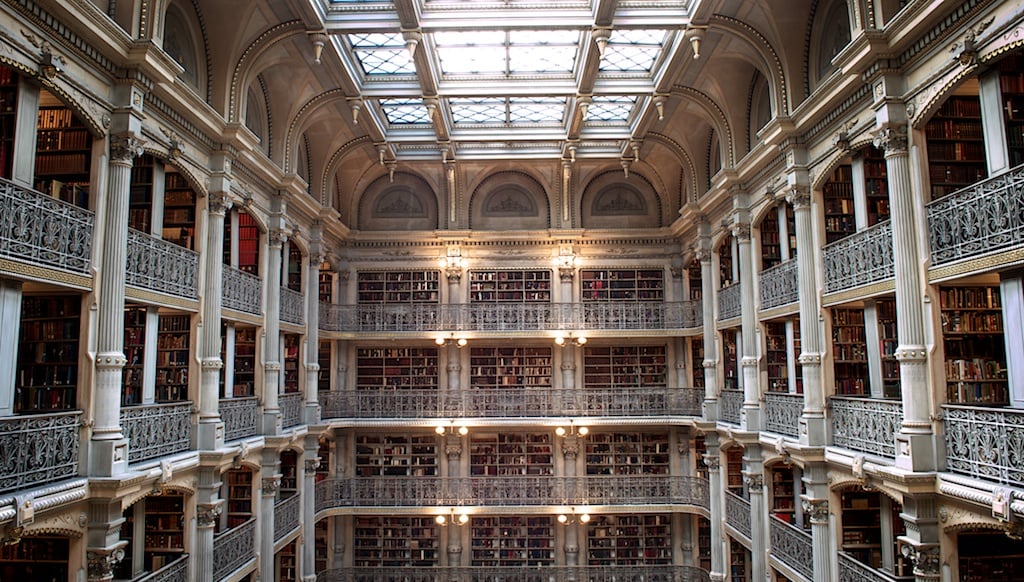
The Peabody Library ceiling is an exercise in controlled excess. Five tiers of cast-iron balconies rise toward a skylight that floods the space with natural light, creating what amounts to a temple devoted to the democratic ideal that knowledge should be freely accessible.
The black and gold ironwork forms geometric patterns that feel both ornate and industrial — a combination that somehow captures the 19th-century American belief that beauty and utility could coexist without compromise.
Admont Abbey Library
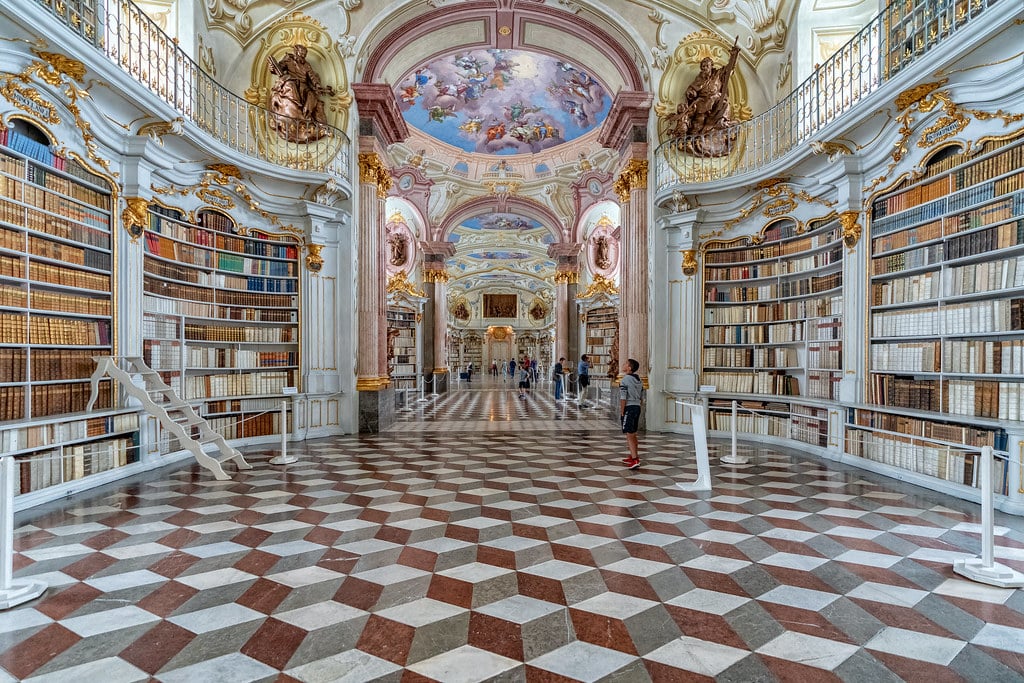
Baroque decoration reaches its logical conclusion at Admont Abbey (where the ceiling frescoes by Bartolomeo Altomonte took seven years to complete, and every single day of that effort shows — not in a labored way, but in the kind of accumulated detail that only comes from sustained attention to a single vision). The painted ceiling depicts the stages of human knowledge from divine revelation through secular learning, and the progression unfolds across the length of the hall like a visual argument that earthly and heavenly wisdom complement rather than compete with each other.
And somehow, despite all that theological complexity swirling overhead, the space still feels designed for quiet contemplation rather than overwhelming spectacle. Books have a way of grounding even the most ambitious architectural gestures.
Boston Public Library McKim Building
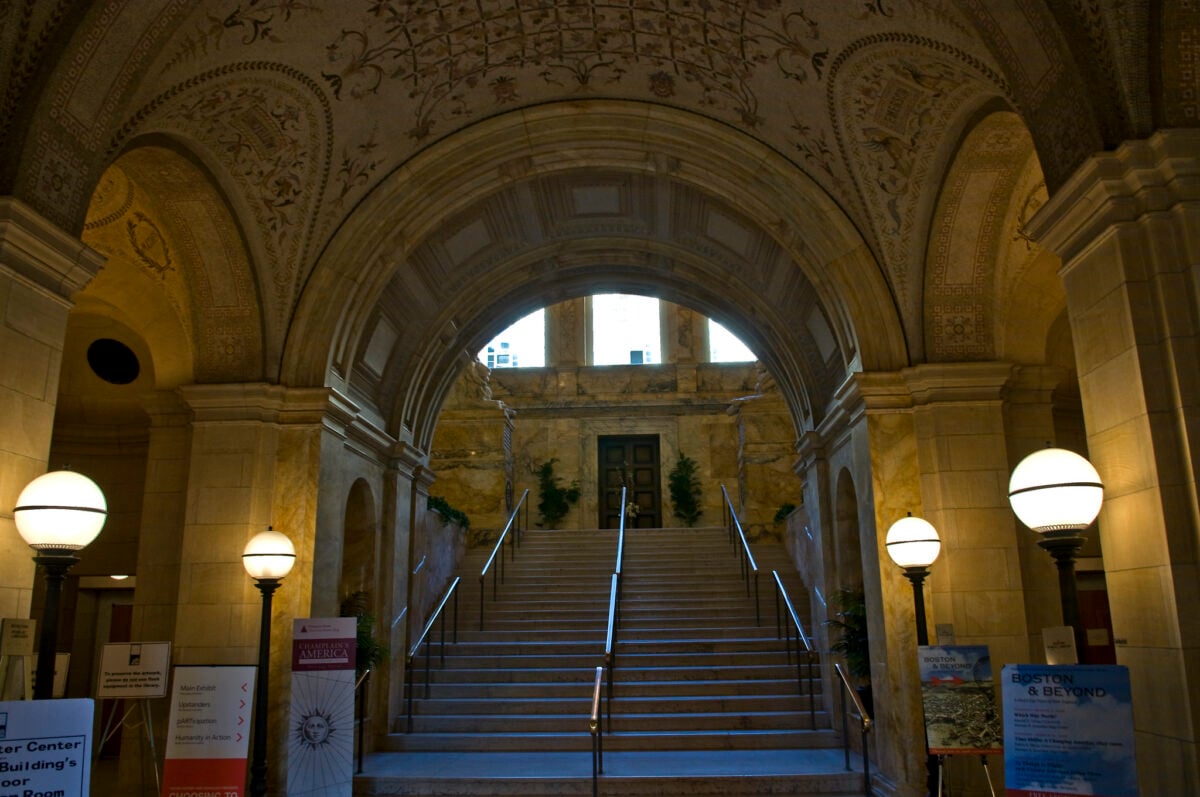
The McKim Building proves that American libraries could hold their own against European grandeur. Puvis de Chavannes painted the ceiling murals in Bates Hall, creating allegorical scenes that celebrate learning without resorting to religious imagery.
The coffered ceiling stretches the length of the reading room, punctuated by brass fixtures that provide warm light for reading. The whole effect feels deliberately civic — grand enough to inspire respect, but not so ornate that it intimidates ordinary citizens.
Clementinum Library
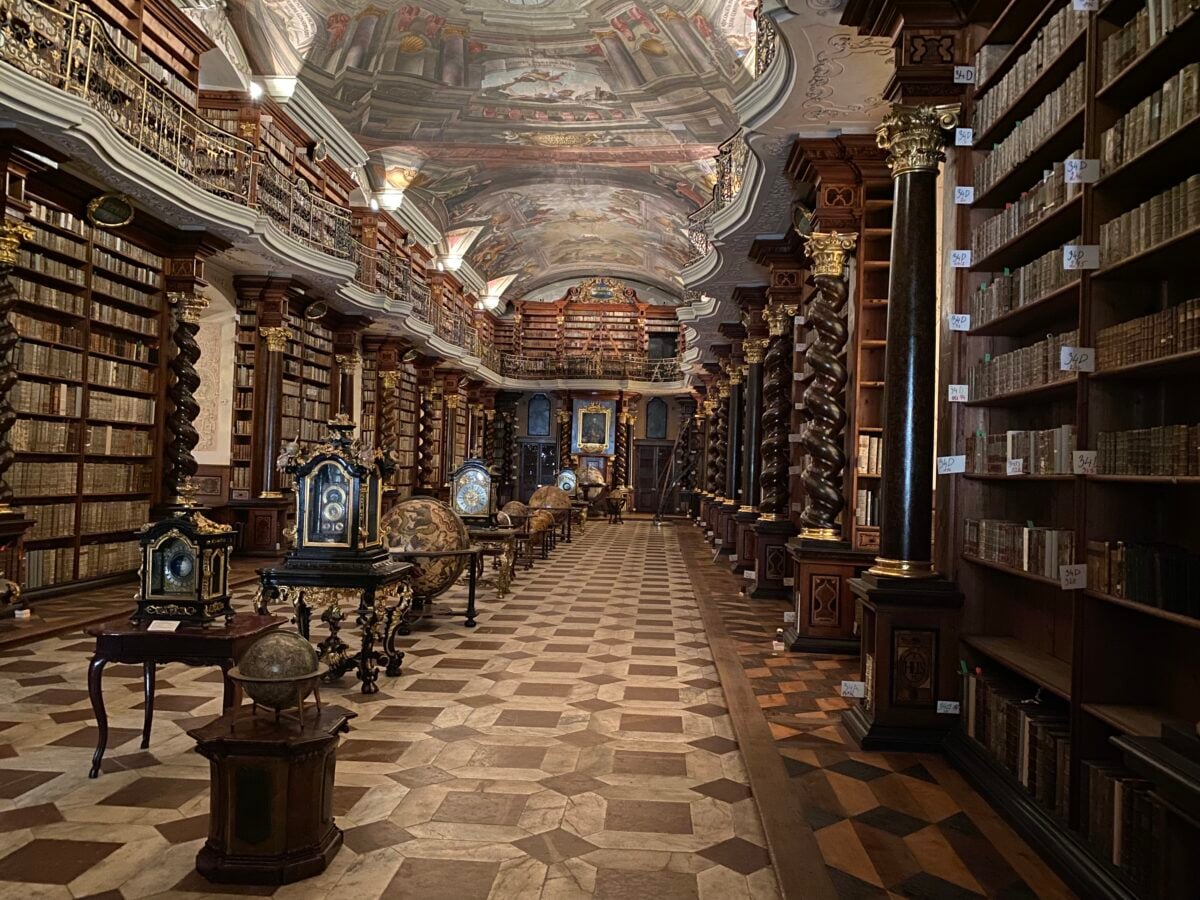
Prague’s Clementinum approaches ceiling decoration like an argument made in paint and gold leaf (the baroque frescoes by Jan Hiebl cover every inch of available space, depicting the relationship between earthly learning and divine wisdom in scenes that flow seamlessly from one section to the next). The library hall itself feels almost impossibly tall for its width, which creates the sense that you’re standing inside a jewelry box designed for giants — everything gleams, everything curves, and the proportions feel simultaneously intimate and monumental.
But here’s what makes it work: despite all that decorative abundance, the globes and wooden reading stands remain the focal points, as if the elaborate ceiling exists primarily to frame the simple act of opening a book.
Biblioteca Joanina
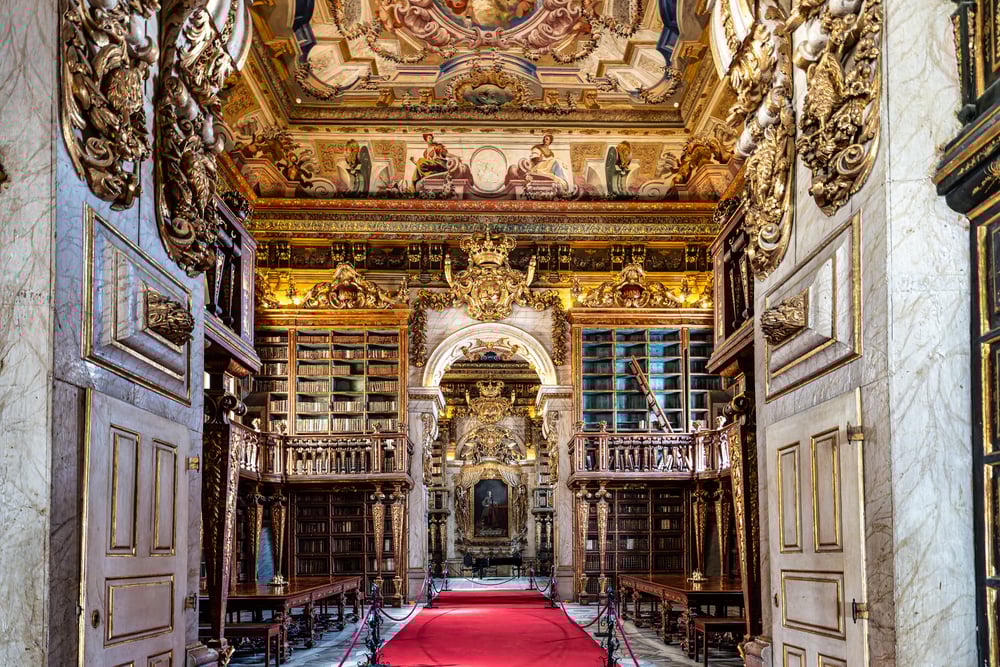
The Biblioteca Joanina at the University of Coimbra takes the position that libraries should feel like treasure vaults. The painted ceiling depicts allegorical figures surrounded by elaborate trompe-l’oeil architectural details that make the room appear larger and more complex than its actual dimensions.
Gold leaf covers nearly every decorative element, creating an environment where books feel less like everyday objects and more like sacred artifacts worthy of such elaborate housing.
Austrian National Library State Hall
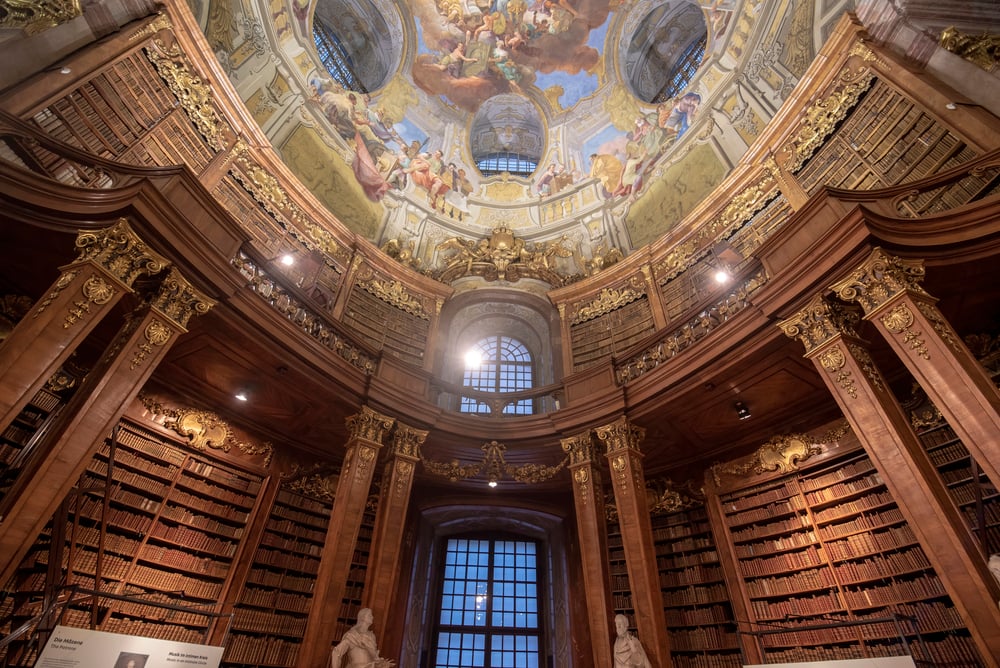
The Austrian National Library doesn’t apologize for making visitors feel small. The oval dome rises above marble columns and gold-detailed shelving that reaches toward Daniel Gran’s ceiling frescoes celebrating the harmony between war and peace, secular and spiritual knowledge.
The proportions are deliberately overwhelming — designed to inspire awe rather than comfort. Every architectural detail reinforces the message that libraries represent humanity’s highest aspirations made manifest in physical space.
Strahov Monastery Library
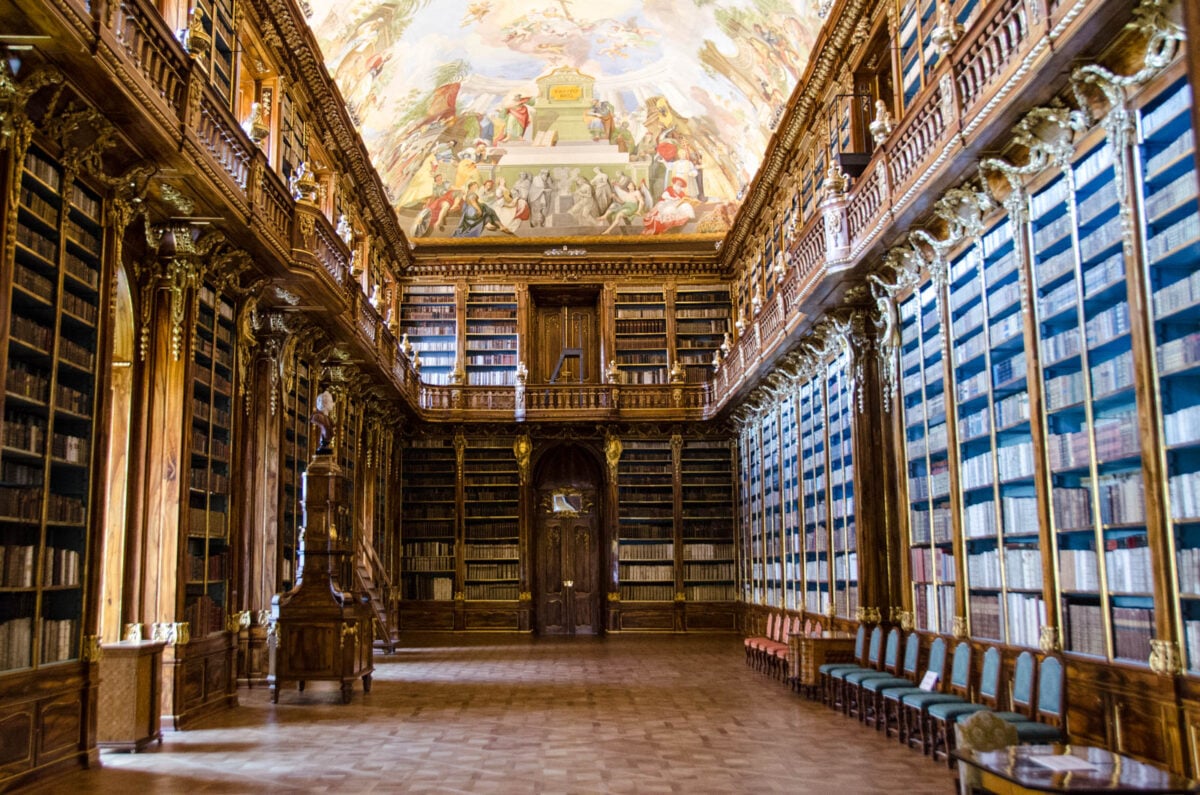
Walking through Strahov’s Philosophical Hall feels like being inside an illuminated manuscript that someone scaled up to architectural proportions (the ceiling fresco by Franz Maulbertsch spans the entire length of the room, depicting the spiritual progress of humanity through various stages of enlightenment). The painted architectural details create the illusion that the room extends far beyond its actual boundaries, with fake columns and moldings that seem to support an impossible heaven populated by allegorical figures representing human knowledge.
And despite all that visual complexity overhead, the walnut bookcases remain the stars — their rich wood grain and careful proportions providing the kind of grounded elegance that makes even the most elaborate ceiling decoration feel purposeful rather than excessive.
Melk Abbey Library
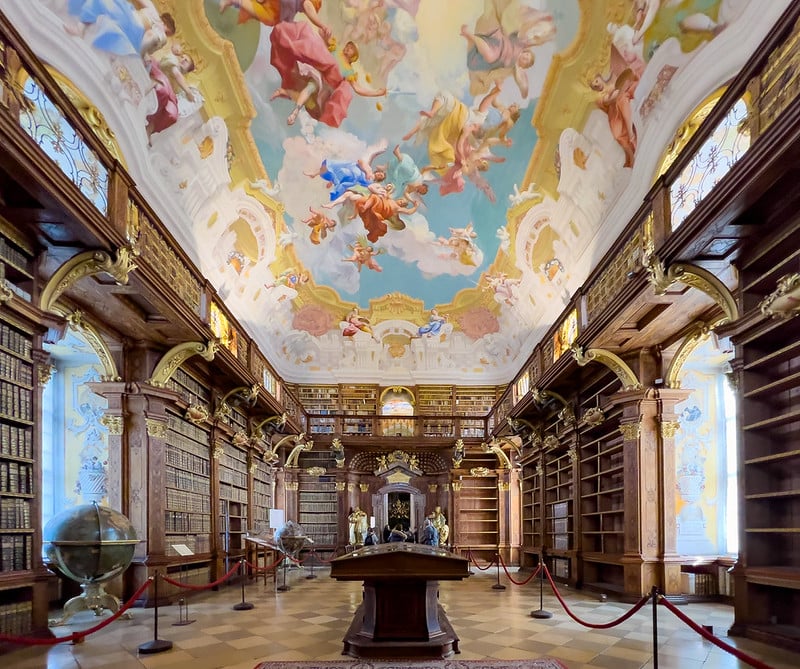
Austrian baroque reaches full expression at Melk Abbey, where the library ceiling combines architectural elements with painted scenes in a way that makes the room feel like the inside of an elaborate music box. The frescoes by Paul Troger depict Faith surrounded by the cardinal virtues, while trompe-l’oeil architectural details extend the room’s apparent height and complexity.
Every surface gleams with gold leaf and rich colors that make the space feel precious rather than simply grand.
Library of El Escorial
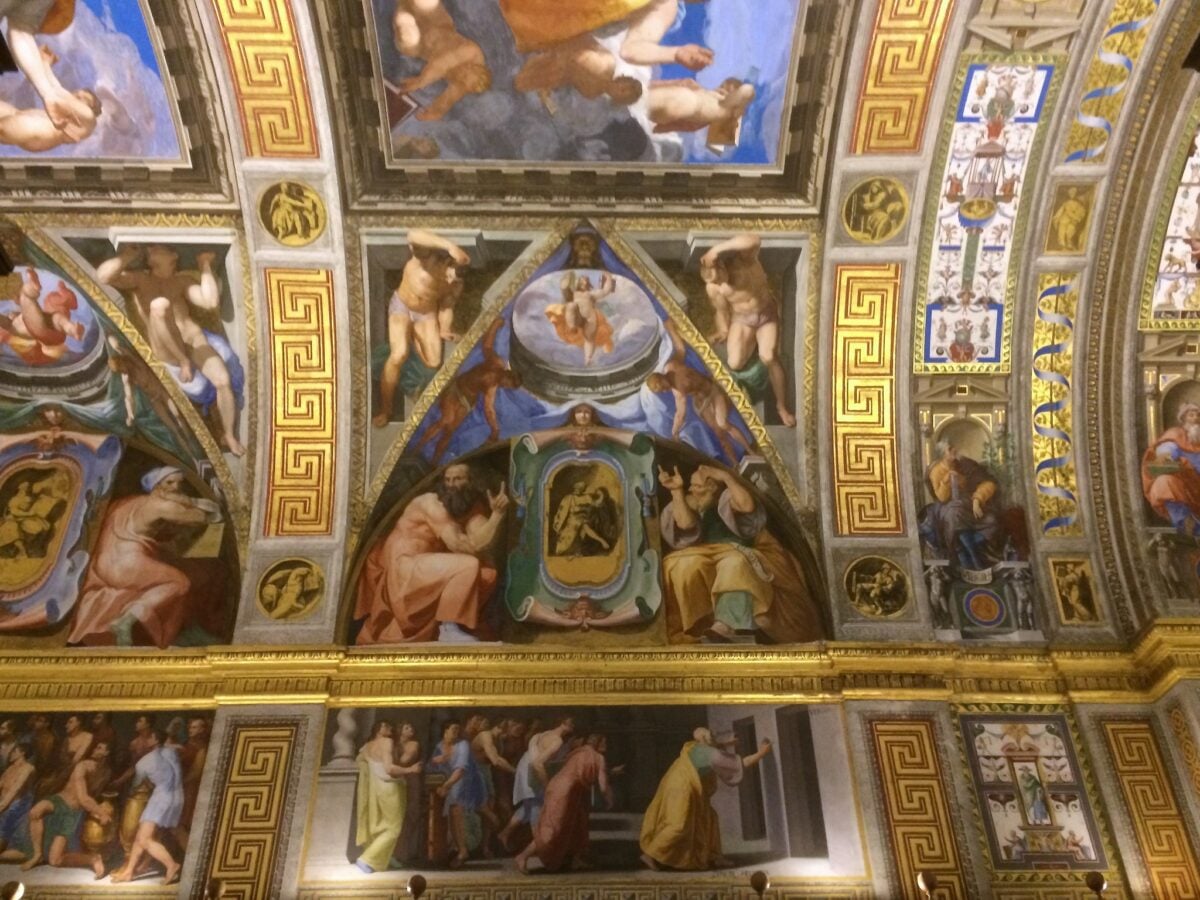
Spanish royal authority manifests itself in the library ceiling at El Escorial through Pellegrino Tibaldi’s frescoes depicting the seven liberal arts. The barrel-vaulted ceiling creates a sense of infinite extension, while the painted figures seem to hover in architectural frameworks that blend seamlessly with the actual structural elements below.
The overall effect reinforces the connection between earthly learning and divine order that Philip II intended when he commissioned the monastery complex.
Biblioteca Marciana
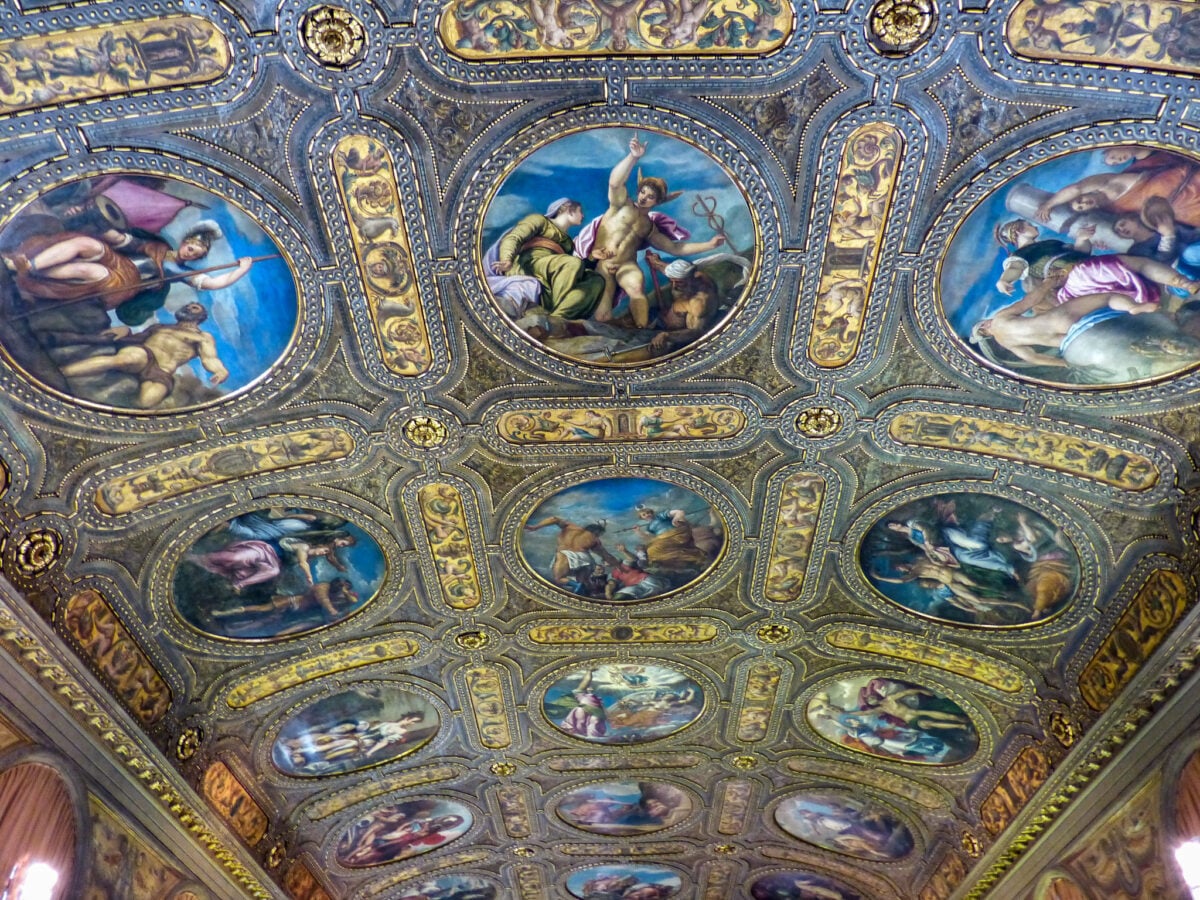
Venice’s approach to library ceiling decoration reflects the city’s unique position between Eastern and Western traditions. The main hall features a gilded wooden ceiling divided into compartments, each containing painted allegorical scenes by various Renaissance masters.
The maritime republic’s wealth shows in every decorative detail, creating an environment where books feel like another form of precious cargo gathered from distant lands and carefully preserved for future generations.
Where words meet wonder
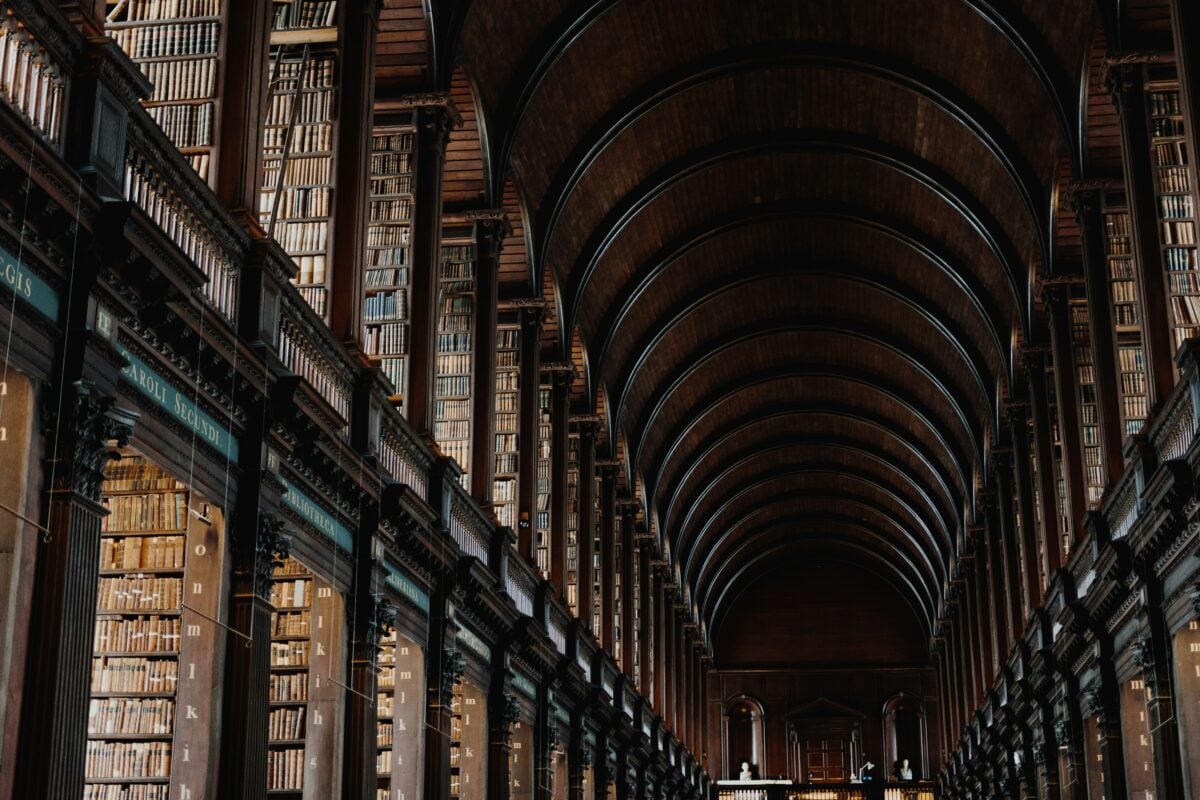
Perhaps the most remarkable thing about these library ceilings isn’t their individual beauty, but what they reveal about human priorities across different centuries and cultures. Whether baroque, neoclassical, or thoroughly modern, each ceiling makes the same fundamental argument: the spaces where we house our accumulated knowledge deserve the same architectural attention we lavish on palaces and places of worship.
These rooms understand that looking up from a book should offer inspiration rather than fluorescent lighting and acoustic tiles. They remind us that libraries have always been more than storage facilities — they’re physical manifestations of our belief that ideas matter enough to surround them with beauty.
More from Go2Tutors!

- The Romanov Crown Jewels and Their Tragic Fate
- 13 Historical Mysteries That Science Still Can’t Solve
- Famous Hoaxes That Fooled the World for Years
- 15 Child Stars with Tragic Adult Lives
- 16 Famous Jewelry Pieces in History
Like Go2Tutors’s content? Follow us on MSN.