Photos Of The Strangest Statues Around The World
Some statues make you stop and stare for all the right reasons — beauty, scale, history. Others make you stop because you genuinely cannot figure out what you’re looking at, or why someone thought it needed to exist.
The world is full of the second kind, and honestly, they’re far more interesting. These aren’t your standard bronze generals on horseback.
These are the ones that raise eyebrows, prompt questions, and occasionally give people nightmares. Here are some of the strangest statues you’ll find on this planet.
Blue Mustang, Denver, Colorado, USA

Locals call it “Blucifer.” The official name is Blue Mustang, and it stands at the entrance to Denver International Airport — which is already one of the more unsettling airports in the world.
The sculpture is a rearing blue horse with glowing red eyes, standing over 30 feet tall. It was created by artist Luis Jiménez, who died in 2006 when a piece of the statue fell on him during production.
The airport installed it anyway. Whether that makes it more haunting or just more memorable depends on your threshold for dark irony.
Manneken Pis, Brussels, Belgium
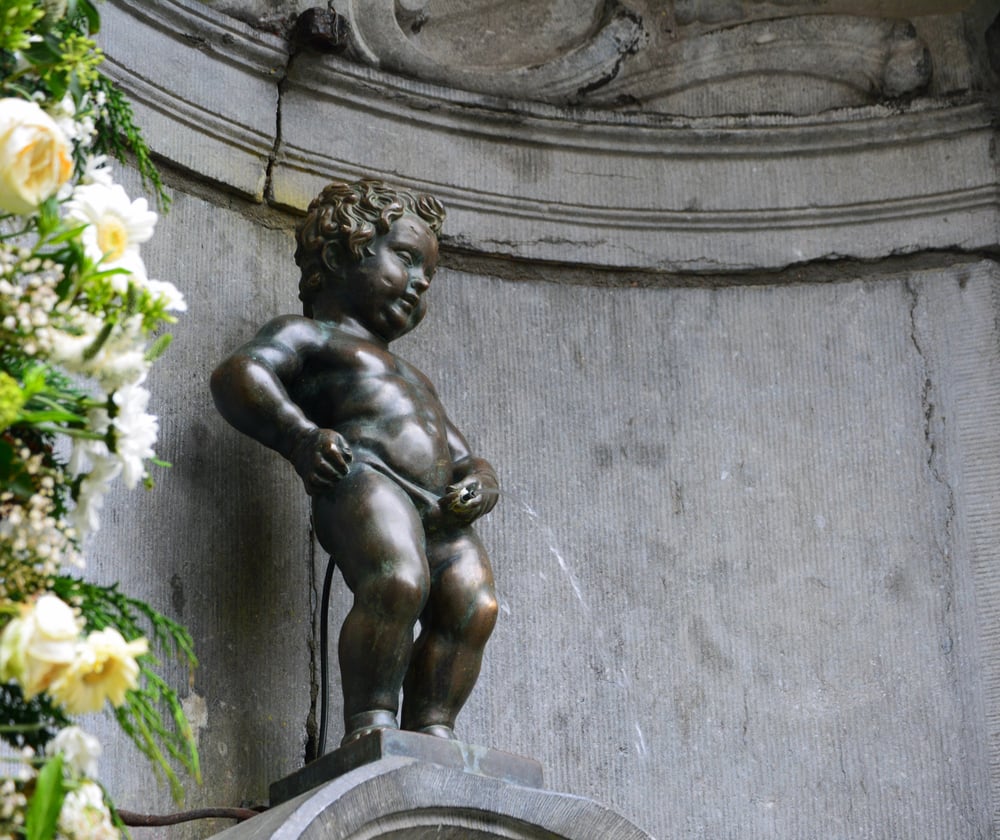
Brussels has a lot going for it — chocolate, architecture, history. And then there’s this: a small bronze statue of a young boy relieving himself into a fountain.
Manneken Pis has stood in the city since 1619, and in that time it has become one of Belgium’s most recognized symbols. The city has given it hundreds of outfits over the years, dressing the statue in everything from a tuxedo to a space suit.
Tourists crowd around it expecting something grand. What they find is a statue barely two feet tall.
The gap between expectation and reality is part of the experience.
The Fremont Troll, Seattle, Washington, USA
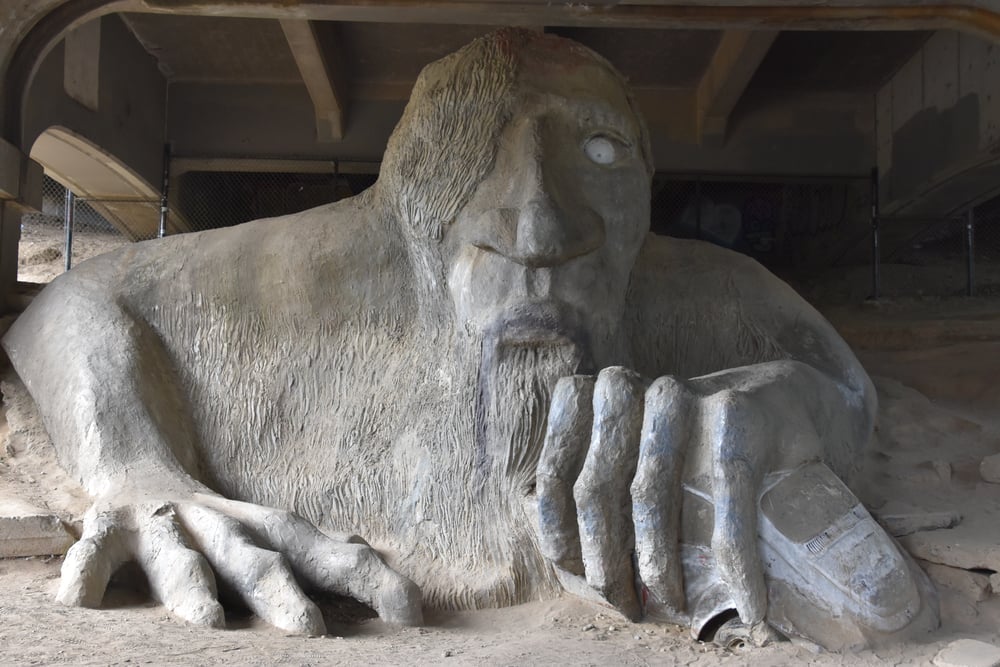
Underneath the Aurora Bridge in Seattle’s Fremont neighborhood, a concrete troll crouches in the dark, clutching a real Volkswagen Beetle in its fist. The sculpture was created in 1990 after the community held a competition to fill the space under the bridge, which had become neglected and unsafe.
The troll worked. People visit it constantly, children climb on it, and it’s become the unofficial mascot of one of Seattle’s most eccentric neighborhoods.
It has one eye made from a hubcap and one empty socket, which somehow makes it even more unsettling.
The Awakening, National Harbor, Maryland, USA
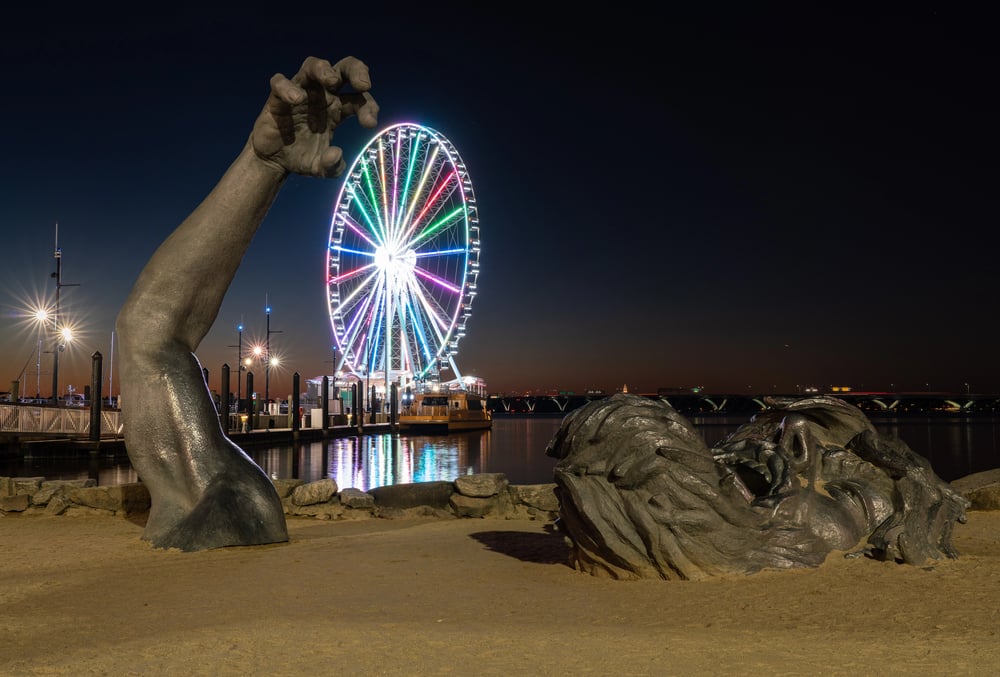
From a distance, it looks like a giant is trying to claw its way out of the earth. The Awakening is a five-piece aluminum sculpture by J. Seward Johnson Jr., depicting a massive bearded figure emerging from the ground, limbs stretched in apparent agony or effort — it’s hard to tell which.
Originally installed at Hains Point in Washington D.C. in 1980, it was sold and relocated to Maryland in 2008. Children treat it as a jungle gym.
Adults photograph it with a mix of delight and unease. It’s one of those sculptures that looks completely different depending on the angle you approach it from.
Monument To The Lab Mouse, Novosibirsk, Russia

Russia has a soft spot for unusual monuments, but this one stands out. In front of the Institute of Cytology and Genetics in Novosibirsk, there’s a bronze mouse wearing glasses, sitting upright at a desk, knitting a double helix strand of DNA with knitting needles.
The monument was created in 2013 as a tribute to laboratory mice — the animals whose involuntary contributions to science have made countless medical discoveries possible. It’s thoughtful, strange, and oddly moving all at once.
The Veiled Christ, Naples, Italy
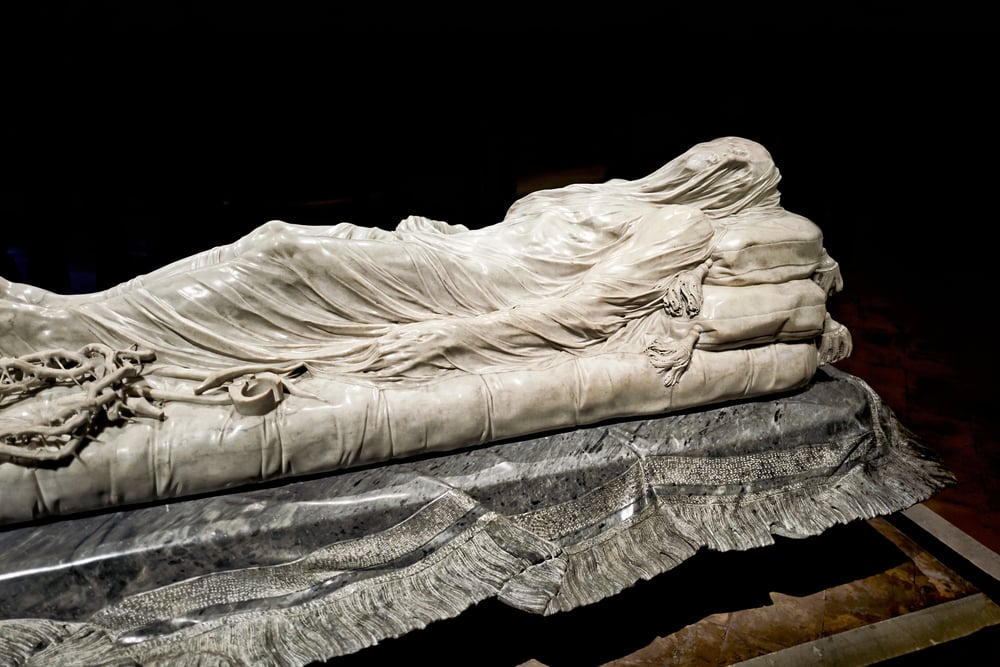
This one is strange not because of what it depicts, but because of how technically impossible it looks. The Veiled Christ is a marble sculpture by Giuseppe Sanmartino, completed in 1753, and it shows Jesus laid out after crucifixion, covered by a thin veil.
The veil is also carved from marble. The fabric texture, the way it clings to the body’s features underneath, the way it drapes and folds — none of it should be possible in stone.
For centuries, people spread rumors that the veil had been magically transformed from real fabric. The truth is that Sanmartino was simply that skilled, which in some ways is even harder to believe.
Carhenge, Alliance, Nebraska, USA
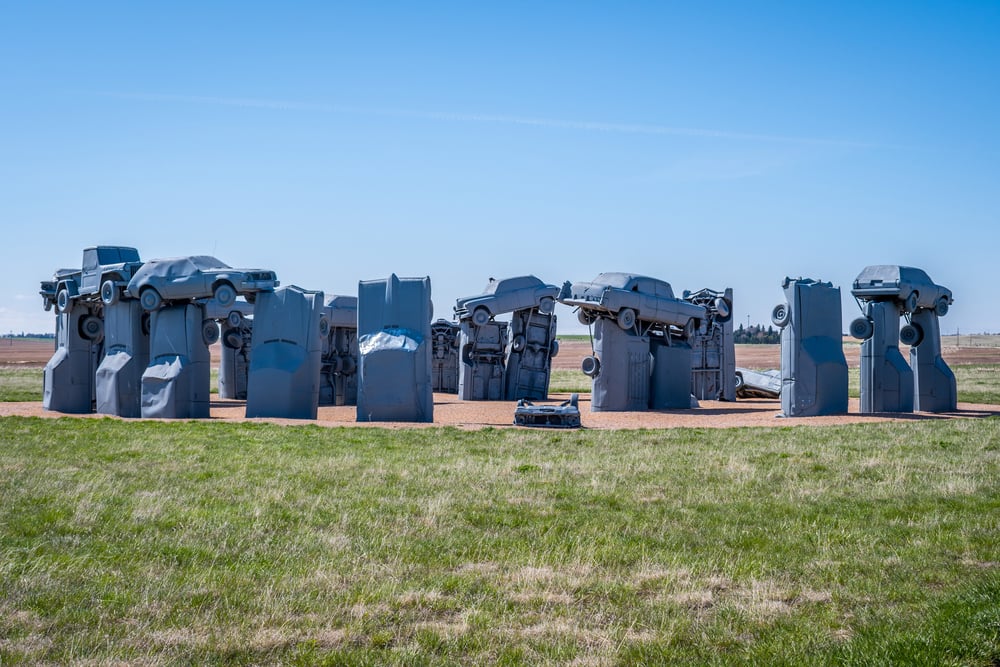
Someone looked at Stonehenge and thought: what if I did that, but with cars? Artist Jim Reinders built Carhenge in 1987 as a tribute to his father, using 38 vintage American cars arranged in the same formation as the original Stonehenge in England.
The cars are painted grey to match the stone. It sits in the middle of the Nebraska plains with almost nothing around it.
It sounds like a joke, and it is — but it’s also strangely faithful to the proportions of the original. Whether it counts as art, satire, or a very elaborate roadside attraction is something visitors seem to enjoy debating.
Genghis Khan Equestrian Statue, Tsonjin Boldog, Mongolia
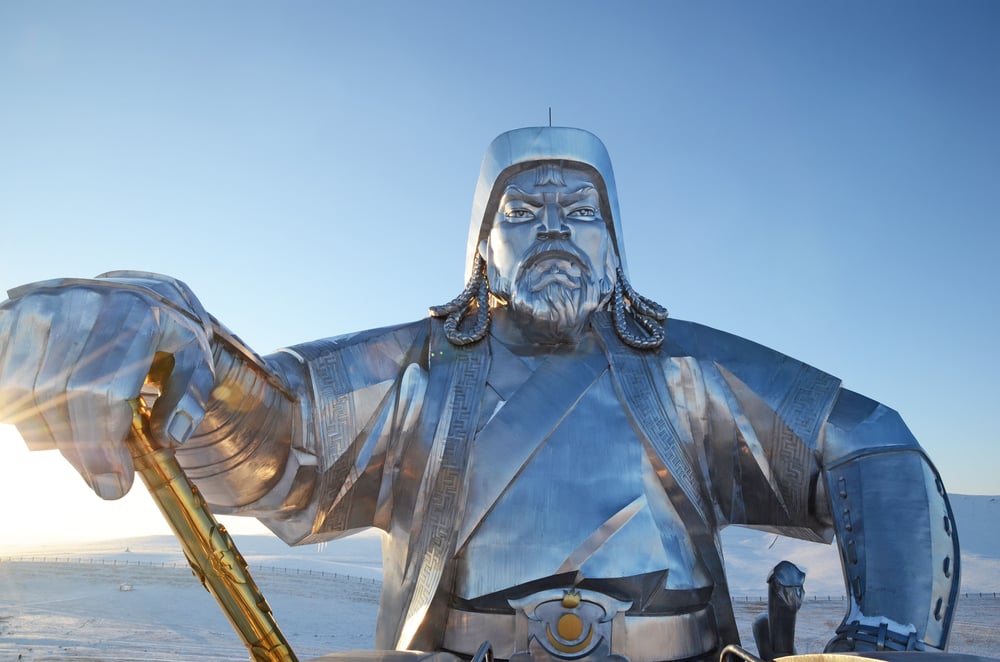
Mongolia built the world’s largest equestrian statue, and they did not hold back. Standing 40 meters tall on top of a visitor center that also functions as its base, the stainless steel figure of Genghis Khan on horseback dominates the landscape for miles in every direction.
You can ride an elevator through the horse’s neck and stand on the statue’s head for a panoramic view of the surrounding steppe. The scale is genuinely hard to process in person.
It’s not strange in a dark or unsettling way — it’s strange in the way that things get when humans decide to go much, much bigger than necessary.
The Fallen Angel, Madrid, Spain
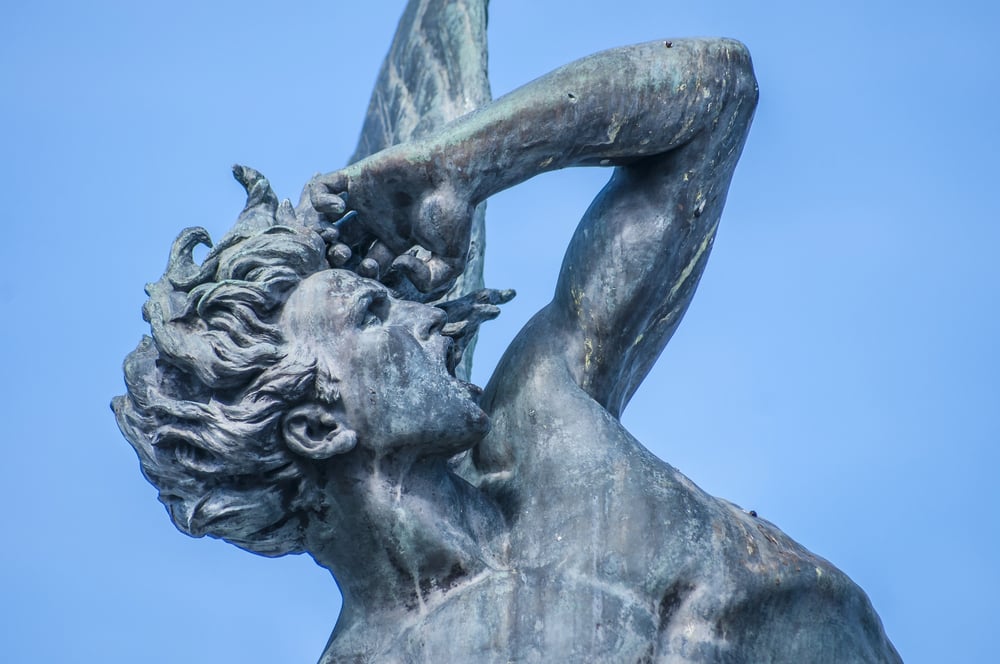
Madrid’s Retiro Park contains the only known public monument in the world dedicated to Lucifer. El Ángel Caído — The Fallen Angel — was created by Ricardo Bellver and installed in 1885.
It depicts a writhing, contorted figure falling from heaven, based on a passage from John Milton’s Paradise Lost. The statue sits at exactly 666 meters above sea level, which was either a deliberate choice or an extraordinary coincidence depending on who you ask.
It’s a genuinely beautiful piece of work, and the fact that it lives in a public park where families stroll on weekends gives it a strange kind of normalcy.
Kelpies, Falkirk, Scotland

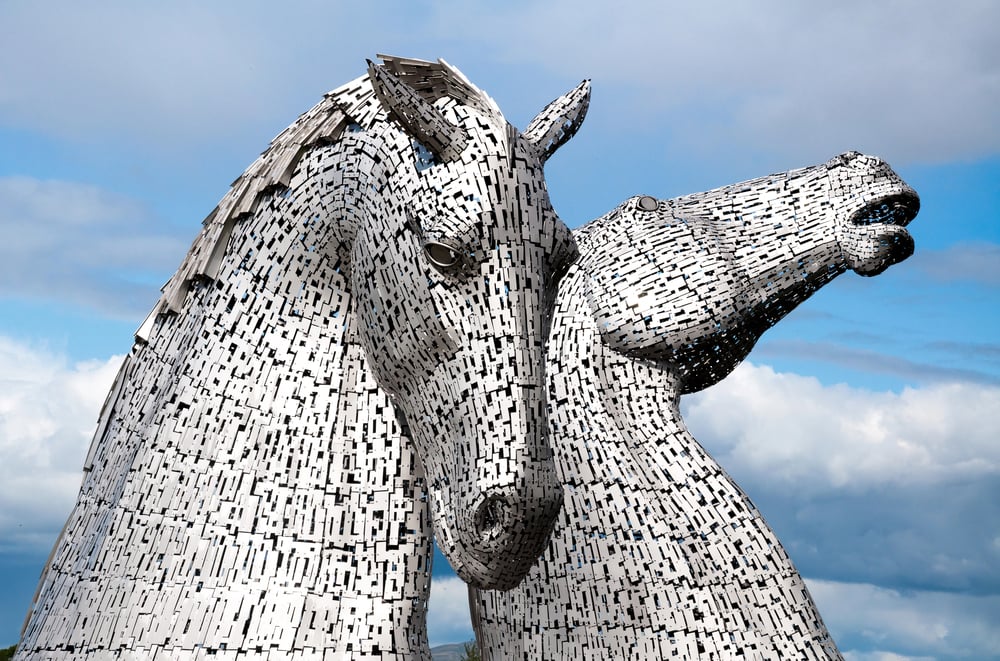
The Kelpies are two 30-meter horse-head sculptures standing beside the Forth and Clyde Canal in Scotland. They were designed by sculptor Andy Scott and completed in 2013.
A kelpie is a mythical shape-shifting water spirit from Scottish folklore, often depicted as a horse. These two steel heads, each large enough to contain a building, look like they’ve just emerged from the water and paused mid-movement.
They’re immaculately detailed — you can see individual hairs in the mane rendered in steel — which somehow makes them more surreal. At night, when they’re lit from inside, the effect is genuinely otherworldly.
The Giant Of Kandovan, Iran

From inside the hard stone of Kandovan’s cliffs, old shapes rise – slowly worn by time until they seem to carry faces. Instead of standing apart, some were later shaped on purpose, merging handwork with what nature left behind.
This place isn’t just ruins; people still dwell here, tucked within hollowed rocks, making life part of the terrain. What you see there does not shout “art” but whispers something quieter – as if the ground began dreaming upright.
Thomas Dambo’s Forest Trolls Around The World
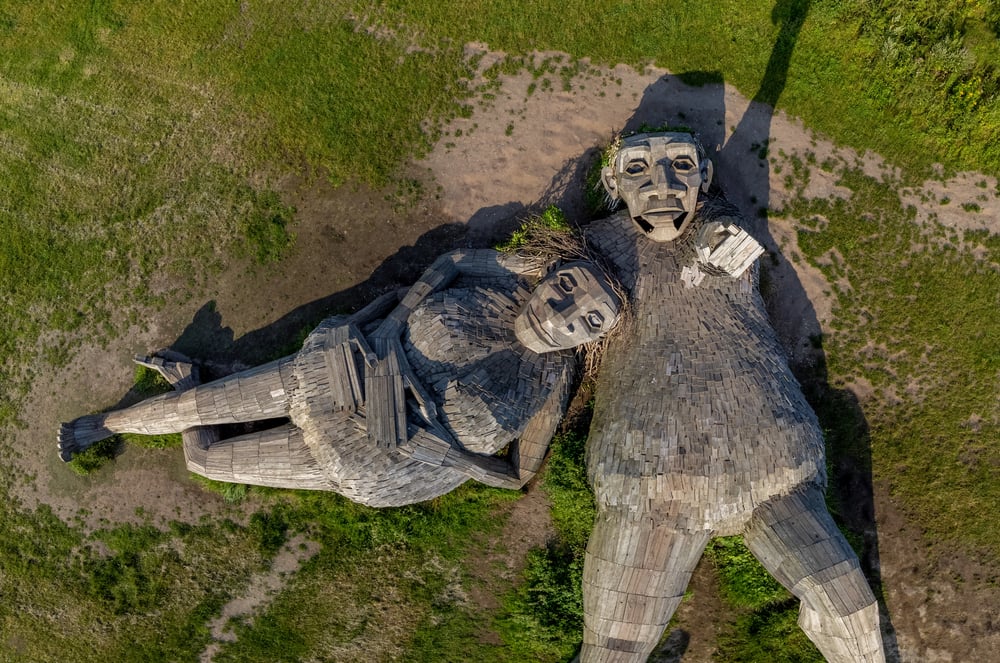
Out in the woods, something waits. Thomas Dambo, an artist from Denmark, builds massive trolls out of old wood.
Not all are friendly to see. Across countries like South Korea, the U.S., Puerto Rico, and his home nation, these figures appear quietly.
Made from scraps people once threw away, each carries its own tale. You won’t find signs pointing the way.
Instead, they hide – lurking behind trunks, half-buried in roots. Imagine walking through stillness then suddenly seeing a 15-foot creature curled beneath branches.
No announcement. Just presence. Surprise lives here, raw and uninvited.
Public art rarely hits so deep. Stillness breaks when moss-covered eyes meet yours.
These moments stick – not because they impress, but because they interrupt. One minute it’s just forest. Next, magic feels possible.
The Vigeland Sculpture Park In Oslo, Norway
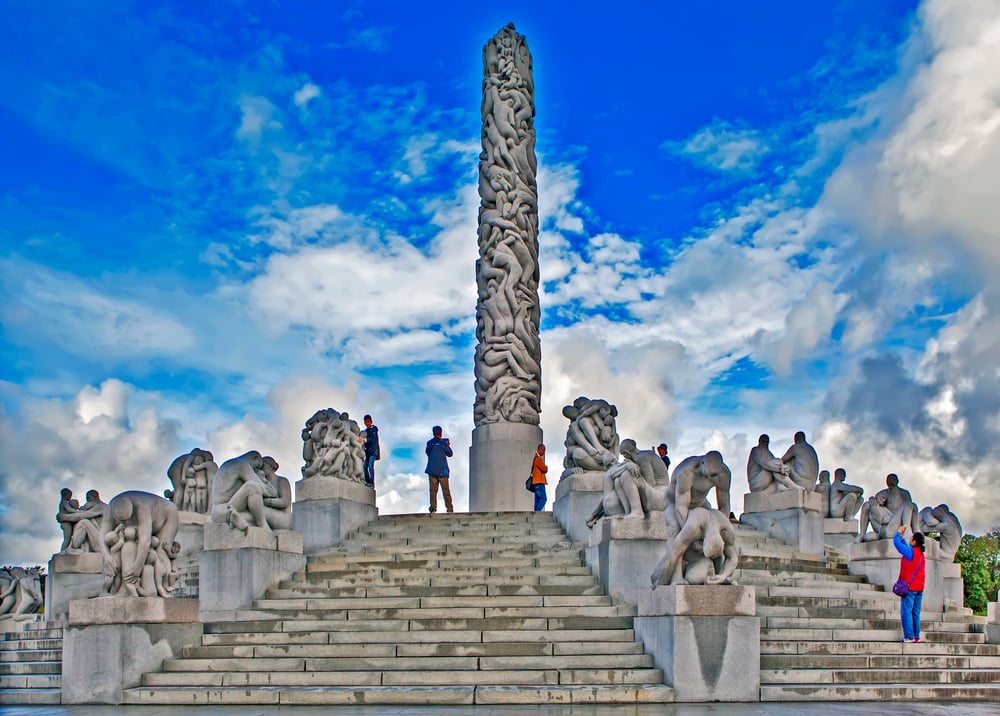
Sculpture parks usually follow some kind of story. Not here – Vigeland Park belongs entirely to Gustav Vigeland.
He worked for years, shaping more than two hundred figures. Every statue stands somewhere within this one place in Oslo.
Each shows people feeling something deep: anger, sorrow, delight, weariness, even games. At the center sits Sinnataggen – a tiny kid twisted in fury, mid-scream.
So many hands have touched it, hoping for fortune, that one leg gleams far brighter than its twin. Then there’s the Monolith – different altogether.
A pillar fourteen meters high, carved with 121 bodies tangled together, climbing like they’re chasing air. Three stonemasons spent 14 years shaping the stone.
Beside it, everything feels oddly out of place.
When Odd Things Start To Mean Something
Odd figures linger longest. Not the clean-cut rider atop his steed, polished and expected.
Instead, it’s the towering equine glazed in cobalt, its stare sharp with crimson light. Or stone carved so thin it mimics fabric against skin.
Maybe even a hulking creature nestled among trees like a secret too heavy to move. These are what settle behind your thoughts.
Precision fades. Wonder stays.
Odd creations often have no clue they’re odd. Many come from pure honesty, others wear irony like a mask, while a few emerge when someone – or a group – speaks in a voice too different for usual shapes.
Maybe that’s why these uneasy, jagged pieces deserve to exist, exactly as they are. Strange art doesn’t need permission to take up space.
More from Go2Tutors!

- The Romanov Crown Jewels and Their Tragic Fate
- 13 Historical Mysteries That Science Still Can’t Solve
- Famous Hoaxes That Fooled the World for Years
- 15 Child Stars with Tragic Adult Lives
- 16 Famous Jewelry Pieces in History
Like Go2Tutors’s content? Follow us on MSN.



