School Lessons That Aged Terribly
Do you recall paying close attention in class and learning facts that your teacher insisted were true? Surprisingly, many of those “facts” turned out to be myths, oversimplifications, or information that has since been thoroughly disproved. Schools have a long history of teaching things that don’t quite stand up to scrutiny, from sanitized history to out-of-date science.
Before anyone bothered to correct them, some of these misconceptions persisted for generations. Others have since been refuted by new findings, but they were founded on the best information available at the time.
In any case, you might want to take a seat if you were taught any of these things in school—because your teachers were mistaken. This is a list of lessons from school that have deteriorated over time.
Columbus Discovered America
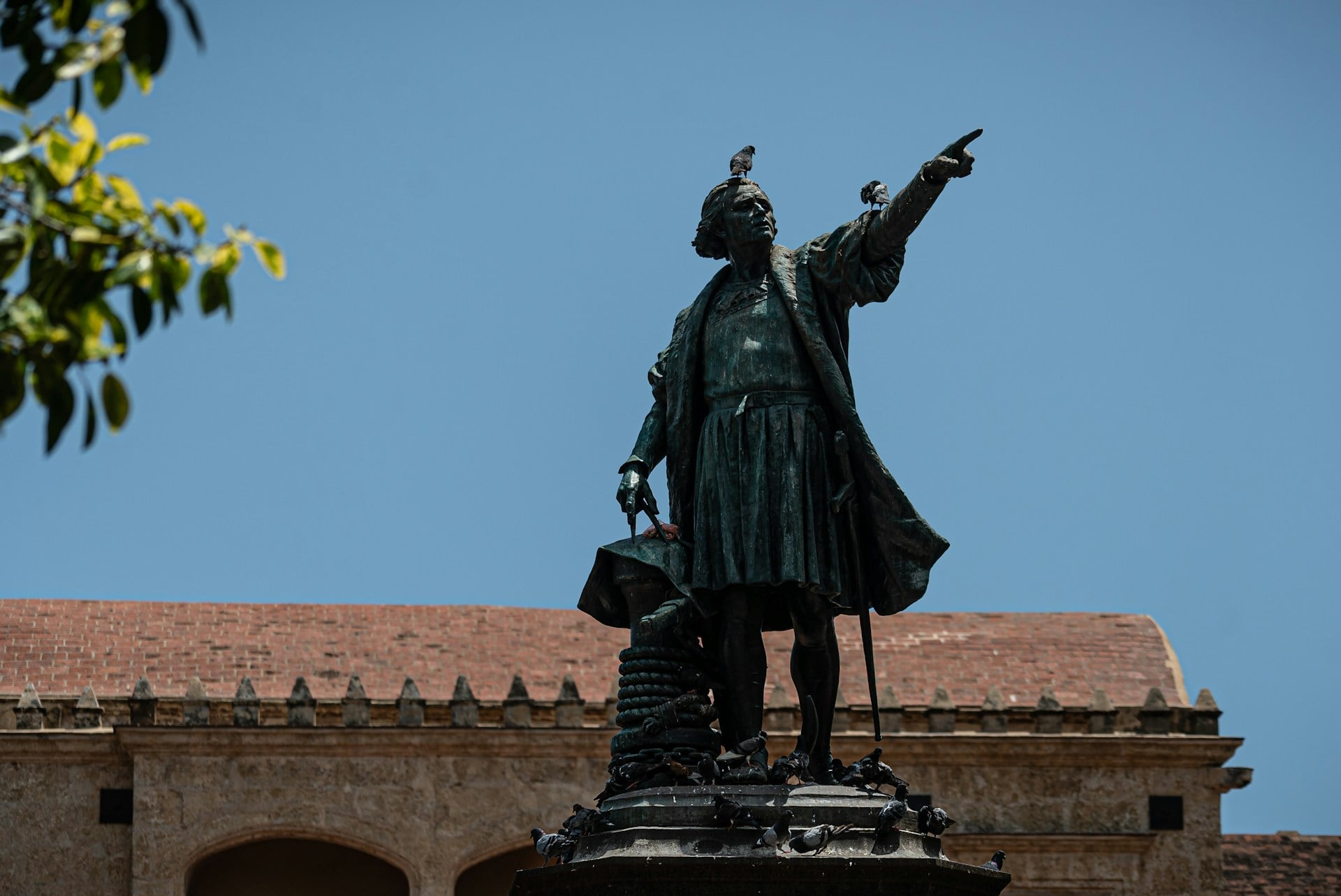
This oversimplified narrative ignores some pretty important details. Indigenous peoples had been living on the continent for thousands of years with thriving civilizations and advanced societies.
Viking explorer Leif Erikson reached North America around 1000 CE, though the Norse settlement at Vinland was temporary and didn’t establish a lasting presence. Columbus himself never actually set foot on what we now call the United States—he landed in the Bahamas and later explored parts of Central and South America.
He believed he’d reached the Indies and held onto this conviction for years, never realizing he’d found a completely different continent.
Einstein Failed Math

Students struggling with math have clung to this myth for comfort, but it’s completely false. The confusion arose partly because Einstein’s school used a reverse grading scale during part of his education, making his excellent marks look poor when viewed without context.
When Einstein heard this rumor, he laughed it off. By age 15, he had already mastered differential and integral calculus.
His academic records show he was a child prodigy, remarkably gifted in mathematics, algebra, and physics. He got high marks in Latin and Greek too.
The only subject that gave him real trouble was French.
George Washington’s Wooden Teeth

The first president definitely didn’t have perfect pearly whites, but his dentures weren’t made from wood. Washington’s false teeth were actually constructed from a combination of gold, hippo ivory, lead, and both human and animal teeth.
The wooden teeth myth, along with the famous cherry tree story about young George confessing he couldn’t tell a lie, came from Mason Locke Weems, his first biographer, who embellished accounts liberally. That cherry tree incident never happened at all—it was pure fiction that somehow became accepted as historical fact.
Pluto Is the Ninth Planet

Anyone who went to school before August 2006 learned that our solar system had nine planets, with tiny Pluto bringing up the rear. That changed when the International Astronomical Union voted on the first formal definition of a planet.
Pluto didn’t make the cut because it hadn’t cleared its orbit of debris, one of the key requirements for full planetary status. The discovery of other similarly sized objects in the Kuiper Belt raised questions about what actually constitutes a planet.
The IAU’s definition has remained debated among astronomers, but Pluto’s status as a dwarf planet has stuck.
The Tongue Taste Map

That diagram showing different taste zones on your tongue was in practically every science textbook. Sweet tastes supposedly registered at the tip, bitter at the back, salty and sour on the sides.
Complete nonsense. Taste buds are actually distributed throughout the entire tongue, and each can detect all five basic tastes, including umami.
This myth originated when psychologist Edwin Boring misinterpreted data from German researcher D.P. Hänig’s work and the error stuck around in educational materials for decades.
We Only Use 10% of Our Brains

This persistent myth suggests we’re all walking around with 90% of our brain power untapped, just waiting to be unlocked. Brain imaging studies have thoroughly demolished this idea.
The brain shows constant low-level activity throughout, though different regions activate more strongly depending on what tasks you’re performing, and some areas actually deactivate during specific functions. About 90% of brain cells are white matter that aren’t used specifically for thinking, but the entire brain is active and necessary for normal function.
Blood Is Blue in Your Veins

Many students were taught that blood turns from blue to red when it hits oxygen. Blood is always red—it’s just darker red when deoxygenated.
The bluish appearance of veins beneath the skin results from how light scatters and gets absorbed as it penetrates tissue, with different wavelengths behaving differently. This misconception was reinforced by textbook diagrams that color-coded veins blue and arteries red for clarity, leading generations of students to believe this was literally true.
Chameleons Change Color for Camouflage

Biology classes often taught that chameleons were the perfect example of adaptive camouflage, but the reality is more nuanced. While some chameleon species do use color changes for camouflage, many primarily shift their skin tones to communicate with each other and regulate body temperature.
They don’t have the ability to match every background they encounter—their color options are limited. The blanket statement that chameleons exist solely as nature’s camouflage artists oversimplifies their complex color-changing abilities.
The Five-Second Rule

Teachers may have discouraged this one, but plenty of students learned it from somewhere and believed it was legitimate science. If food drops on the floor and you grab it within five seconds, it’s supposedly safe to eat.
Bacteria transfer time actually varies based on food moisture—wetter foods pick up more bacteria faster than dry foods. However, contamination can still occur quite rapidly, and using seconds as a definitive measure of food safety was never scientifically sound to begin with.
Swallowed Gum Stays in Your Stomach Seven Years

This myth was probably spread by teachers trying to stop students from chewing gum in class. The seven-year figure is completely fabricated.
Most people empty their stomachs anywhere from 30 to 120 minutes after eating. While gum isn’t fully digested like other foods, it typically passes through the digestive system within a few days rather than lingering for years.
Gastroenterologists occasionally spot gum during procedures, but it’s never been sitting there for seven years.
People in Columbus’s Time Believed Earth Was Flat

Educated people had known for centuries that Earth was round by 1492. Ancient Greek scholar Eratosthenes even calculated Earth’s circumference around 240 BCE with remarkable accuracy.
Columbus wasn’t trying to prove the world was round—he was attempting to demonstrate that sailing west was a viable route from Europe to the Indies. The flat Earth myth might have started with Washington Irving’s fictionalized 1828 biography of Columbus, which invented this dramatic conflict for storytelling purposes.
Vikings Wore Horned Helmets

Those iconic horned helmets that show up in every Viking depiction? Completely made up.
Archaeological finds from the Viking era provide zero evidence that Scandinavian raiders actually wore such headgear. This popular image arose during 19th-century Romantic nationalism and became widespread through costume designs for Richard Wagner’s operas.
The dramatic look proved so visually striking that it stuck in popular imagination despite having absolutely no historical basis whatsoever.
Napoleon Was Short

British propaganda did a number on Napoleon’s reputation, and the ‘short emperor’ myth served their purposes perfectly. Napoleon was measured at 5 pieds 2 pouces in French units, which converts to approximately five feet six or seven inches—completely average for men at the turn of the 19th century.
The confusion arose from differences between French and English measurement systems. The British were happy to let people believe their enemy was a tiny man with delusions of grandeur.
Benjamin Franklin Discovered Electricity
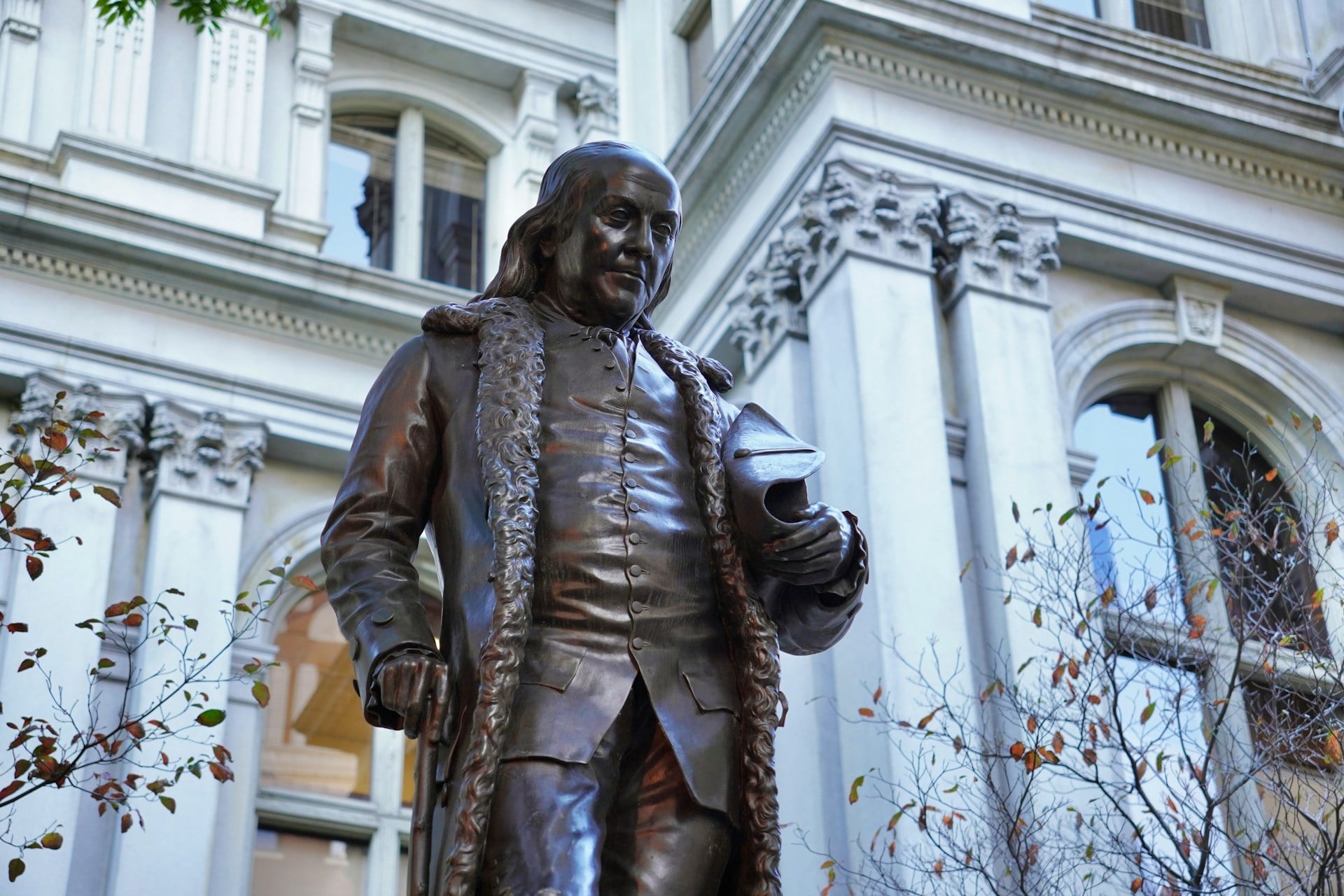
This oversimplification of Franklin’s famous kite experiment has been taught for generations. Franklin didn’t discover electricity—he conducted experiments theorizing about capturing electrical charge.
Some historians now argue the kite experiment as commonly described may have been reconstructed or embellished after the fact, with no contemporary witnesses documenting it exactly as taught. Franklin’s contributions to understanding electricity were significant, but he wasn’t the first person to recognize that electricity existed or to experiment with it.
The Food Pyramid Said Load Up on Carbs

Students who grew up in the 1990s learned nutrition from the 1992 food pyramid, which featured grains as the foundation. While the pyramid didn’t explicitly say to consume most calories from bread and pasta, that became the widespread public interpretation.
The USDA has completely overhauled this guidance, now promoting more balanced proportions. We’ve learned that not all fats are evil, healthy fats are actually essential, and the heavy emphasis on refined grains wasn’t the nutritional wisdom it seemed at the time.
Alexander Graham Bell Invented the Telephone

Bell gets credit in history books, but the story is more complicated than schools taught. Elisha Gray filed a patent caveat for a telephone design on the same day Bell filed his patent, leading to legal disputes about who actually invented it first.
Bell was one of several people working on voice transmission technology simultaneously. What made the difference was that Bell secured the patent, which legally established his claim, but the invention’s origins involve competing innovators and remain historically contentious.
Facts Change, and That’s Actually Okay

The upside of learning that your schooling was based on false information and myths is that it shows you something significant about the nature of knowledge. As we create better instruments and techniques, science advances.
Examining previously overlooked viewpoints helps us gain a deeper understanding of history. The information you were taught wasn’t always false; in many cases, it was the best knowledge at the time.
Learning how to think critically and update your knowledge when new information becomes available is more important than learning static facts.
More from Go2Tutors!

- The Romanov Crown Jewels and Their Tragic Fate
- 13 Historical Mysteries That Science Still Can’t Solve
- Famous Hoaxes That Fooled the World for Years
- 15 Child Stars with Tragic Adult Lives
- 16 Famous Jewelry Pieces in History
Like Go2Tutors’s content? Follow us on MSN.



