Stars You Can Easily Spot at Night
Out past the glow of streetlamps, when the air turns sharp and still, certain points of light claim your attention without warning. Brightness isn’t their only trait – some stay fixed while others seem to shift, even blink.
These standout specks form patterns older than written words. No tools required, just open space and time passing slowly overhead.
Stars stand out not only because they shine bright. Their position matters, so does their hue, along with how often they show up.
Night after night, season to season, these lights stay consistent, helping those who wander, share tales, or simply look up. Spotting even a handful changes everything – suddenly the heavens seem less chaotic, more like an old friend.
Far above, some bright points catch your eye when darkness falls. These aren’t hidden – they show up clearly if you just step outside.
What makes them different? Heat, size, distance, all play roles.
Spotting them needs nothing more than open skies and steady looking. One shines blue-white, another holds a reddish glow.
Patterns form once your eyes adjust. Names come later; first comes recognition.
Distance fades detail, yet brightness tells stories. Look south on clear evenings – you might see the familiar belt of three.
Each point has traveled light across years to reach you. Quiet moments reveal what busy glances miss.
Sirius
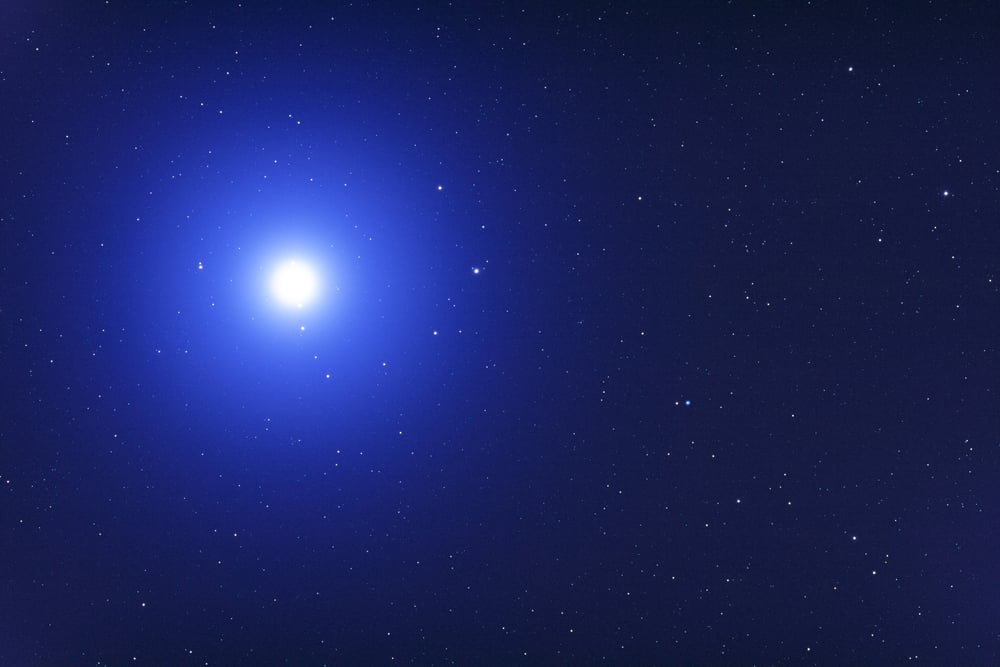
Sirius is the brightest star in the night sky, and once you see it, you’ll understand why it earned the nickname ‘the Dog Star’. It shines with an intense white-blue light and often appears to twinkle dramatically when it’s low on the horizon.
You can usually find Sirius by locating the constellation Orion first. Follow the line formed by Orion’s belt downward and slightly left, and you’ll land on Sirius.
It’s especially prominent during winter evenings in the Northern Hemisphere and summer nights in the Southern Hemisphere. Because of its brightness, Sirius is sometimes mistaken for a planet.
What gives it away is its steady position night after night, even as planets slowly shift.
Canopus

Canopus is the second-brightest star in the night sky, though it isn’t visible from all locations. Observers in the Southern Hemisphere see it clearly, while those farther north may never glimpse it at all.
It appears low in the southern sky and shines with a soft white glow that feels calmer than Sirius. Historically, it was an important navigation star, especially for sailors crossing southern oceans.
If you live in Australia, South Africa, or parts of South America, Canopus is one of the easiest bright stars to recognise once you know where to look.
Arcturus
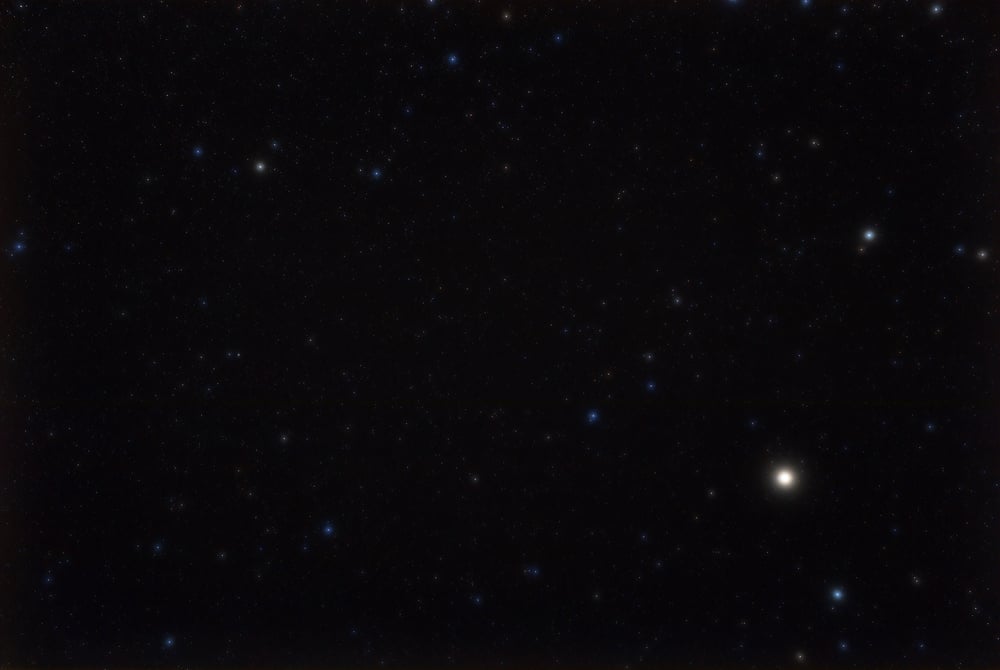
Arcturus stands out because of its warm, orange tint. Unlike most bright stars, which appear white or blue-white, Arcturus has a noticeable color that’s visible even to the unaided eye.
It’s one of the easiest stars to locate because it’s tied to a simple visual trick. Find the Big Dipper, follow the curve of its handle, and you’ll ‘arc to Arcturus’.
The star sits in the constellation Boötes and dominates the spring and early summer sky. Arcturus often looks brighter and steadier than nearby stars, making it an excellent starting point for learning the sky.
Vega
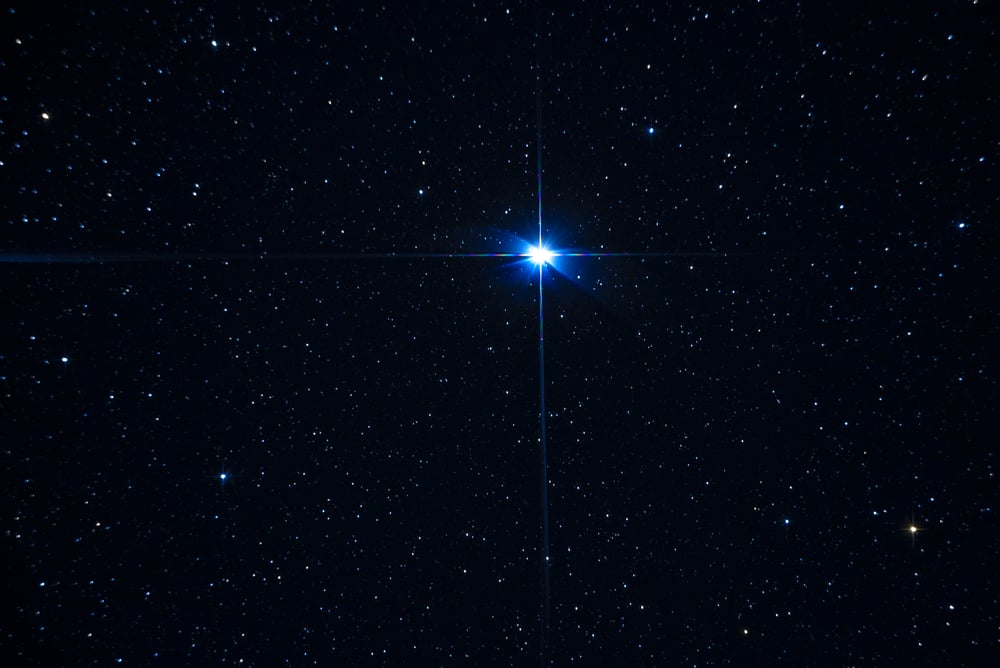
Vega is a brilliant blue-white star that appears almost overhead during summer nights in much of the Northern Hemisphere. Its brightness and position make it hard to miss once the sky darkens.
It forms part of a well-known pattern called the Summer Triangle, along with two other bright stars. Vega is usually the first of the three to catch your eye.
Because it rises high and shines steadily, Vega is often one of the first stars beginners learn to recognise.
Capella

Capella glows with a soft yellow-white light and is most noticeable during fall and winter nights in the Northern Hemisphere. It sits high in the sky, making it visible for long stretches of the night.
Unlike stars that rise and set quickly, Capella appears to circle the sky slowly, giving the impression that it’s always present. This makes it especially easy to spot if you step outside at different times of night.
Its steady brightness and slightly warm tone help distinguish it from cooler-looking stars nearby.
Betelgeuse

Betelgeuse is one of the most visually striking stars because of its reddish-orange hue. It marks one of the shoulders of Orion and contrasts strongly with the constellation’s other bright stars.
The colour is subtle but noticeable, especially when compared to the blue-white stars around it. Betelgeuse also varies slightly in brightness over time, which adds to its character.
Once you find Orion, Betelgeuse becomes an easy landmark and a favorite for first-time stargazers.
Rigel

Opposite Betelgeuse in Orion is Rigel, a bright blue-white star that marks the hunter’s foot. The contrast between Rigel and Betelgeuse makes Orion one of the easiest constellations to recognise.
Rigel shines sharply and cleanly, often appearing brighter than Betelgeuse despite being farther away. It sits lower in the constellation, helping define Orion’s shape clearly.
If you can spot Orion’s belt, Rigel is never far away, anchoring the lower portion of the figure.
Aldebaran
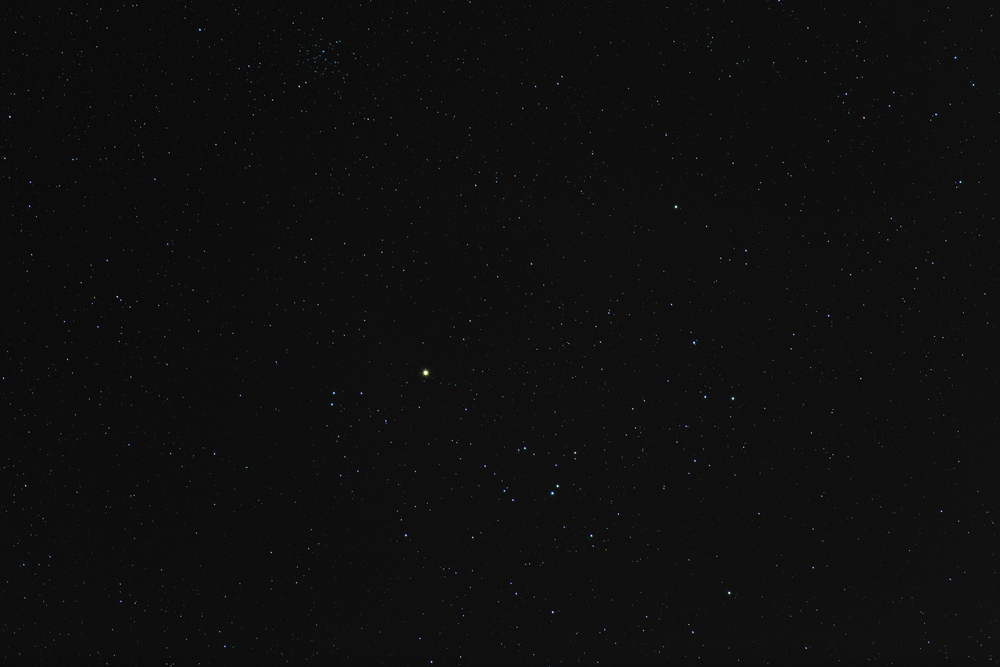
Aldebaran appears as a warm, orange star marking the eye of the Taurus constellation. While it isn’t the brightest star in the sky, its color and position make it easy to identify.
It often appears near a V-shaped cluster of stars, giving Taurus a distinctive outline. Aldebaran’s glow feels softer than nearby bright stars, which helps it stand out once you know what to look for.
During winter months, Aldebaran rises prominently in the evening sky and remains visible for hours.
Antares
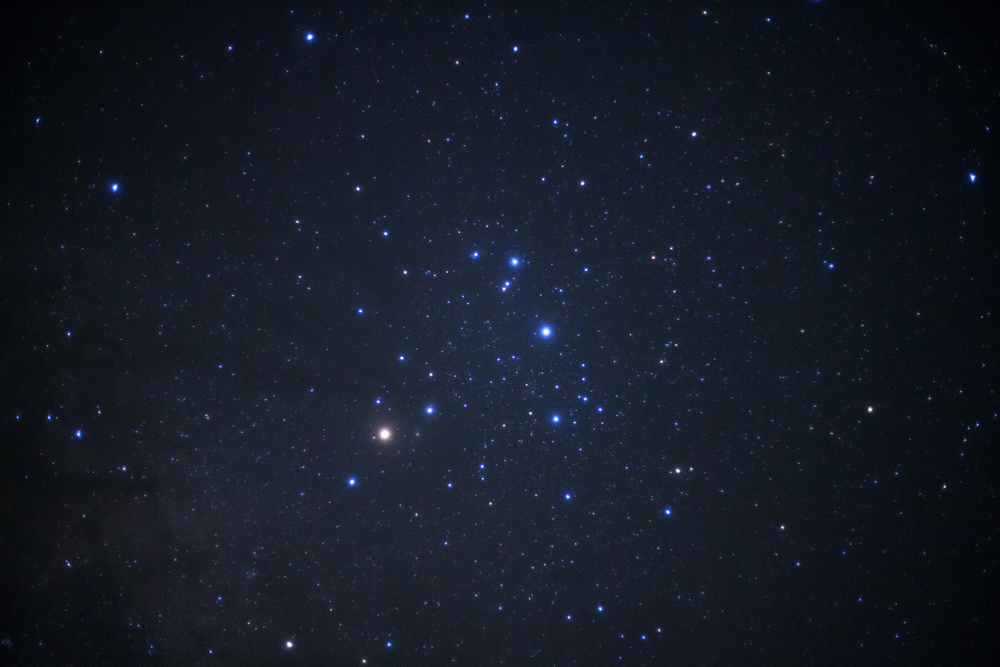
Antares is another reddish star, often compared in colour to Betelgeuse. It sits in the heart of the Scorpius constellation and dominates the southern sky during summer nights.
Its name reflects its rivalry with Mars, as the two can look remarkably similar in color and brightness. The difference is that Antares remains fixed among the stars, while Mars moves gradually over weeks.
In darker skies, Antares becomes the anchor for spotting the curved shape of Scorpius.
Polaris
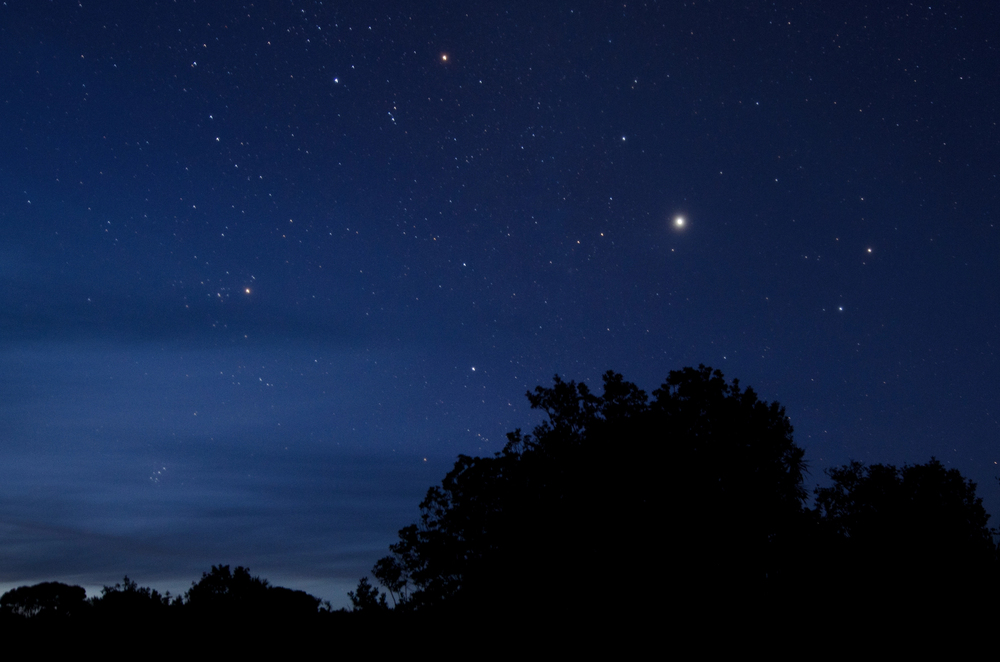
Polaris, also known as the North Star, isn’t the brightest star, but it’s one of the most important. It appears nearly fixed in the sky, marking true north.
To find Polaris, locate the Big Dipper and follow the line formed by its outer bowl stars. Polaris sits at the end of that line and barely moves as the night progresses.
Its steady position makes it invaluable for orientation and one of the first stars many people learn to identify.
Why These Stars Are Easy to See

Brightness plays a major role, but so does context. Stars that sit within well-known constellations are easier to recognise because their patterns guide your eye.
Colour also matters. Red and orange stars stand out because most stars appear white to the unaided eye.
Even a slight tint becomes noticeable once you compare nearby points of light. Finally, consistency helps.
Stars that appear night after night in the same place build familiarity, turning the sky into a map rather than a scatter of dots.
Best Conditions for Spotting Stars

Clear skies make an obvious difference, but light pollution is often the biggest barrier. Even moving a few miles away from city centers can dramatically improve visibility.
Let your eyes adjust to darkness for at least fifteen minutes. Avoid looking at bright screens during that time, as they reset your night vision.
You don’t need perfect darkness to spot the brightest stars. Many of the ones listed here remain visible even from suburban areas.
Why Learning a Few Stars Changes Everything
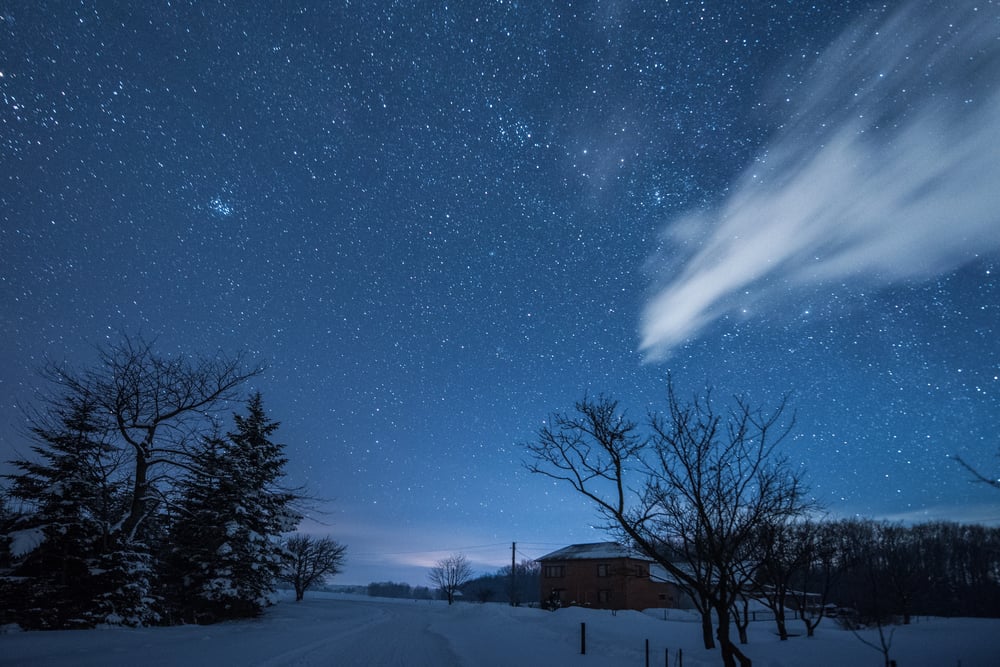
Look up. Spot just a few shining points.
Suddenly, the dark feels less huge. Shapes appear where there was only black.
Paths become clear without maps. These lights start seeming familiar.
Not so far away anymore. Spotting these bright stars opens a path.
Through them, it becomes possible to recognize star patterns, follow the turning seasons, one step at a time. Movement across the months reveals itself slowly, then clearly.
Clouds do not require studying to enjoy. A handful of constellations can turn an ordinary evening into something quiet and deep.
More from Go2Tutors!

- The Romanov Crown Jewels and Their Tragic Fate
- 13 Historical Mysteries That Science Still Can’t Solve
- Famous Hoaxes That Fooled the World for Years
- 15 Child Stars with Tragic Adult Lives
- 16 Famous Jewelry Pieces in History
Like Go2Tutors’s content? Follow us on MSN.