The Best Cars from the 90s and Early 2000s
Cars from the 90s and early 2000s hit differently. They came before everything got complicated with screens and assist systems.
You turned a key, pressed a pedal, and the car responded exactly how you expected it to. No lag. No software updates.
Just metal, rubber, and the road. This era gave us something special.
Japanese manufacturers were pushing boundaries with turbos and tuning potential. European brands were perfecting the sports sedan.
American companies remembered how to build proper performance cars again. The result was a decade and a half of vehicles that people still talk about today.
These cars didn’t just look good or go fast. They had character.
You could feel what the wheels were doing through the steering wheel. Engines screamed instead of humming quietly.
Manual transmissions were standard, not optional extras. And when something broke, you could actually fix it yourself.
Honda NSX: When Japan Built a Supercar

Honda looked at Ferrari and Porsche in 1990 and decided they could do better. The NSX proved they were right.
This mid-engine supercar used an all-aluminum body and chassis when most manufacturers still relied on steel. The engine was a 3.0-liter V6 that revved to 8,000 rpm with titanium connecting rods.
Ayrton Senna allegedly helped develop the handling. Whether that’s entirely true or good marketing, the NSX drove like nothing else from Japan at the time.
It cornered flat, felt balanced, and didn’t try to kill you when you pushed hard. Ferrari owners complained their cars were unreliable.
NSX owners never worried about that. The interior was simple but functional.
Everything fell to hand naturally. The visibility was excellent for a supercar.
You could drive it daily without destroying your back or your wallet. Honda proved that exotic performance didn’t require exotic maintenance costs.
Values have climbed steadily over the years. Clean examples now sell for serious money.
The NSX demonstrated that Japanese engineering could compete at the highest level of performance cars.
Mazda Miata: The Roadster That Never Quit
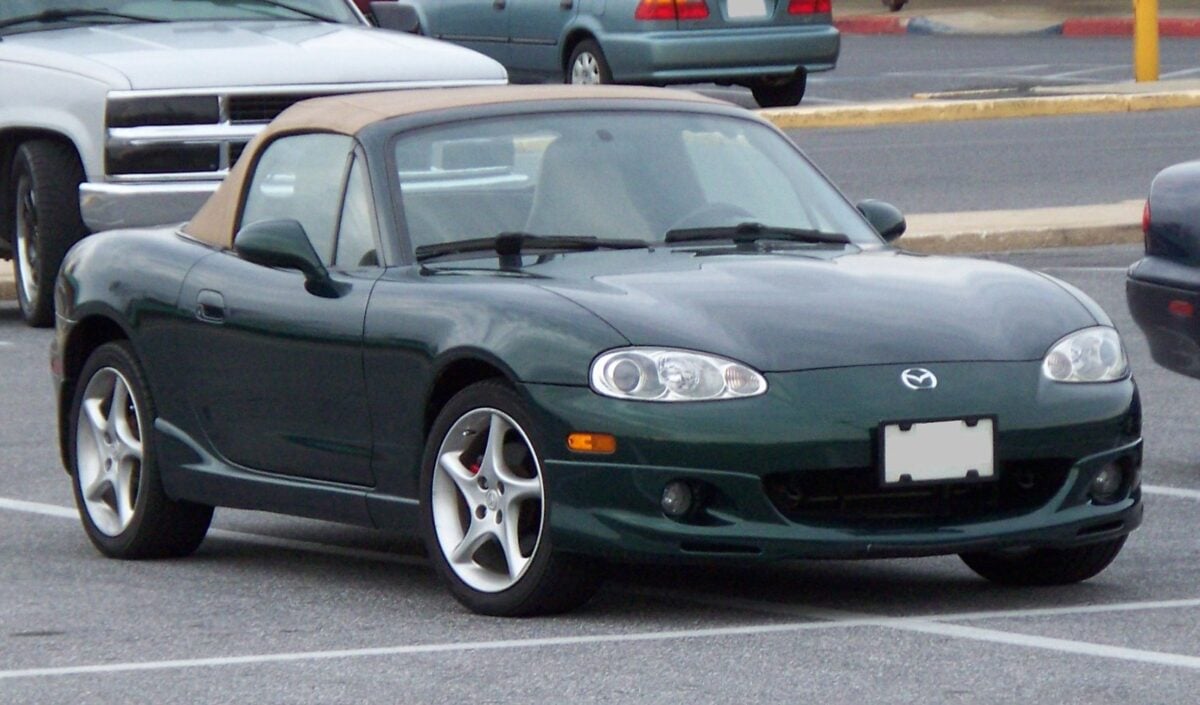
Mazda introduced the Miata in 1990 and single-handedly revived the affordable roadster. British sports cars from the 60s inspired the design.
Pop-up headlights, rounded curves, and rear-wheel drive created something that looked fun before you even turned it on. The first Miatas came with a 1.6-liter engine making 116 horsepower.
That sounds pathetic until you drive one. The car weighs practically nothing.
The 50/50 weight distribution means it rotates through corners naturally. The short-throw manual transmission clicks into gear perfectly every time.
You don’t buy a Miata to go fast in a straight line. You buy it because driving becomes an event.
Every corner is fun. Every on-ramp is an excuse to rev it out.
The engine isn’t powerful enough to get you in serious trouble, so you can explore the handling without fear. Reliability matches any Honda.
The car starts every time, doesn’t leak, and runs forever with basic maintenance. British roadsters from decades earlier promised the same fun but spent more time broken than working.
Mazda figured out how to make a fun sports car that actually worked.
Toyota Supra: The Tuner’s Dream

The fourth-generation Supra arrived in 1993 with a 3.0-liter inline-six that Toyota strapped two turbos to. The 2JZ-GTE engine made 320 horsepower from the factory.
That number was conservative. The real output was higher.
But factory power wasn’t why people loved the Supra. The engine could handle absurd amounts of boost without exploding.
Tuners discovered they could push 500, 700, even 1000 horsepower with the right modifications. The inline-six design was nearly bulletproof.
The Supra looked aggressive without being cartoonish. Wide rear haunches, a long hood, and that distinctive rear spoiler made it recognizable from a distance.
The interior felt more like a luxury car than a sports car, with automatic climate control and a digital dash. Values went insane after the Fast and Furious movies featured one.
What sold for $30,000 in the early 2000s now goes for triple that or more if it’s clean and stock. Finding an unmolested Supra has become nearly impossible.
Most got modified heavily by previous owners chasing more power.
Nissan 300ZX: Twin Turbo Technology

Nissan’s Z32 300ZX from 1990 packed serious technology into a sleek coupe body. The twin-turbo V6 made 300 horsepower, which was massive for the time.
But the real trick was the four-wheel steering system that helped the car corner better than physics suggested it should. The design aged incredibly well.
Narrow front end, tall rear, and smooth curves created a shape that still looks contemporary decades later. The interior leaned more toward luxury than sport, with comfortable seats and good ergonomics.
Working on a 300ZX challenges even experienced mechanics. The engine bay is packed tight. Simple maintenance becomes complicated when you need three hours to change spark plugs.
This complexity scared off many potential buyers, keeping values relatively reasonable compared to the Supra. The 300ZX proved Nissan could compete with any sports car manufacturer in the world.
It won awards, earned respect, and demonstrated that Japanese sports cars had moved beyond cheap and cheerful into serious performance territory.
BMW E39 M5: The Perfect Sport Sedan

BMW released the E39 M5 in 1999 and created what many consider the greatest sport sedan ever built. A naturally aspirated V8 making 400 horsepower lived under the hood.
The engine revved freely and sounded incredible doing it. The E39 balanced luxury and performance perfectly.
Soft leather seats, wood trim, and tech features made it comfortable for daily driving. But the suspension tuning, precise steering, and near-perfect weight distribution meant it carved corners like a much smaller car.
BMW kept the design conservative. No wild body kits or massive spoilers.
Just subtle M badges and quad exhaust tips. The car could pass as a regular 5 Series until you opened it up and the V8 started singing.
Reliability proved better than later M cars. The S62 engine had its issues, but nothing catastrophic if maintained properly.
Finding clean examples under $20,000 is still possible, though prices are climbing as people realize what they’re losing. The E39 M5 came at the perfect moment.
Modern enough to be reliable and comfortable, old enough to have hydraulic steering and no intrusive electronic systems. It’s why enthusiasts still call it the high-water mark for sport sedans.
BMW E46 M3: The Last Great M Car

The E46 M3 arrived in 2001 with a naturally aspirated inline-six that revved to 8,000 rpm. The S54 engine made 338 horsepower and sounded like nothing else.
You could option it with a six-speed manual or a sequential manual gearbox that nobody wanted. BMW nailed the styling.
The E46 looked aggressive without trying too hard. Wider fenders, a quad-pipe exhaust, and those distinctive side mirrors communicated what the car was without shouting about it.
The proportions just worked. The handling was sharp but controllable.
You could push hard without feeling like the car was about to bite you. The steering provided real feedback.
The chassis stayed balanced through corners. Everything about the driving experience felt natural and connected.
Values have climbed significantly. What sold for $15,000 a decade ago now commands $40,000 or more if it’s clean and manual.
The E46 M3 represents the last time BMW built an M car focused purely on driving experience rather than numbers.
Mazda RX-7 FD: Rotary Power

The third-generation RX-7 appeared in 1993 with curves that made people stop and stare. Mazda designed a body that looked like it was moving while standing still.
Pop-up headlights and smooth lines created one of the best-looking sports cars of the decade. The rotary engine separated the RX-7 from everything else.
Twin turbos pushed the 1.3-liter rotary to 255 horsepower. The engine revved easily and delivered power smoothly.
But rotary engines are weird. They use oil by design, require careful maintenance, and don’t last as long as piston engines.
The RX-7 weighed almost nothing. Combined with excellent suspension tuning, this made it handle like a go-kart.
The car rotated through corners naturally and rewarded smooth inputs. Racing versions dominated their class.
Finding a clean FD RX-7 is tough. Many got modified heavily or poorly maintained.
The ones that survived in good condition now sell for serious money. Values keep climbing as people realize how special these cars were.
Dodge Viper: American Excess

Dodge released the Viper in 1992 as an answer to European exotics. The solution was simple: take a massive V10 truck engine, stick it in a lightweight body, and add no driver aids whatsoever.
The result was brutal. The first Vipers made 400 horsepower from an 8.0-liter V10.
No traction control. No anti-lock brakes.
Barely any windows. The car would absolutely try to kill you if you weren’t paying attention.
The long hood, side exhaust pipes, and wide stance looked menacing because it was menacing. Driving a Viper demanded respect.
The power came on hard and the rear end would step out without warning if you weren’t smooth. But when you got it right, the acceleration felt violent in the best way possible.
The V10 sounded like thunder. You can still find early Vipers for $40,000 or less.
That’s an absurd amount of American muscle for not much money. Later GTS models with the hardtop cost more but look even better.
Either way, owning a Viper means accepting that comfort and convenience aren’t part of the package.
Acura Integra Type R: Honda’s Hot Hatch

Acura brought the Integra Type R to America in 1997. Honda took the regular Integra and stripped weight, upgraded the suspension, and tuned the B18C5 engine to perfection. The result was 195 horsepower from a 1.8-liter four-cylinder that revved to 8,400 rpm.
The Type R weighed under 2,700 pounds. Honda achieved this by removing sound deadening, using thinner glass, and deleting unnecessary features.
The suspension sat lower and stiffer than the standard Integra. The front-wheel drive handling was sharp and responsive.
VTEC kicked in around 6,000 rpm and the engine would scream to redline. The five-speed manual had short, precise throws.
The seats hugged you tight. Everything about the car felt focused on driving.
Thieves loved the Integra Type R as much as enthusiasts did. Many got stolen and parted out.
Finding an original, unmolested example is nearly impossible now. The few that survived in stock condition sell for investment-level prices.
What cost $24,000 new can bring $80,000 or more if it’s pristine.
Porsche 911 (964 and 993): Air-Cooled Perfection

The 964-generation 911 ran from 1989 to 1994, marking one of the last truly analog Porsches. The 993 that followed from 1995 to 1998 refined the formula further.
Both represent peak air-cooled 911 design before water cooling took over. The 964 came with all-wheel drive as an option, a first for the 911.
The suspension improved over earlier models. The interior got modernized while keeping the classic 911 layout.
But it still had that distinctive flat-six engine mounted out back, ready to spin you backward if you lifted mid-corner. The 993 improved the design and fixed most of the 964’s issues.
The rear suspension finally worked properly. The exterior looked more cohesive.
Build quality increased. But it retained the air-cooled engine and that special 911 character that made them so engaging to drive.
Values for both models have exploded. Clean 964s easily cross six figures.
The rarest 993 variants approach or exceed a million dollars. Even base models cost serious money now.
The air-cooled 911 market went from affordable classic to investment-grade collectible in just a few years.
Chevrolet Corvette C5: American Sports Car

Chevrolet redesigned the Corvette for 1997 with the C5 generation. The new car looked more modern than the aging C4 it replaced.
Rounded curves and sleeker proportions moved away from the boxy 80s styling. Flip-up headlights disappeared in favor of fixed units.
The base engine was a 5.7-liter V8 making 345 horsepower. Later Z06 models pushed that to 385 horsepower with more aggressive tuning.
The C5 used a transaxle layout, putting the transmission in the back for better weight distribution. The result was a car that handled far better than previous Corvettes.
Performance was strong for the price. The C5 could hit 60 mph in under five seconds and top out around 175 mph.
All while costing a fraction of what European sports cars demanded. The interior quality remained questionable, but nobody bought a Corvette for the dashboard.
You can find C5 Corvettes for under $20,000 now. That’s incredible value for a legitimate sports car with a V8 and proper handling.
Maintenance is cheap compared to imports. Parts are everywhere.
The C5 proves you don’t need European badges for real performance.
Ford Mustang SVT Cobra: The Snake Returns

Ford’s Special Vehicle Team created the SVT Cobra to give the Mustang serious performance credibility. The 1999-2004 models came with a 4.6-liter V8 that made between 320 and 390 horsepower depending on the year.
The 2003-2004 Cobra featured a supercharged version making 390 horsepower and 390 lb-ft of torque. That was massive power for the time, especially in something that cost under $40,000 new.
The supercharger whine combined with the V8 rumble created an addictive soundtrack. The Cobra handled better than standard Mustangs thanks to upgraded suspension, bigger brakes, and wider tires.
It still felt like a muscle car rather than a sports car, but the power made up for any handling compromises. Straight-line acceleration was brutal.
Finding clean examples isn’t hard and prices remain reasonable. The Cobra proved Ford could build a performance Mustang that competed with cars costing twice as much.
Modern Mustangs are faster, but they lack some of the raw character these Cobras had.
Honda Civic Si: Affordable Performance
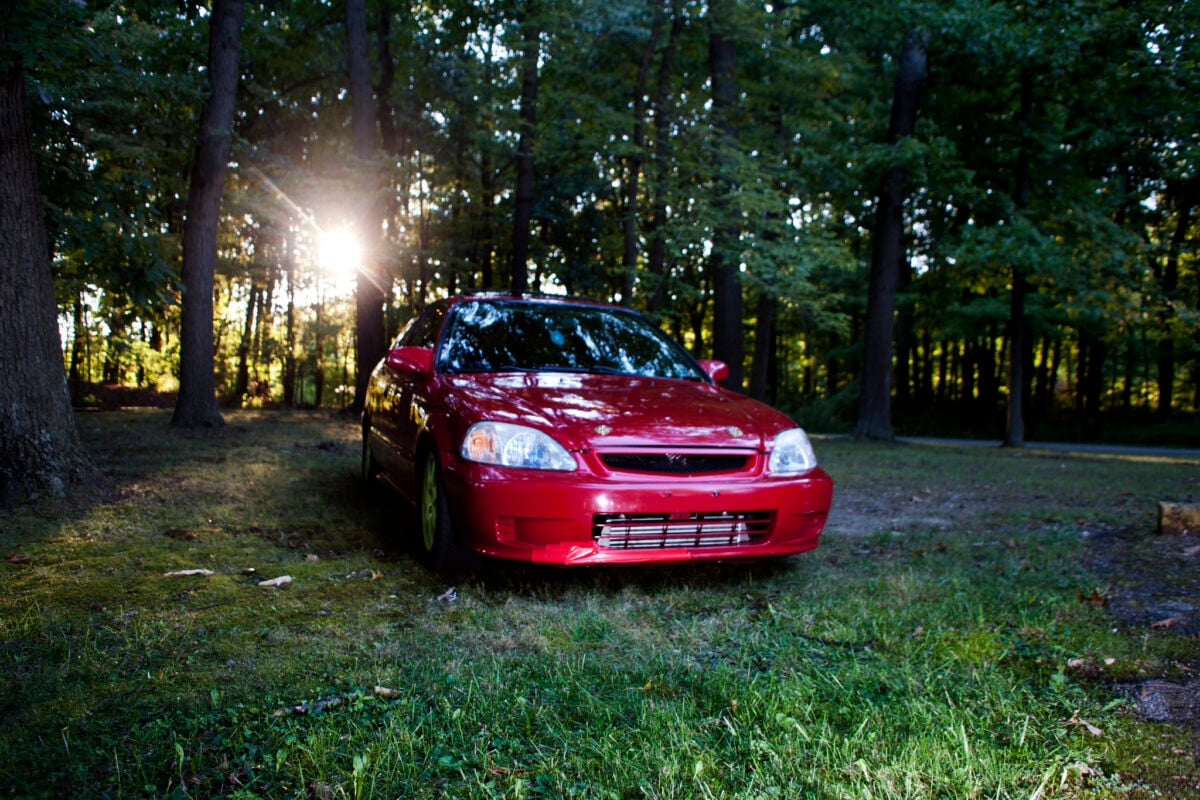
The fifth and sixth generation Civic Si models from 1999-2000 packed Honda’s excellent engineering into an affordable package. The 1.6-liter VTEC engine made 160 horsepower, which sounds modest until you consider the car weighed barely 2,500 pounds.
VTEC meant the engine had two distinct personalities. Below 6,000 rpm it felt normal and docile.
Then VTEC engaged and the engine screamed to 8,000 rpm with a distinctive roar. The five-speed manual had perfectly spaced ratios.
The suspension balanced comfort and handling well enough for daily driving and weekend fun. The Civic Si costs under $20,000 new.
You got proper performance with Honda reliability and efficiency. Insurance stayed cheap because it was still just a Civic.
This made it perfect for younger drivers who wanted something fun but couldn’t afford insurance on a real sports car. Many got modified heavily over the years. Finding a stock example requires patience.
But even modified ones remain affordable and parts are everywhere. The Civic Si proved you didn’t need big power or rear-wheel drive to have fun.
When Cars Were Still Cars
Few experiences nowadays come close to the unfiltered response these vehicles gave. The driver slipped into step with the car, almost without noticing.
Through the steering wheel came every detail – cracks in the road, traction holding, tires sliding loose. Every time the accelerator moved, so did the speed, right away.
Noise built up gradually, matching each rise in engine speed. Heavy metal now moves fast, yet somehow hides its soul beneath shiny surfaces.
Thanks to turbocharged engines teamed with automatic transmissions, getting around is effortless. Error-correcting systems step in before you even notice a slip.
Earlier models did not interfere. They made you fight the road, feel every bump, own every slide.
It’s why people still search so hard. Not every old car feels alive, but a twenty-five-year-old Miata does – more than many new speed machines.
Even with 150,000 miles, an E39 M5 moves from owner to owner like something priceless. These cars didn’t cushion the world; they connected it, demanding attention while replying with honesty whenever challenged.
Every day it gets worse, yet people recall what vanished. With more wanting them, fewer deals remain because the need just rises.
Even so, if the price jumps too far, the past sticks clear. These tools are built to make driving seem deeper, but they never seize control.
The last of the machines roared before silence took over. Those days held a kind of grace few noticed at the time.
More from Go2Tutors!

- The Romanov Crown Jewels and Their Tragic Fate
- 13 Historical Mysteries That Science Still Can’t Solve
- Famous Hoaxes That Fooled the World for Years
- 15 Child Stars with Tragic Adult Lives
- 16 Famous Jewelry Pieces in History
Like Go2Tutors’s content? Follow us on MSN.