The Forgotten Sports Legends Who Shaped Modern Games
The big names are familiar to all sports fans. Basketball was transformed by Michael Jordan.
Babe Ruth had a lasting impact on baseball. Muhammad Ali was more than just a boxer.
However, for every well-known figure in sports history, there are dozens of trailblazers whose work subtly influenced the modern games we enjoy. These athletes did more than just play; they broke down barriers that seemed insurmountable at the time, forced leagues to revise their rulebooks, and created strategies that champions still employ today.
The majority of them never received the credit they were due. Decades of highlight reels with more glamorous stars overshadowed their stories.
However, contemporary sports would be entirely different without these lost greats. These 14 athletes, who altered the course of history, are rarely given credit.
George Mikan

Before the three-point line and before the shot clock, there was George Mikan—a 6’10” giant who was so dominant that basketball had to reinvent itself around him. Playing for the Minneapolis Lakers in the late 1940s and early 1950s, Mikan would park himself near the basket and score at will.
Defenders couldn’t stop him without fouling, and the game became painfully slow. The NBA widened the lane from six feet to twelve feet in 1951 just to keep him farther from the hoop.
His dominance also contributed to teams stalling rather than facing him, which helped push the league toward introducing the shot clock in 1954 to speed up the game overall. Think of him as the guy who made basketball stop looking like a chess match and start looking like the fast-paced game we know today.
Leroy Edwards

Standing 6’5″ in the 1930s made Leroy Edwards a tower among men. Playing in the National Basketball League, Edwards would camp out in the paint and dominate games by simply refusing to leave the key.
His strategy was brutally effective and equally boring to watch. The league responded by creating the three-second rule in 1936, which prevented offensive players from staying in the restricted area for more than three seconds.
This single rule opened up the game, forcing players to move and creating the fluid style of play that defines modern basketball. Edwards essentially forced basketball to become more creative.
Like Go2Tutors’s content? Follow us on MSN.
Bill Russell

Bill Russell didn’t just win eleven championships with the Boston Celtics—he redrew the court. During his college days at the University of San Francisco, Russell averaged over 20 points and 20 rebounds per game by exploiting his 6’9″ frame and extraordinary athleticism.
He’d post up close to the basket and wait for teammates to launch passes high above defenders, where he’d simply finish at the rim. After Russell led his team to back-to-back national championships in the mid-1950s, the NCAA expanded the free-throw lane to twelve feet in 1956.
They widened the key to limit where Russell could set up shop, fundamentally changing offensive strategy for generations.
Kareem Abdul-Jabbar
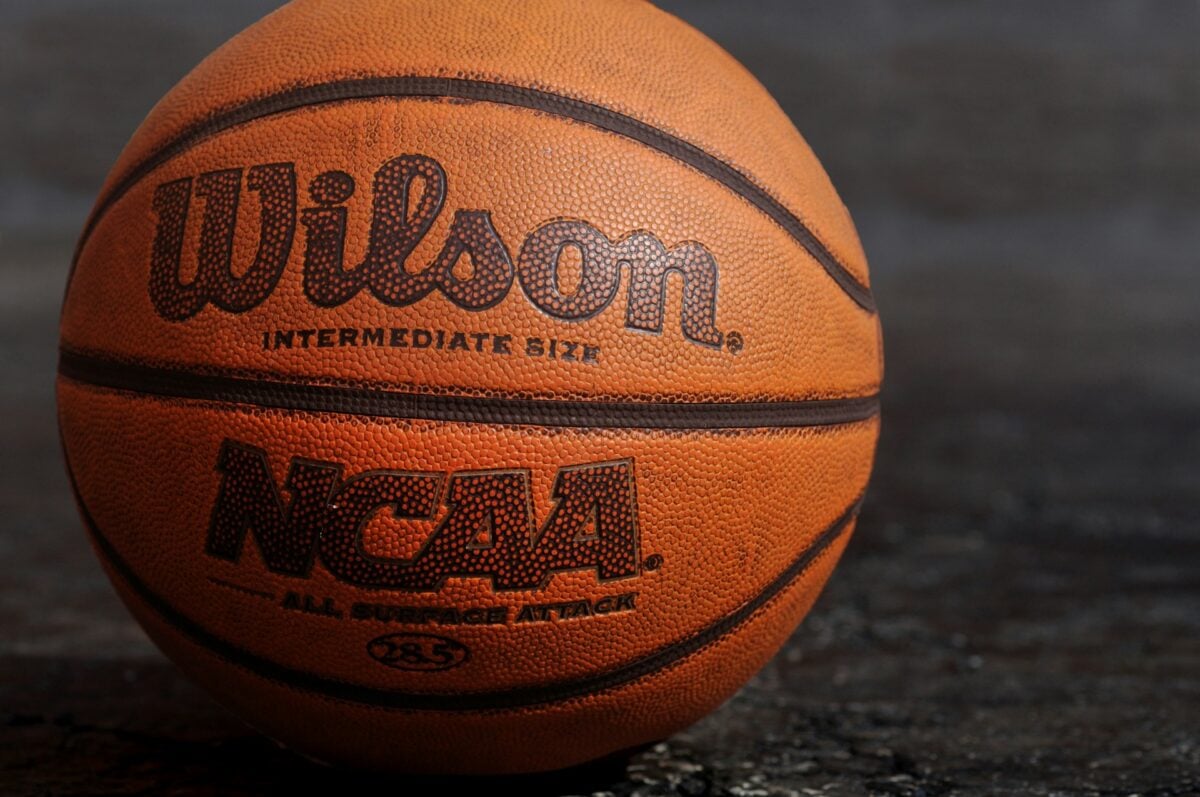
The dunk was so synonymous with Kareem Abdul-Jabbar during his UCLA days in the 1960s that the NCAA just banned it entirely. At 7’1″, dunking was barely an effort for him, and he was steamrolling opponents on his way to consecutive national championships.
The NCAA’s solution was to outlaw dunking altogether from 1967 to 1976, forcing Kareem to develop his famous skyhook—arguably the most unstoppable shot in basketball history. The ban didn’t slow him down one bit, proving that true legends adapt.
When the NCAA finally lifted the ban, they’d already created one of the game’s most iconic moves out of pure necessity.
Ray Mancini

This is the only story on this list that nobody wants to celebrate, but it changed boxing forever. Ray ‘Boom Boom’ Mancini was a devastating puncher who won 23 of his 29 fights by knockout.
In 1982, he defended his lightweight title against South Korean fighter Kim Duk-koo in a brutal 14-round bout. Mancini won by technical knockout, but seconds after the fight ended, Kim collapsed into a coma and died four days later.
The tragedy sent shockwaves through boxing, and in the months that followed, referee Richard Green took his own life. This horrific sequence forced every major boxing organization to reduce championship fights from 15 rounds to 12 rounds in 1983, a rule that remains today.
Like Go2Tutors’s content? Follow us on MSN.
Fosbury
High jumpers used to approach the bar from the front and roll over it face-down, a technique that looked athletic but had clear limitations. Then Fosbury showed up at the 1968 Olympics in Mexico City and went over the bar backward, landing on his back in a technique so strange that people thought he was joking.
He won gold, and within a decade, nearly every elite high jumper had adopted the ‘Fosbury Flop.’ Today, you’d be hard-pressed to find anyone using the old method.
Fosbury took a technique that looked ridiculous and turned it into the standard, proving that innovation doesn’t always come in a pretty package.
Jim Thorpe
If you’re looking for the definition of a multi-sport legend, Jim Thorpe is it. He won gold in both the decathlon and pentathlon at the 1912 Olympics, though his medals were later stripped because he’d played semi-professional baseball, violating the amateur-only rules of the time.
The Olympic Committee partially restored them in 1982, but it wasn’t until 2022—nearly 70 years after his death—that they were fully reinstated. Thorpe also played professional baseball from 1913 to 1919 and became one of pro football’s biggest stars in the 1920s.
He even served as the first president of what would become the NFL. Despite all this, most casual sports fans today couldn’t tell you much about him.
Bo Jackson

Bo Jackson was a freak of nature who made playing two professional sports at the highest level look easy. He won the Heisman Trophy in 1985 playing college football at Auburn, then simultaneously played for the NFL’s Los Angeles Raiders and MLB’s Kansas City Royals.
In 1989, he hit a leadoff home run in the MLB All-Star Game and won MVP honors. A year later, he made the NFL Pro Bowl.
Jackson’s career ended tragically with a hip injury in his late twenties, but his dual dominance remains unmatched. Nike built an entire ‘Bo Knows’ advertising campaign around him, and for good reason—the man genuinely seemed capable of mastering any sport he touched.
Like Go2Tutors’s content? Follow us on MSN.
Deion Sanders

Deion ‘Prime Time’ Sanders is the only athlete to ever play in both a Super Bowl and a World Series, but even that undersells his absurdity. On October 11, 1992, Sanders played in an NFL game for the Atlanta Falcons during the day, then boarded a private jet to join the Atlanta Braves in Pittsburgh for a playoff game that same night.
He competed in professional football from 1989 to 2005 and professional baseball from 1989 to 2001, making him the longest-tenured two-sport professional athlete in history. Sanders was a shutdown cornerback in football and a legitimately dangerous base stealer in baseball, leading the National League with 14 triples in 1992.
Dr. Frank Jobe

You’ve heard of Tommy John surgery, but have you heard of Frank Jobe? Probably not, and that’s exactly the problem. Jobe was the Los Angeles Dodgers’ team doctor for over 50 years, and in 1974, he performed a groundbreaking ulnar collateral ligament reconstruction on pitcher Tommy John that saved his career—and eventually thousands of other pitchers.
Before Jobe perfected this procedure, a torn elbow ligament meant retirement. He took a ligament from John’s forearm and used it to replace the torn one in his elbow, allowing John to pitch for 14 more seasons.
This surgery is now so routine that people forget it didn’t exist half a century ago.Jobe changed sports medicine, but Tommy John got his name on the procedure.
Althea Gibson

Althea Gibson didn’t just play tennis—she smashed through racial barriers with the force of a champion. On August 25, 1950, she became the first African American to compete at the US National Championships, breaking the color line just as Jackie Robinson had done in baseball three years earlier.
Gibson went on to win 11 Grand Slam titles, including becoming the first Black athlete to win Wimbledon in 1957 and the US Open. She did all this while facing segregation, hostile crowds, and a tennis establishment that didn’t want her there.
Robinson gets remembered as a trailblazer, and rightfully so, but Gibson deserves the same reverence.
Like Go2Tutors’s content? Follow us on MSN.
Don Barksdale

Jackie Robinson broke baseball’s color barrier in 1947, and one year later, Don Barksdale became the first African American to represent the United States in Olympic basketball at the 1948 London Games. Barksdale played alongside nine players from the American South and was coached by Adolph Rupp, a man with a notorious reputation for racism.
During training in segregated Oklahoma and Kentucky, Barksdale faced varying levels of hostility but persevered. He went on to play in the NBA starting in 1951 and became the first Black NBA All-Star in 1953.
Robinson’s name is legendary, but Barksdale’s pioneering role in basketball has been almost entirely forgotten.
Willie O’Ree
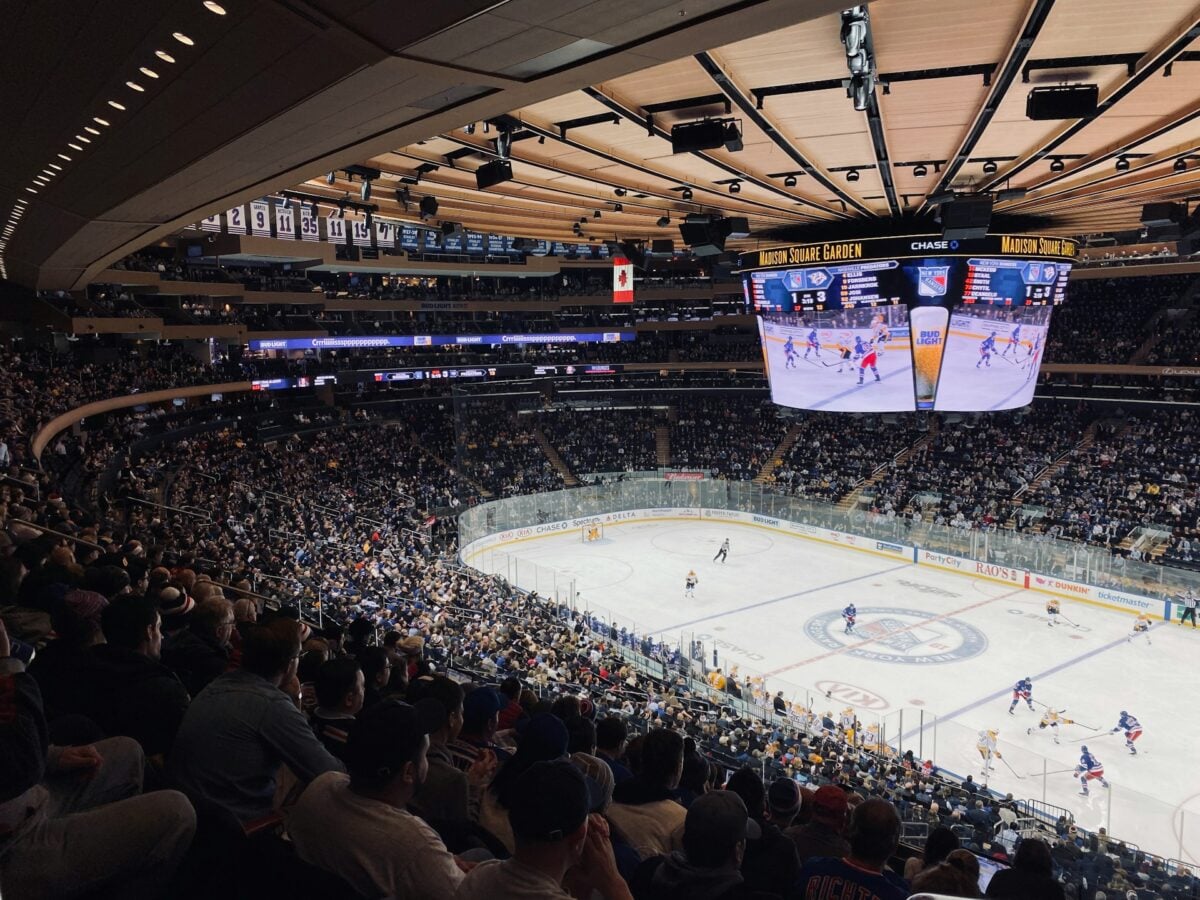
On January 18, 1958, Willie O’Ree became the first Black player in the NHL when he took the ice for the Boston Bruins against the Montreal Canadiens. What makes his achievement even more remarkable is that he’d lost vision in his right eye three years earlier after being hit by a deflected slapshot—a fact he kept secret throughout his career.
O’Ree played just 45 NHL games across two seasons, scoring four goals, but his impact went far beyond statistics. He endured racist taunts and hostility in nearly every arena he played in, yet he opened a door that had been firmly shut for Black hockey players.
Fanny Blankers-Koen

At the 1948 London Olympics, Fanny Blankers-Koen shattered every assumption about what female athletes could achieve. The Dutch runner was 30 years old and a mother of two—ancient by athletic standards and burdened by societal expectations that women should focus on family, not competition.
She won four gold medals in track and field, proving that women could compete at the highest levels regardless of age or motherhood. Her victories challenged the pseudoscientific claims that dominated women’s sports at the time, yet her name rarely appears in conversations about the greatest Olympians.
She deserves better.
Like Go2Tutors’s content? Follow us on MSN.
The Game Hasn’t Forgotten Them

The athletes on this list did not amass countless endorsement deals or dominate back pages. Some experienced racism, some were born in the wrong time period, and some simply had the bad luck of being overshadowed by more well-known figures.
However, their influence can be seen in every aspect of contemporary sports, including the regulations we adhere to, the methods we instruct, and the obstacles we no longer hesitate to overcome. They demonstrated that being the most well-known person in the game is not necessary to change it, and that greatness isn’t always loud.
Even though the highlight reels are long gone, these legends had a significant impact on sports that endures today.
More from Go2Tutors!

- 16 Historical Figures Who Were Nothing Like You Think
- 12 Things Sold in the 80s That Are Now Illegal
- 15 VHS Tapes That Could Be Worth Thousands
- 17 Historical “What Ifs” That Would Have Changed Everything
- 18 TV Shows That Vanished Without a Finale
Like Go2Tutors’s content? Follow us on MSN.