The Oldest Messages Ever Found in Bottles
You toss a bottle into the ocean. The waves take it.
Years pass. Decades.
Maybe a century. Then someone finds it, miles away or right where you started.
The message inside connects two strangers across impossible distances and time. Some bottles float for just a few months before washing ashore.
Others spend generations drifting through ocean currents, buried in sand, trapped on the seafloor. The oldest ones tell stories that reach back through world wars, scientific expeditions, and quiet moments of hope from people who never imagined their words would survive so long.
A Note Hidden Under Scottish Floorboards

In November 2022, plumber Peter Allan cut through a floor in an Edinburgh home during routine renovations. His saw revealed something unexpected: a glass bottle wedged beneath the boards.
Inside sat a rolled note that had been there for 135 years. The message came from 1887.
Two men had been working on the house and decided to leave a record of their presence. They wrote about the work they were doing, signed their names, and tucked the note into the bottle before sealing it under the floor.
When the homeowner Eilidh Stimpson saw what Allan had found, she realized they had stumbled onto something remarkable. The note wasn’t from the ocean.
Some people argue that makes it just a time capsule, not a true message in a bottle. That debate misses the point.
These workers wanted someone in the future to know they existed. They used a bottle to preserve their message.
The method worked for 135 years.
The Paula’s 132-Year Journey

Tonya Illman was walking along Wedge Island in Western Australia when she spotted what looked like an old bottle half-buried in sand. The date was January 21, 2018. She picked it up, thinking it would make a nice decoration for her home.
Her son’s girlfriend noticed something inside when she tried to empty out the sand. A rolled piece of paper, damp and fragile.
They dried it carefully in the oven. When they finally unrolled it, they could make out a date: June 12, 1886.
The note was part of a German naval experiment. For decades, German ships threw thousands of bottles into the ocean to study currents and map shipping routes.
Each bottle contained a form asking the finder to record when and where they found it, then send it back to the German Naval Observatory in Hamburg. Captain O. Diekmann of the sailing vessel Paula had thrown this particular bottle overboard while traveling from Cardiff to Indonesia.
The printed form had spaces for coordinates, ship details, and dates. Researchers later found Paula’s original logbook in German archives.
The captain’s handwriting on the bottle matched his entries in the journal perfectly. The coordinates lined up exactly.
The bottle spent 131 years and 223 days at sea before Illman found it. Researchers believe it washed ashore within a year or two of being tossed overboard, then got buried in damp sand that preserved it.
A storm surge more than a century later finally uncovered it.
Captain Brown’s Floating Laboratory

Andrew Leaper was hauling in fishing nets near the Shetland Islands in April 2012 when he noticed a bottle tangled in the rope. The bottle was thick glass, specially designed to sink and drift along the seafloor rather than float on the surface.
Inside was a postcard from June 10, 1914. Captain C. Hunter Brown of the Glasgow School of Navigation had thrown the bottle overboard along with 1,889 others. He wanted to map deep ocean currents around Scotland.
The postcards promised a reward of six pence to anyone who found one and mailed it back with details about the location. The bottle had drifted for 98 years.
Leaper found it just nine miles from where Brown originally released it. That suggests the bottle spent decades trapped on the seafloor rather than traveling long distances.
Marine Scotland Science still keeps Brown’s original notebooks. When bottles from his experiment turn up, researchers compare them against his records.
So far, 315 of the original 1,890 bottles have been found and logged. The strangest part? Leaper’s fishing vessel, the Copious, had found another record-breaking bottle six years earlier.
His friend Mark Anderson pulled in a 92-year-old bottle from the same experiment while working on the same ship. Finding two world-record bottles on one vessel seems impossible. But it happened.
George Parker Bidder’s Century-Long Wait

Before World War I, British marine biologist George Parker Bidder wanted to understand how water moved at different depths in the North Sea. He designed bottles that would sink to specific levels and stay there, drifting with deep currents instead of surface waves.
Between 1904 and 1906, Bidder released more than 1,000 bottles into the North Sea. Each contained a postcard promising a reward of one shilling to the finder. Most were never seen again.
In April 2015, Marianne Winkler was vacationing on Amrum, a small island off Germany’s northwest coast, when she spotted an old bottle on the beach. She and her husband Horst carefully extracted the note inside.
The date showed 1906. The bottle had spent 108 years in the ocean.
Guinness World Records certified it as the oldest message in a bottle at that time. Three years later, the Paula bottle broke that record.
Then the Scottish floor bottle pushed it even further.
Bidder’s bottles weren’t romantic. They were data collection tools.
But they proved something important: ocean currents follow patterns that persist across decades. The bottles that washed up in similar locations showed water moving in predictable directions, even a century apart.
Letters From the Trenches

Malcolm Neville was 27 when he boarded the troop ship HMAT A70 Ballarat on August 15, 1916. Australia was sending reinforcements to France for World War I. William Harley, age 37, was on the same ship.
His mother had already died. Both men wrote letters that day.
Neville addressed his to his mother in South Australia. He wrote about the food, the rough seas, how they were “as happy as Larry” despite everything.
He asked whoever found the bottle to please send the note to his mother. Harley knew his mother wouldn’t receive his letter.
He wrote that the finder could keep it. He hoped they were “as well as we are at present.” They sealed both letters in a Schweppes bottle and threw it overboard as the ship headed toward war.
Neville died in France seven months later. He was 28.
Harley survived two wounds but died of cancer in 1934. His family blamed the chemical weapons used in the trenches.
The bottle stayed lost for 109 years. In October 2025, Debra Brown was cleaning trash from Wharton Beach in Western Australia with her family when they found it. The letters were still legible.
The bottle showed no barnacles, suggesting it had been buried in sand for most of that time. Brown tracked down Neville’s great-nephew and Harley’s granddaughter.
Both families were stunned. For Harley’s descendants, it felt like their grandfather had reached across time to touch them one more time.
A Soldier’s Last Words to His Wife

Private Thomas Hughes crossed the English Channel on September 9, 1914, heading toward the battlefields of World War I with the Durham Light Infantry. At 7:52 PM, he dropped a green bottle into the water.
The note inside was simple: “Dear Wife, I am writing this note on the Boat and dropping it into the sea, just to see if it will reach you.” He asked his wife to sign the envelope, date it, and keep it safe.
He signed off: “Ta-Ta Sweet for the present. Your Hubby.”
Two days later, Hughes was dead. Killed in action at the River Aisne.
His body was never recovered. The bottle drifted for 85 years.
In 1999, fisherman Steve Gowan found it in the River Thames. He thought at first it was a prank because the message was so clear and well-preserved.
Then he saw Hughes’ name, army number, and regiment. Historians helped Gowan trace Hughes’ family.
They found his daughter, Emily Crowhurst, who was in her late 80s. She never expected to receive a final message from the father who died before she really knew him.
Gowan flew to New Zealand to deliver the letter in person. Emily kept it for years before donating it to the Durham Light Infantry museum.
Most families who lose someone in war never get a final letter. She considered herself fortunate.
When a Message Found Love

Frank Hayostek spent Christmas 1945 on a ship in the Atlantic. He was 21, a medical corpsman heading home from France after World War II ended.
It was his third Christmas away from family. That stormy evening, he wrote a note about his loneliness and his childhood dream of sending a message in a bottle.
He tucked it into an aspirin bottle and threw it into the dark ocean. Eight months later, a dog named Oscar found the bottle on a beach in County Kerry, Ireland.
The dog belonged to Breda O’Sullivan, a young Irish woman who lived near Dingle. She read Frank’s note and decided to write back.
They began corresponding. Six years later, Frank saved enough money to visit Ireland and meet Breda in person.
But before he left, a local newspaper ran a story about their message-in-a-bottle friendship. The story went viral.
By the time Frank arrived in Ireland in August 1952, reporters and photographers swarmed them everywhere they went. The media attention overwhelmed what might have been a private meeting between two people who had shared letters for years.
They spent two weeks together, then returned to their separate lives. Both eventually married other people.
But they kept writing to each other for decades, right up until their deaths. Their story captured something people wanted to believe: that a lonely message could cross an ocean and connect two strangers in meaningful ways.
Sometimes it happens. Just not always the way fairy tales suggest.
The Cheerful Notes That Survived a Century
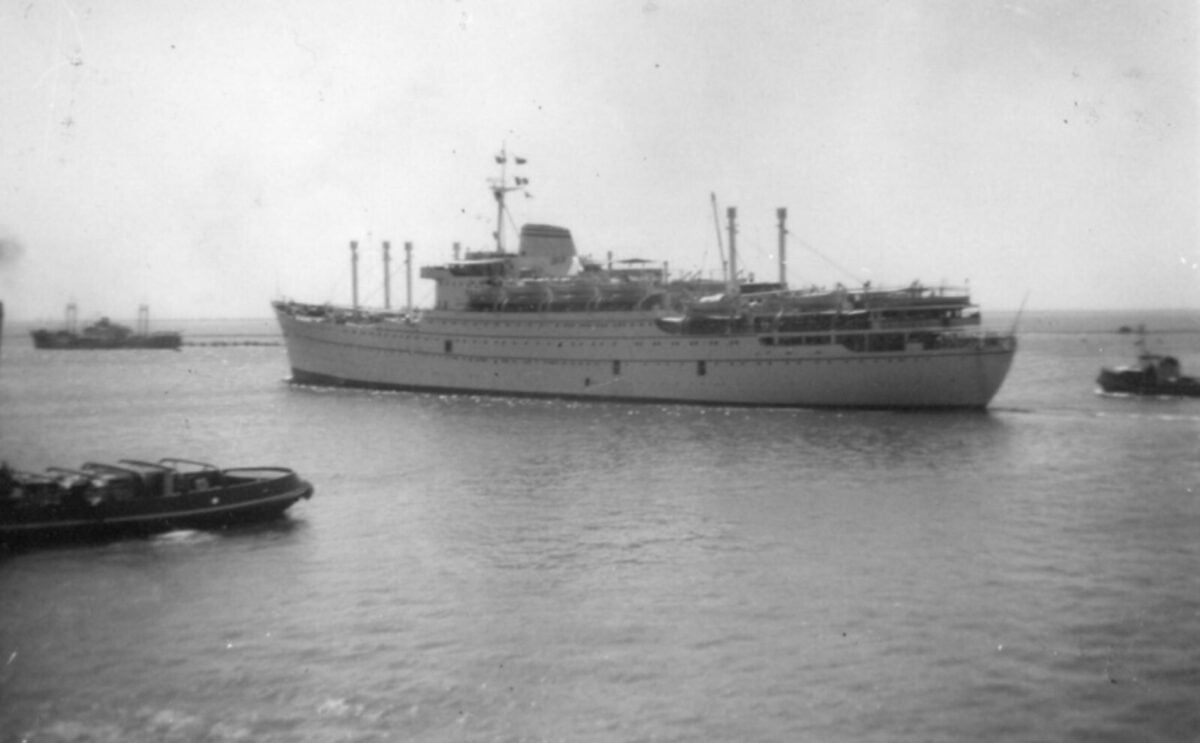
Two Australian privates stood on the deck of a troop ship in August 1916. The vessel was carrying them toward Europe and World War I.
Malcolm Neville and William Harley decided to send messages home. Neville wrote about the good food, the rolling seas, how one bad meal “we buried at sea.” His tone was upbeat.
He signed it “Your loving son Malcolm” and asked the finder to send it to his mother. Harley’s note was equally cheerful.
He hoped the finder was “as well as we are at present.” Since his mother had died, he told the finder they could keep his letter. They put both notes in a Schweppes bottle and tossed it overboard.
The date was August 15, 1916. The Brown family found that bottle 109 years later while cleaning trash from an Australian beach.
The letters were in remarkable condition, the pencil marks still clear. Debra Brown spent weeks tracking down descendants of both soldiers.
She learned that Neville died in France in 1917. Harley survived the war but died of cancer in 1934, likely caused by poison gas exposure.
Their families were grateful to have this unexpected window into their ancestors’ last days at sea before reaching the battlefields. The bottle showed no signs of barnacles or long ocean exposure.
Brown believes it washed ashore quickly and got buried in a sand dune, where it stayed protected until a recent storm uncovered it.
A Japanese Sailor’s Desperate Plea

The story of Chunosuke Matsuyama comes wrapped in legend. According to accounts passed down over generations, Matsuyama and his crew of about 40 men were shipwrecked somewhere in the South Pacific.
The year was supposedly around 1784. Stranded with no rescue in sight, Matsuyama carved a message into coconut wood.
He described their situation and sealed the carved wood inside a bottle. Then he cast it into the ocean.
The bottle drifted for over 150 years. In 1935, someone found it washed ashore in Japan. The most striking detail: the bottle supposedly turned up in Matsuyama’s home village, the same place where he was born.
This story gets repeated often, but details are scarce. No one has verified whether the dates are accurate or if the bottle really returned to Matsuyama’s birthplace.
The tale persists because people want to believe in that kind of cosmic connection between a message and its intended destination. True or embellished, the story captures why messages in bottles fascinate us.
We send them hoping they’ll reach someone who matters. Sometimes, against all odds, they do.
The Queen’s Official Bottle Opener
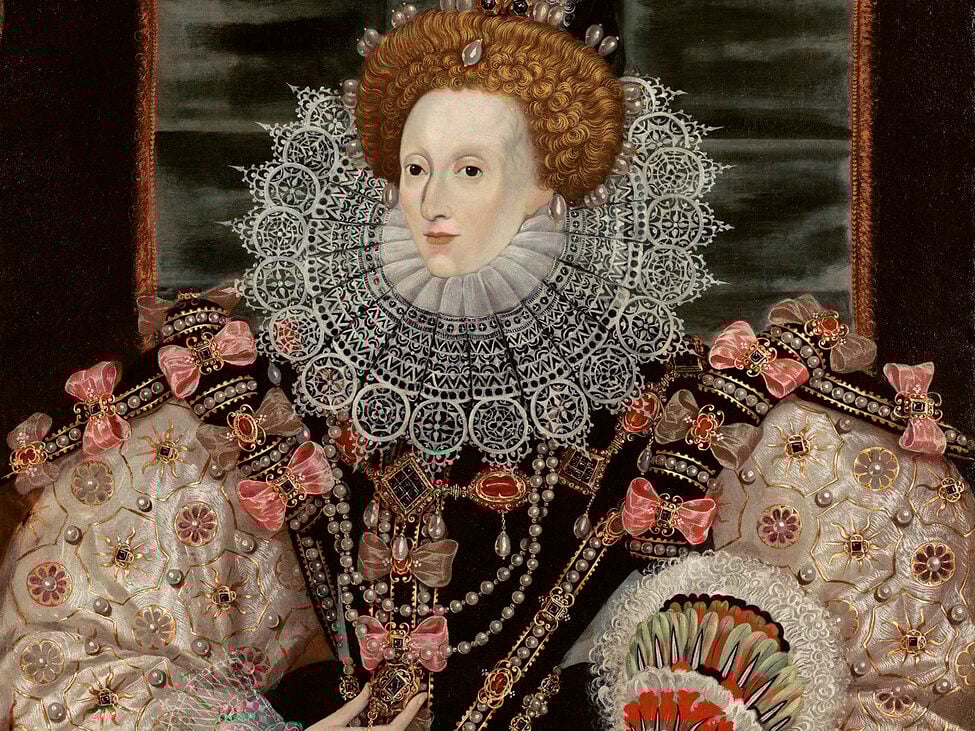
In the 1500s, Queen Elizabeth I had a problem. Bottles kept washing up on English shores, and she worried they might contain intelligence from British spies or naval officers abroad. She also feared enemy agents might be using bottles to send coded messages.
Her solution was practical but extreme. She created an official position: the Uncorker of Ocean Bottles.
This person had the sole authority to open any bottle found on English beaches or shores. Anyone else who opened a bottle faced execution.
The punishment seems absurd now. But in an era when information traveled slowly and naval power determined survival, a message in a bottle could contain secrets worth killing for.
Maps, troop movements, descriptions of enemy fortifications. All of it might be sealed in glass, floating toward whoever found it first.
The Uncorker of Ocean Bottles held their position for years. How many bottles they actually opened remains unknown.
Most bottles probably contained nothing of value. But the position existed because even one important message justified the system.
No records show how long this office continued or who held it. But the fact that Elizabeth created it at all shows how seriously monarchs took maritime communication in an age before radio or telegraph.
What Scientists Learned From Old Bottles

Captain Brown’s 1914 experiment and George Parker Bidder’s work a decade earlier weren’t just Victorian curiosities. They helped establish the foundation of modern oceanography.
Before these drift bottle experiments, scientists could only guess at how water moved beneath the surface. They knew surface currents existed because sailors could feel them.
But deep currents remained mysterious. Did they flow in the same directions as surface water? Did they follow seasonal patterns? No one knew for certain.
The bottles provided answers. When researchers plotted where bottles launched from specific locations eventually washed up, patterns emerged.
Water in the North Sea consistently moved from east to west at certain depths. Bottles released near Scotland appeared years later in Norway, following predictable paths.
This data helped create the first accurate maps of ocean currents. Those maps improved shipping routes, helped predict where floating debris might travel, and laid groundwork for understanding how oceans circulate heat around the planet.
Today’s oceanographers use much more sophisticated tools. Satellite tracking, deep ocean sensors, computer modeling.
But the basic principle remains the same: track where something goes after you release it, and you learn how the ocean moves. Those old bottles, still washing up occasionally, continue adding data points to experiments that began more than a century ago.
Why We Keep Sending Them
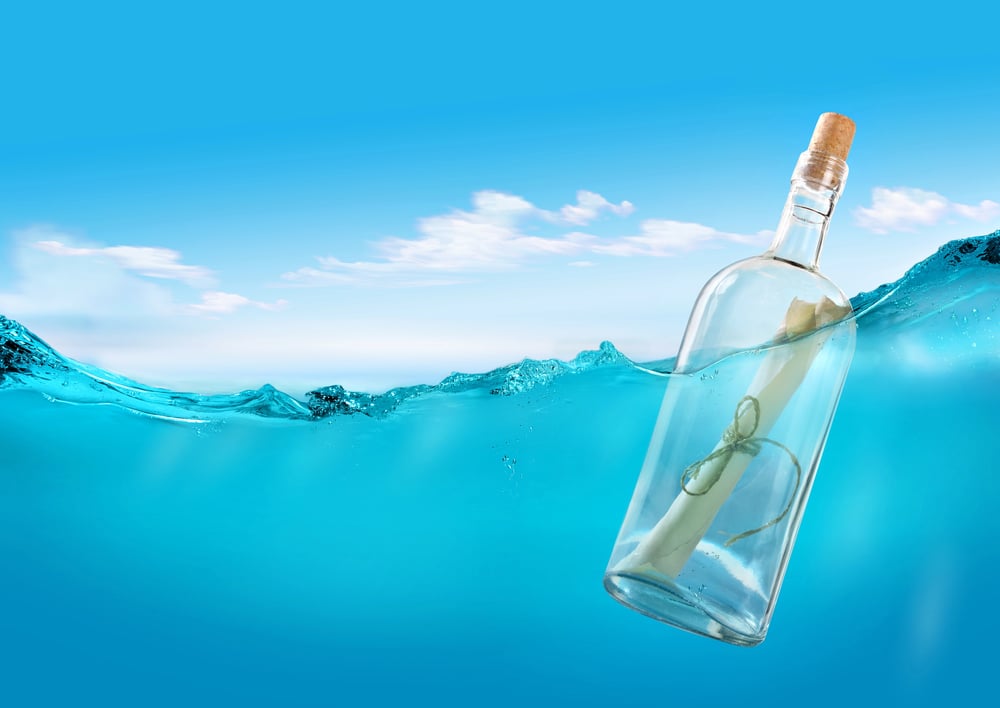
Scientific research explains why institutions threw thousands of bottles into the ocean. But why do individual people still do it? Why write a note, seal it in glass, and throw it into the sea when you could just post your thoughts online?
The answer has nothing to do with practical communication. You send a message in a bottle because you want to believe in connection across impossible distances.
You want to reach someone you’ll never meet, in a place you can’t predict, at a time you won’t live to see. There’s something profound about surrendering control.
You can’t track the bottle with GPS. You can’t check if anyone found it.
You simply let go and hope. That act of hope matters more than whether the message actually reaches anyone.
Children send bottles with notes about their daily lives, their pets, their schools. Adults send them with philosophical musings, love confessions, goodbye messages.
Some bottles contain ashes of loved ones. Others hold proposals or wedding invitations or birth announcements cast into the sea as symbolic gestures.
The romance persists because bottles bridge the gap between our desire for permanence and our acceptance of chance. You want your words to last.
You want to matter to someone, somewhere. But you’re also willing to accept that the ocean might keep your message forever, unread and unknown.
That combination of hope and acceptance drives people to keep sending bottles, even now, in an age when we can communicate instantly with anyone anywhere.
Where Messages Go to Wait
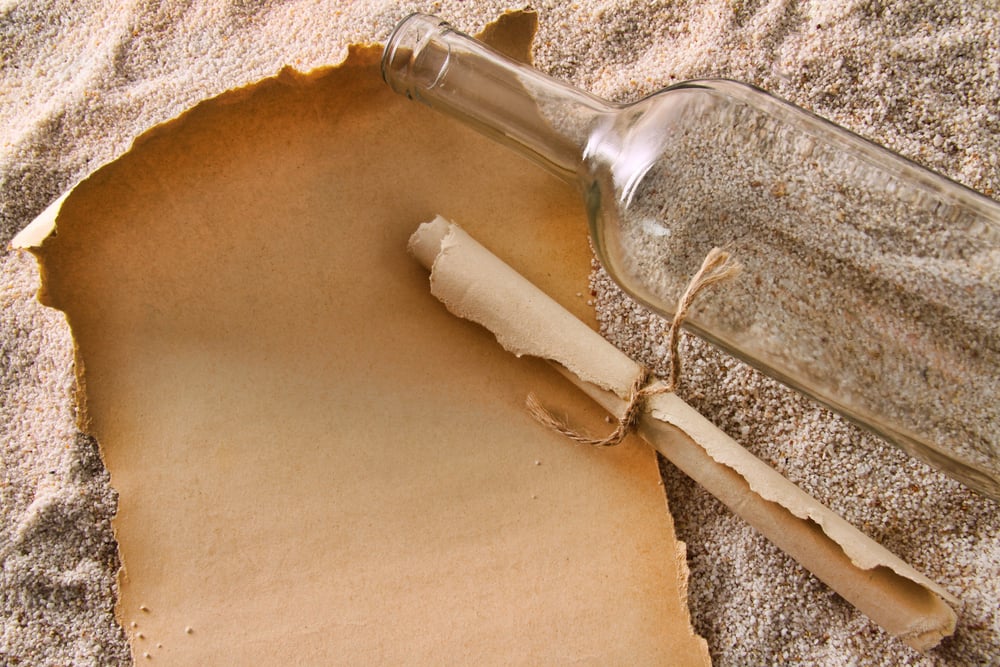
Picture the bottle sitting on the ocean floor. Sand slowly covers it.
Years pass. Decades.
Currents shift the sand around it but leave the glass untouched. Fish swim past without noticing.
Storms rage on the surface hundreds of feet above. The bottles that survive longest often do so because they get buried quickly and stay that way.
Exposure to sun, saltwater, and waves destroys glass and paper over time. But burial preserves them.
The same way time capsules survive when sealed in foundations or walls, bottles survive when the ocean hides them in sand and sediment. Eventually something changes.
A storm creates new currents that wash away the protective layer. The bottle emerges after a century of darkness.
It floats to the surface or rolls onto a beach. Someone walking by picks it up.
They see the message inside. The connection happens, finally, long after the sender stopped believing it was possible.
That waiting period matters. The bottle needs those years to become something more than paper and glass.
It transforms into a physical link between distant points in time. The person who finds it isn’t just reading words.
They’re touching something another human held generations ago. They’re receiving a message that outlasted the messenger.
Every old bottle discovered suggests hundreds or thousands more still out there, waiting. Buried in sand dunes.
Trapped in underwater caves. Lodged between rocks in places no one walks.
Some will emerge next year. Others might stay hidden for another century.
A few will never be found at all. But they’re out there, patient, holding their messages in the dark.
More from Go2Tutors!

- The Romanov Crown Jewels and Their Tragic Fate
- 13 Historical Mysteries That Science Still Can’t Solve
- Famous Hoaxes That Fooled the World for Years
- 15 Child Stars with Tragic Adult Lives
- 16 Famous Jewelry Pieces in History
Like Go2Tutors’s content? Follow us on MSN.