The Oldest Trees Still Growing
Trees have been standing long before cities rose, empires fell, and entire languages disappeared from the earth. Some of these ancient giants were already old when the pyramids were being built, and they’re still here today, quietly growing in remote corners of the world.
They’ve survived wildfires, droughts, storms, and human expansion, holding onto life with a stubbornness that’s hard to fully grasp. These aren’t just old plants.
They’re living witnesses to thousands of years of history, each ring in their trunks marking another year survived.
Methuselah

Hidden somewhere in California’s White Mountains stands a bristlecone pine that’s been alive for over 4,850 years. Scientists named it Methuselah after the oldest person mentioned in the Bible, and they keep its exact location secret to protect it from vandals and overeager visitors.
The tree started growing during the time when humans were just figuring out how to write, and it’s been through every major event in recorded history since then. Its twisted, gnarled branches don’t look like much, but this tree has mastered the art of survival in one of the harshest environments on the planet.
The Gran Abuelo

Deep in Chile’s Alerce Costero National Park grows a Patagonian cypress that locals call the Gran Abuelo, which translates to ‘Great Grandfather.’ Scientists estimate this massive tree is at least 3,600 years old, making it the second oldest known tree in the world.
The trunk measures over 13 feet across, and the tree towers above the temperate rainforest that surrounds it. Unlike the dry, harsh home of Methuselah, this ancient cypress thrives in wet, cool conditions, proving that extreme age isn’t limited to one type of environment.
The Senator

Florida once had a bald cypress called The Senator that stood for around 3,500 years in Big Tree Park. Tourists came from all over to see this giant that had watched Native American tribes come and go, survived countless hurricanes, and grew to 118 feet tall.
Tragically, a woman started a fire inside the hollow trunk in 2012 while trying to see her drugs better, and the ancient tree burned down in just a few hours. A clone called The Phoenix now grows from The Senator’s remains, but the original is gone forever, showing how fragile these ancient lives really are despite their incredible endurance.
Jōmon Sugi

Japan’s oldest tree grows on Yakushima Island, a mountainous place where it rains nearly every day. The Jōmon Sugi is a Japanese cedar estimated to be between 2,000 and 7,000 years old, though the wide range comes from the difficulty of accurately dating such an enormous tree without damaging it.
The name comes from the Jōmon period of Japanese history, suggesting the tree might have been alive when people were still hunting and gathering on the islands. Thousands of hikers make the challenging trek through the misty forest each year just to stand in front of this massive cedar, which has a trunk circumference of over 50 feet.
Llangernyw Yew

In a small churchyard in North Wales stands a yew tree that’s believed to be between 4,000 and 5,000 years old. The Llangernyw Yew has been growing in the same spot since the Bronze Age, long before the church beside it was even imagined.
The tree has split and regrown so many times over the millennia that it’s difficult to tell where one trunk ends and another begins. Welsh legend says the tree is visited by a spirit called the Angelystor, or ‘Recording Angel,’ who comes each Halloween to predict which parishioners will die in the coming year.
The Hundred Horse Chestnut

Sicily’s Mount Etna is home to what may be the world’s widest tree, a sweet chestnut called the Hundred Horse Chestnut. The tree gets its name from a legend claiming that a queen and her company of 100 knights took shelter under its branches during a thunderstorm, and they all fit comfortably beneath it.
Scientists estimate the tree is between 2,000 and 4,000 years old, though its exact age is impossible to determine because the trunk has split into multiple sections. Despite growing on an active volcano that has erupted dozens of times, this ancient chestnut keeps producing leaves and chestnuts every year.
Old Tjikko

Sweden’s Fulufjället National Park is home to a Norway spruce with a root system that’s been carbon dated to 9,565 years old. The visible tree trunk above ground is only a few hundred years old, but it’s genetically identical to the ancient roots beneath it, which have been sending up new trunks for thousands of years.
This cloning strategy has allowed Old Tjikko to survive since the end of the last ice age, when the area was first becoming habitable for trees. The tree looks small and scraggly compared to giant sequoias and ancient bristlecones, but its roots have been alive longer than any other individual tree on earth.
Sarv-e Abarkuh

Iran’s Zoroastrian Sarv cypress has been standing in the desert province of Yazd for an estimated 4,000 to 5,000 years. The tree is mentioned in ancient Persian texts and has been considered sacred for generations, with Zoroastrians believing it was planted by their prophets.
Standing about 82 feet tall, this cypress has survived through the rise and fall of multiple empires, from ancient Persia through the Islamic conquest and into modern Iran. Local legend claims that Zoroaster himself planted the tree, though historians note the tree is far older than the prophet’s lifetime.
Pando

Out in Utah sits something ancient, not obvious at first sight. A cluster of 47,000 aspens sways together, yet beneath the soil everything connects.
One massive root network ties each trunk, every leaf – same genes, same origin. That underground web has likely been spreading since long before cities rose.
Eighty centuries deep, its roots took hold while glaciers still moved. Weight?
Around six thousand metric tonnes, more than any other creature alive today. Yet now, bit by bit, it fades.
Grazing animals nibble new stems too fast for regrowth. Meanwhile, older trunks weaken, nearing their final seasons.
Alerce Milenario

Hidden deep in Chile’s Alerce Costero National Park grows a tree possibly even older than Methuselah. Known as Alerce Milenario, this ancient Patagonian cypress may have lived for roughly 5,484 years – scientists arrived at that number by blending classic ring analysis with digital simulations.
Confirmation could crown it the longest-living individual tree known. Tucked within a faraway gorge, visitors today can still walk to see it along a footpath; yet experts hesitate, questioning if public access should shrink to prevent harm.
Its trunk spreads so wide that three adults stretching arm-in-arm wouldn’t meet fingertips across its bark.
The Sacred Fig

Standing tall in Anuradhapura, Sri Lanka, the Jaya Sri Maha Bodhi dates back to 288 BCE – making it the oldest known tree with a recorded planting time. A branch from the very fig tree where Buddha reached awakening was brought here, rooted into soil through ancient Buddhist tradition.
For more than two millennia, visitors have arrived without pause, honoring its presence across generations. Metal arms hold its limbs steady now, while a gilded fence marks its sacred space.
Meditation and quiet prayer draw crowds every year, drawn by something deeper than age alone. Through wars, seasons, silence – it has remained watched, written about, kept alive.
General Sherman

California’s Sequoia National Park contains the largest tree by volume on earth, a giant sequoia named General Sherman. While it’s not the oldest tree at around 2,200 years old, it’s still ancient by most standards, and it continues to add roughly one pickup truck’s worth of wood to its mass every year.
The trunk alone weighs an estimated 2.7 million pounds, and the first branch doesn’t appear until 130 feet up the trunk, higher than most trees ever grow. Giant sequoias can live for over 3,000 years, so General Sherman is really only middle aged for its species.
The tree has survived countless forest fires thanks to its thick, fire resistant bark.
Prometheus

The oldest tree ever scientifically documented isn’t alive anymore, but its story is worth knowing. A bristlecone pine called Prometheus grew in Nevada’s Wheeler Peak area for nearly 5,000 years before a graduate student cut it down in 1964.
The student was studying climate patterns and got his coring tool stuck in the tree, so a forest ranger gave him permission to cut it down. Only after counting the rings did anyone realize they’d just killed the oldest known tree on the planet.
The incident led to much stricter protection laws for ancient trees, though it came too late for Prometheus.
Fortingall Yew

Scotland’s Fortingall Yew has been growing in a churchyard in Perthshire for an estimated 3,000 to 5,000 years, making it one of the oldest trees in Europe. The tree was much larger centuries ago, but people used to take pieces of the wood and bark as souvenirs or for good luck charms, slowly whittling away at the ancient yew.
What’s particularly interesting is that this tree, which has been documented as male for its entire recorded history, suddenly started producing female berries in 2015. Scientists aren’t sure if the tree changed its biological function or if it was always both male and female in different sections.
Either way, after thousands of years, this ancient tree is still finding ways to surprise us.
The Zoroastrian Sarv of Kashmar

Another ancient cypress in Iran, this tree in Kashmar province is estimated to be around 4,000 years old. Unlike its more famous cousin in Abarkuh, the Kashmar cypress doesn’t get as many visitors, but locals have been protecting it for generations.
The tree stands over 80 feet tall and has a trunk diameter of about 18 feet at its widest point. Islamic and Zoroastrian texts both mention ancient cypress trees in this region, suggesting that these giants were already considered remarkable over a thousand years ago.
The tree continues to produce healthy green foliage every year despite its incredible age.
The Stara Maslina

Montenegro’s Old Olive tree in the town of Bar has been producing olives for over 2,000 years according to local estimates, making it one of the oldest olive trees on earth. The gnarled trunk is completely hollow and split into several sections, but the tree still produces fruit every year.
Unlike many ancient trees that grow in remote wilderness areas, this olive stands right in a residential area where locals have been harvesting its olives for generations. The tree’s survival through wars, occupations, and the transition from Roman rule to Ottoman Empire to modern Montenegro shows how these ancient plants can adapt to massive changes happening around them.
Patriarca da Floresta

A towering jequitibá rosa rises deep within Brazil’s Atlantic Forest, known locally as the Patriarca da Floresta – estimated at roughly three millennia in age. Close to two hundred feet high, its massive trunk spans more than fifty feet around, marking it among South America’s most ancient trees.
Protection came through official recognition by the Brazilian state, shielding it from timber operations while much of the nearby woodland vanished over time. Research reveals countless plants and animals thriving on and near its bark, branches, and roots, each playing a role in its unique biological network.
This single organism reflects how vast forests once stood before cities, farms, and roads took hold.
The Students of Methuselah
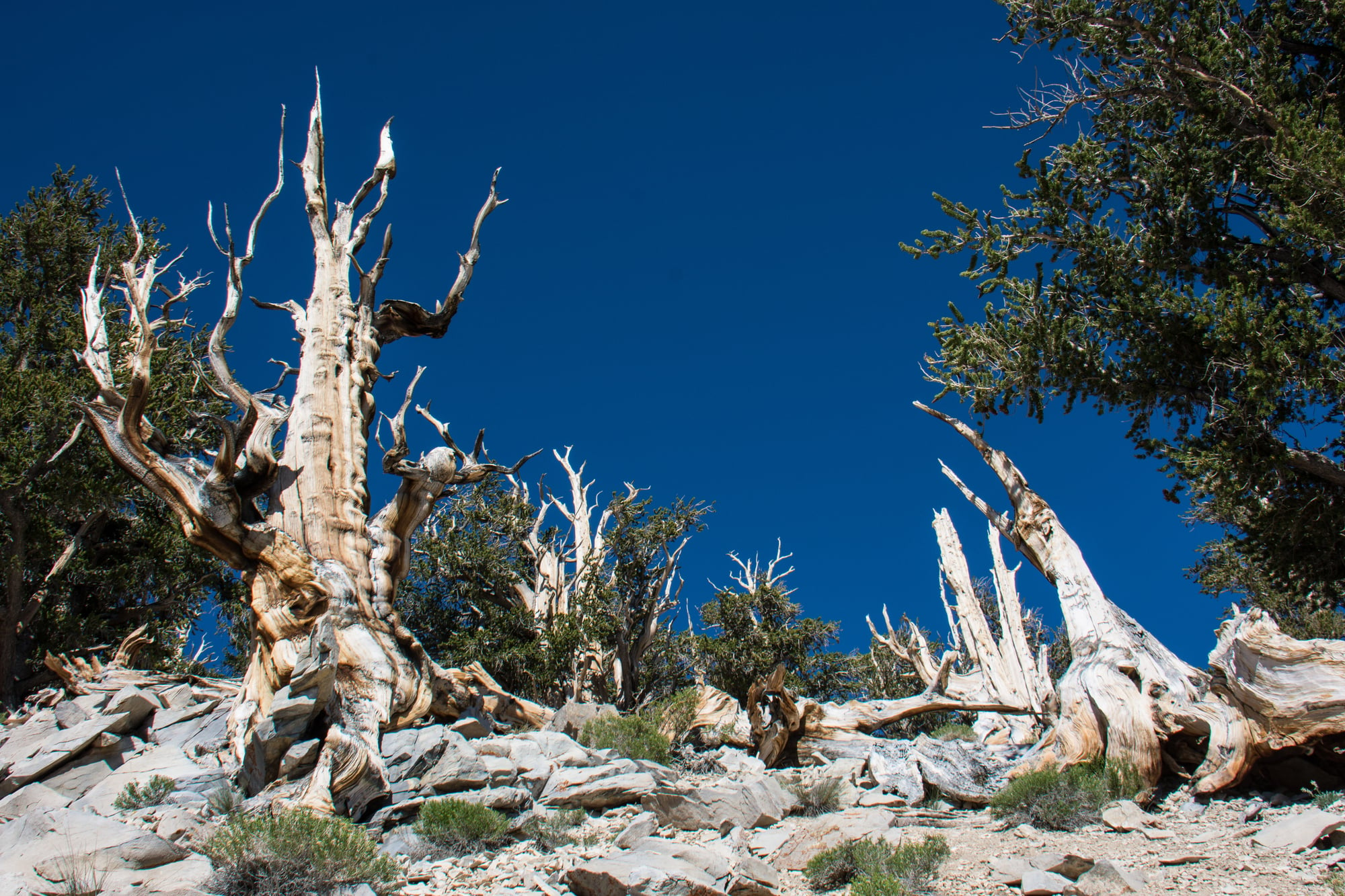
High up in the White Mountains, home to Methuselah, researchers spot bristlecone pines almost just as ancient, a few even past 4,000 years. Because conditions there are extreme and parched, growth crawls – some trunks widen by less than a millimeter each year.
Even when dead, parts of these trees stay whole for ages, standing like gnarled artworks shaped by time. With data from live specimens plus weather-worn remnants still upright, experts built timelines stretching more than ten millennia into the past.
That long view helps reveal shifts in Earth’s atmosphere others might miss.
Still Standing After All These Years

Still standing after empires crumbled, many had only begun life when people first scratched words onto stone. While climates changed beyond recognition, these giants endured what would crush newer roots.
Diseases emerged – unknown at their birth – and still they grew. Floods came, then droughts deeper than memory, yet upward they pushed, season by slow season.
Year after year, another ring forms, quiet proof of persistence without hurry. Fast lives pass around them, buzzing with urgency, but the trees remain outside that rush.
Their presence suggests preservation matters, regardless of who gets to witness the outcome.
More from Go2Tutors!

- The Romanov Crown Jewels and Their Tragic Fate
- 13 Historical Mysteries That Science Still Can’t Solve
- Famous Hoaxes That Fooled the World for Years
- 15 Child Stars with Tragic Adult Lives
- 16 Famous Jewelry Pieces in History
Like Go2Tutors’s content? Follow us on MSN.



