Tiny Homes Printed by Giant Robots
The housing crisis keeps getting worse, and traditional construction methods can’t keep up. Building a house the old way takes months, requires dozens of workers, and costs more every year.
But what if you could print a home in days instead of months? That’s exactly what’s happening right now with 3D-printed houses, and the results look nothing like what you’d expect.
The machines making houses

These aren’t your desktop 3D printers scaled up a bit. The robots building houses stand as tall as giraffes and move on tracks or robotic arms that span the width of a building lot.
They squeeze out concrete like toothpaste from a tube, layer by layer, following a digital blueprint with precision that human hands can’t match. The print heads weigh hundreds of pounds and push out concrete at a steady pace, building walls that curve and bend in ways that would make traditional framing nearly impossible.
Some machines work from a fixed position, rotating to reach every corner. Others roll along rails, constructing homes in sections.
Why concrete works for printing

Traditional concrete takes days to fully cure, but the mix used in 3D printing sets up in minutes. This quick-setting concrete needs to be strong enough to support the layers above it almost immediately, yet fluid enough to flow smoothly through the printer.
The mixture includes special additives that control how fast it hardens. Too fast, and the printer can’t keep up.
Too slow, and the walls slump before they set. Getting this balance right took years of testing, and different companies guard their concrete recipes closely.
Speed that changes everything

A 3D printer can finish the walls of a small house in 24 hours. The foundation gets poured normally, then the printer takes over.
No framing, no individual bricks or boards. Just continuous walls rising from the ground at a pace that makes construction crews stop and stare.
This speed matters most in disaster areas where people need shelter fast. After hurricanes or earthquakes, these printers can create housing while traditional construction is still clearing debris and ordering materials.
The tiny home advantage

Smaller houses make perfect testing grounds for this technology. Print a 400-square-foot home, work out the bugs, then scale up.
The tiny home movement embraced this approach early because the homes cost less to print and less to mess up if something goes wrong. These printed tiny homes show up everywhere now—backyard studios, vacation rentals, emergency housing.
They’re small enough to print in a day but substantial enough to prove the technology works.
Design freedom you can’t get otherwise

Try building a circular room with traditional framing and you’ll understand why most houses have right angles. 3D printers don’t care about angles. They follow the digital plan exactly, whether that means curves, organic shapes, or geometric patterns that would drive a carpenter crazy.
Architects are finally designing homes without worrying about whether framers can actually build them. Want a wave pattern in your walls? Print it.
Need built-in furniture that flows seamlessly from floor to wall? The printer handles it. This freedom extends to structural elements too.
The printer can create hollow walls with perfect insulation channels, or walls that are thick in some places and thin in others based on load requirements. Traditional construction forces compromises.
Printing doesn’t.
The waste problem gets smaller

Construction sites overflow with waste. Cut boards, broken bricks, excess concrete—about 30% of materials delivered to a typical building site end up in dumpsters.
3D printing uses almost no excess material because the printer only deposits what the design requires. There’s no sawdust, no scrap lumber, no pallets of unused bricks.
The concrete mixer feeds the printer exactly the amount needed for each layer. When the house is done, you could eat off the construction site.
Labor shortages meet automation
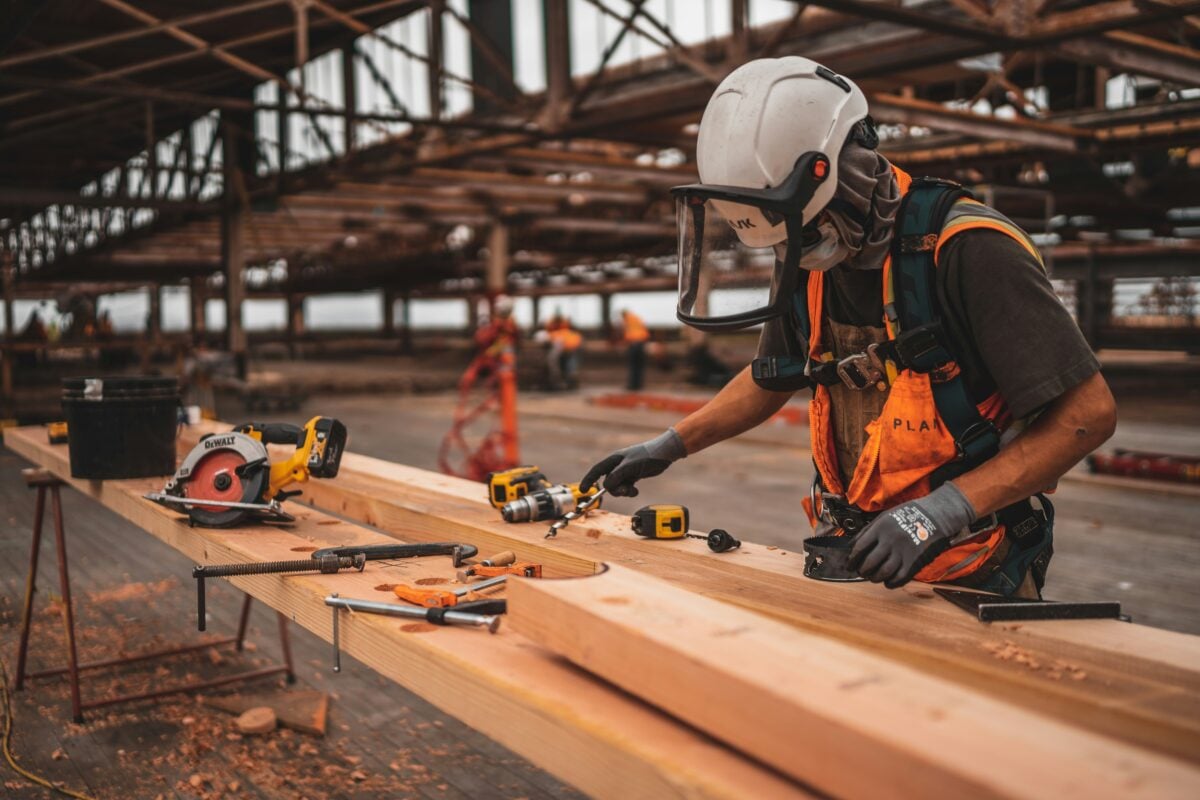
Finding skilled construction workers gets harder every year. Fewer young people enter the trades, and experienced workers retire faster than new ones replace them.
A 3D printer doesn’t call in tired or take lunch breaks. One or two technicians can oversee a printer that would normally require a crew of ten or more.
The printer does the repetitive work—laying concrete, maintaining straight lines, matching specifications. The humans handle setup, troubleshooting, and finishing work.
This doesn’t eliminate construction jobs. It changes them. Workers become printer operators, maintenance specialists, and quality control experts instead of laborers hauling materials and mixing concrete by hand.
Weather doesn’t stop the process

Rain shuts down most construction sites. High winds make working on scaffolding dangerous.
Extreme heat or cold affects how concrete cures. 3D printers work in conditions that would send human crews home.
Some printing systems include weather shields that move with the print head, protecting the fresh concrete from rain and sun. Others use heated or cooled concrete mixes that cure properly regardless of ambient temperature.
This means construction continues on schedule, and schedules in construction almost never hold.
Cost cutting without quality loss

Print a tiny home for $10,000 in materials and labor. Build the same home traditionally and you’re looking at $50,000 or more.
The savings come from speed, reduced waste, and minimal labor costs. These numbers matter for developers trying to create affordable housing, but they matter even more for individuals who want to own a home but can’t afford traditional prices.
A printed tiny home puts ownership within reach for people who thought they’d rent forever. The cost difference grows larger with volume.
Print one home and you save money. Print fifty and the per-unit cost drops dramatically because the setup costs get distributed across multiple units.
Inspectors learning new rules

Building codes evolved around stick-frame construction and masonry. Inspectors know what to look for when someone nails studs together or lays bricks.
But what do you inspect when a robot prints walls in one continuous piece? Cities are slowly adapting their codes to accommodate printed structures.
Some require traditional inspections at each stage of printing. Others accept the digital specifications as proof of compliance.
This patchwork of regulations slows adoption but gets more consistent every year. The industry is working on standardized testing methods—load tests, thermal performance measurements, moisture resistance checks.
Once these become standard, inspections will move faster and builders will face fewer surprises.
Utilities and finishing work

The printer can’t install your plumbing or electrical system. Those still require human expertise and careful planning.
Most designs include channels and chases in the printed walls where pipes and wires can run, then get covered with a finishing layer. The roof presents another challenge.
Some printers can create curved concrete roofs, but most printed homes still use traditional roof framing and shingles. The walls might be revolutionary, but the top often looks conventional.
Windows and doors get installed after printing completes, though some systems can pause the print to insert frames that the concrete then prints around. This creates a seamless integration between the printed structure and traditional components.
The aesthetic debate

Some people love the layered look of printed concrete. The horizontal lines tell the story of how the house was built, making the construction method visible in the final product.
Others want smooth walls that look like any other house. Both options exist.
You can leave the layers exposed for an industrial look, or apply stucco and paint that hides the printing entirely. The choice depends on what you want your home to say about itself.
What’s next for robot builders

The technology improves every month. Printers get faster, concrete formulas get better, and designers push boundaries.
Some companies are testing multi-material printing—concrete for walls, foam for insulation, all in one continuous process. Others work on printing multi-story buildings, though the engineering challenges grow with each additional floor.
The printer needs to be taller, the concrete needs to be stronger, and the foundation needs to support more weight. The most interesting development might be printing on demand.
Imagine ordering a home online, customizing the design, and having it printed on your lot within weeks. That future is closer than most people think.
Building where traditional construction can’t

Remote areas with no construction workers or building material suppliers become buildable with 3D printing. Load a printer and concrete mixer on trucks, drive to the site, and start building.
This opens up land that was previously too expensive or difficult to develop. The same principle works in extreme environments.
NASA is testing concrete 3D printing for lunar habitats using moon dust as the printing material. What works on the moon will definitely work in the desert, the mountains, or anywhere else on Earth.
Homes that adapt to you

Traditional houses force you to adapt to their layout. Printed homes can be customized before construction starts with a few clicks in a design program.
Need a wider doorway? Change the file. Want a specific ceiling height? Update the blueprint.
The printer doesn’t care. This flexibility matters most for people with specific accessibility needs or unconventional requirements.
Your home can fit your life instead of forcing your life to fit the home.
When machines build shelter
The robots aren’t replacing construction workers to save money or increase profits. They’re solving problems that traditional methods can’t address—speed, affordability, customization, and consistency.
The giant machines printing tiny homes today are prototypes for the future of housing. You might never live in a printed home, or you might already be planning one.
Either way, the technology is here, it works, and it’s getting better. The question isn’t whether robots will build our homes.
They already are.
More from Go2Tutors!

- 16 Historical Figures Who Were Nothing Like You Think
- 12 Things Sold in the 80s That Are Now Illegal
- 15 VHS Tapes That Could Be Worth Thousands
- 17 Historical “What Ifs” That Would Have Changed Everything
- 18 TV Shows That Vanished Without a Finale
Like Go2Tutors’s content? Follow us on MSN.