Unusual Facts About Famous Bridges
Bridges connect more than just two pieces of land. They hold stories that most people never hear about.
Engineers face problems that sound impossible to solve. Workers risk their lives in ways that seem unimaginable.
And sometimes, the solutions people come up with are just plain weird. You probably know what the Golden Gate Bridge looks like.
You’ve seen pictures of Tower Bridge opening up. But the stories behind these structures go way beyond their postcards.
Here are some facts about famous bridges that don’t make it into the tourist guides.
The Golden Gate Bridge Was Almost Yellow and Black

The Navy wanted the Golden Gate Bridge painted with yellow and black stripes. They thought it would make the bridge more visible to ships in the fog.
The consulting architect, Irving Morrow, pushed hard for the orange-vermillion color instead. He won that fight, and now that distinctive color is called “International Orange.”
The Navy’s version would have looked like a giant warning sign stretching across the bay.
London Bridge Is in Arizona (The Actual One)

London Bridge kept sinking into the Thames. By the 1960s, the bridge was dropping about an inch every eight years. The city decided to sell it.
Robert McCulloch bought the entire bridge for $2.46 million and had it shipped to Lake Havasu City, Arizona, brick by brick. Some people think he confused it with Tower Bridge and bought the wrong one, but McCulloch denied this until he died.
The bridge now sits in the desert, about as far from London as you can get.
The Brooklyn Bridge Has a Secret Wine Cellar
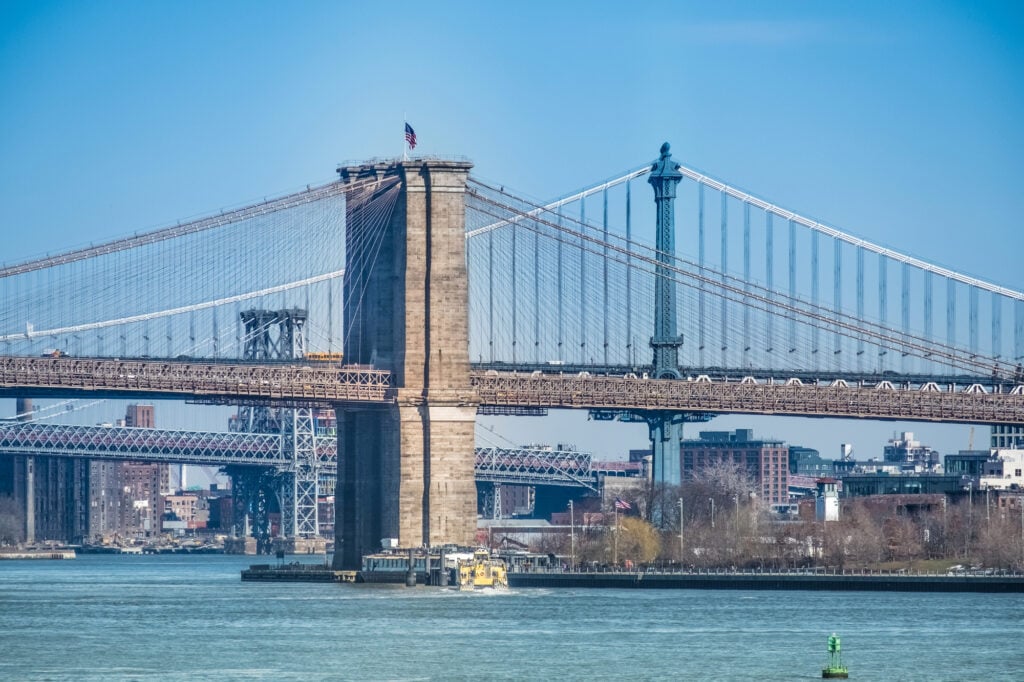
During construction of the Brooklyn Bridge, workers built large vaults in the stone foundations. After the bridge opened in 1883, the city rented these spaces out as wine cellars.
The temperature stayed perfectly cool and constant. Several wine merchants stored their inventory there for decades.
The vaults still exist, though they’re closed to the public now. Your bottle of vintage wine from the 1800s might have aged underneath one of New York’s busiest bridges.
Tower Bridge Can Open in Just 60 Seconds
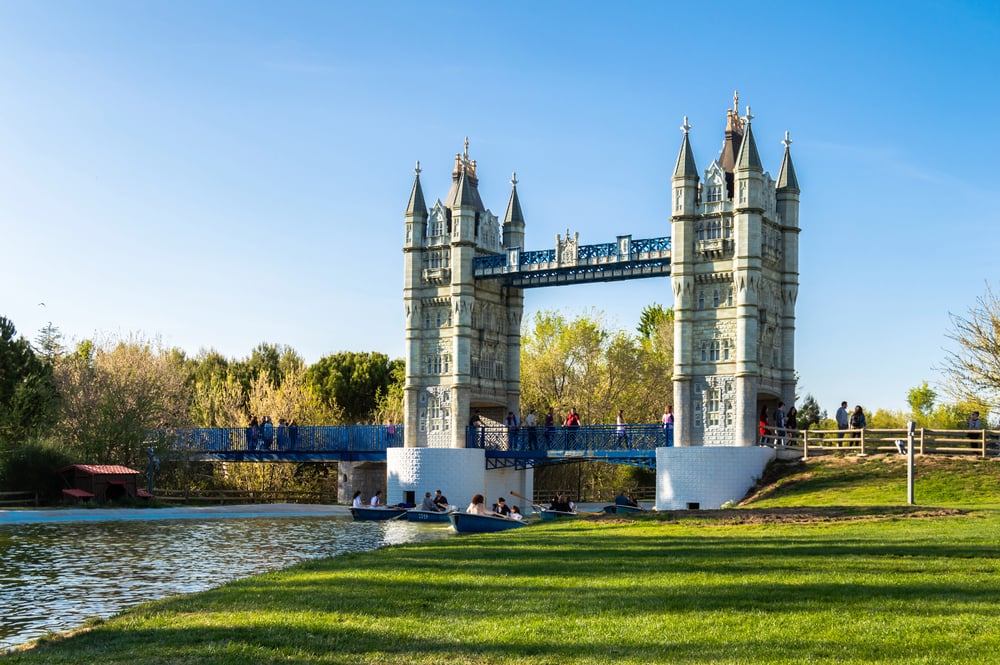
Tower Bridge looks slow and Victorian, but the hydraulic system can raise both bascules to their full 86-degree angle in about a minute. When the bridge opened in 1894, steam powered the system.
Now it runs on electricity and oil, but the original hydraulic engines are still there, sitting in the engine rooms as museum pieces. The bridge opens about 800 times a year, and traffic just has to wait.
The Chesapeake Bay Bridge-Tunnel Goes Underwater

Most bridges go over water. The Chesapeake Bay Bridge-Tunnel does that for part of its 17.6-mile length, then drops underwater through two mile-long tunnels.
Engineers built the tunnels because they couldn’t block the shipping channels with bridge supports. The transition points where the road dives under the water are artificial islands.
You drive along at 55 mph, and suddenly you’re descending into a tunnel beneath the bay. Then you come back up and you’re on a bridge again.
Sydney Harbour Bridge Has a Hidden Room at the Top

A small room sits at the very top of the Sydney Harbour Bridge’s arch. Construction workers built it as a space for the maintenance crews.
These days, it’s used as a tea room for the bridge climb guides during their breaks. The room has windows that look out over Sydney in every direction.
Most people walking the bridge climb tour path don’t know it’s up there. The bridge also consumed more paint during construction than any other structure in history at the time.
Workers used 272,000 liters before it opened in 1932.
Pont du Gard Was Built Without Mortar

The Romans built the Pont du Gard aqueduct bridge in southern France around 40-60 AD. They cut the stones so precisely that they fit together without any mortar or cement.
Some of the stones weigh up to six tons. The structure still stands after nearly 2,000 years.
Modern engineers tested it and found that the design could handle loads far heavier than anything the Romans needed it for. They just built things to last.
The Golden Gate Bridge Makes Music

Wind passing through the railing system of the Golden Gate Bridge creates a humming sound that people can hear for miles. This started happening after retrofitting work in 2020.
Engineers replaced some of the original railing with thinner, more aerodynamic slats to help the bridge handle high winds better. But the new design turned the entire structure into a giant wind instrument.
On windy days, the bridge essentially sings across San Francisco. Residents have mixed feelings about this feature.
Millau Viaduct Is Taller Than the Eiffel Tower
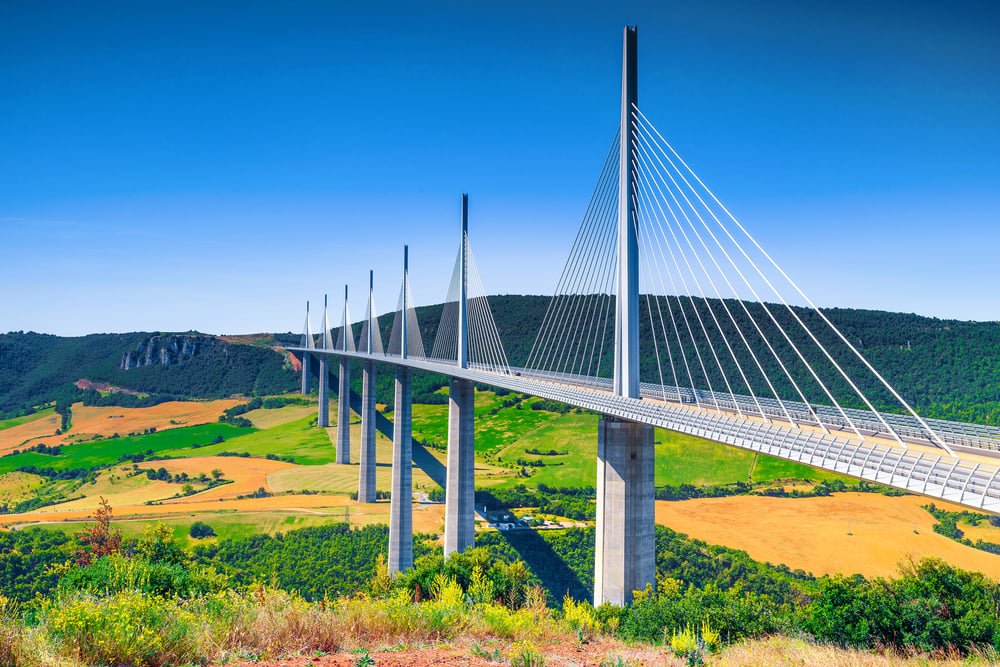
The Millau Viaduct in France holds the record as the tallest bridge in the world. Its highest pylon reaches 1,104 feet, which makes it taller than the Eiffel Tower.
The roadway sits 890 feet above the Tarn River valley. Drivers crossing it often describe feeling like they’re flying rather than driving.
On foggy mornings, the tops of the towers poke through the clouds while the valley disappears completely. Construction took just three years, which seems impossible for something that size.
The builders assembled the road deck on either side of the valley, then pushed the sections out over the pillars using GPS-guided hydraulic rams. Each section had to line up within a few millimeters.
The Verrazano-Narrows Bridge Changes Length

The Verrazano-Narrows Bridge connecting Brooklyn and Staten Island expands and contracts by up to 12 feet depending on the temperature. Hot summer days make the steel expand.
Cold winter days shrink it. Engineers account for this when they design suspension bridges, making sure the deck can move freely.
The towers of the bridge are also so tall and far apart that they’re actually a tiny bit out of parallel because of the Earth’s curvature.
Pont Neuf Is the Oldest Bridge in Paris (And Means “New Bridge”)

Pont Neuf translates to “New Bridge.” It’s the oldest standing bridge across the Seine in Paris. Construction started in 1578 and finished in 1607.
Every other bridge built before it has been torn down and rebuilt at some point. This one just keeps standing.
Henry IV inaugurated it, and his statue still sits in the middle. The bridge was radical for its time because it had sidewalks.
Before Pont Neuf, pedestrians and horses all shared the same space on Paris bridges.
The Tacoma Narrows Bridge Collapsed From Wind

The original Tacoma Narrows Bridge opened in July 1940. Four months later, it collapsed.
Not from an earthquake or a storm, but from relatively mild 40 mph winds. The bridge started twisting and undulating in waves.
Engineers had built it too light and flexible. A physics professor happened to be there with his camera and filmed the whole thing.
His footage became one of the most famous engineering failure videos ever recorded. The bridge earned the nickname “Galloping Gertie” before it fell into Puget Sound.
They built a replacement with better engineering.
Chapel Bridge Has a 666-Panel Painting Series Inside

The Chapel Bridge in Lucerne, Switzerland, has a series of 17th-century paintings mounted inside the covered walkway. The paintings show scenes from Swiss history and the lives of the city’s patron saints.
There were originally 158 panels. A fire in 1993 destroyed most of them, but restorations have brought many back.
You can walk through the bridge and see the paintings overhead. The bridge itself dates to 1333, making it one of the oldest wooden covered bridges in Europe.
The Bridge That Moves With the Wind
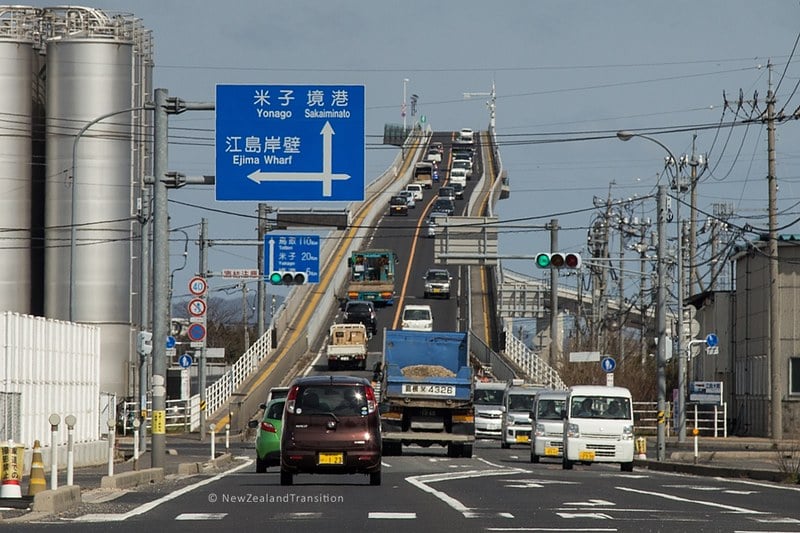
The Eshima Ohashi Bridge in Japan looks impossibly steep in photos. It rises at a 6.1% gradient on one side and 5.1% on the other.
That doesn’t sound like much until you see it. The bridge had to be built high enough to let ships pass underneath, so it climbs to 144 feet.
Drivers going up feel like they’re on a roller coaster. The bridge connects two cities across Lake Nakaumi.
It’s concrete and rigid, but small tour boats below make it look like it’s reaching straight up into the sky.
Rialto Bridge Was an Engineering Gamble
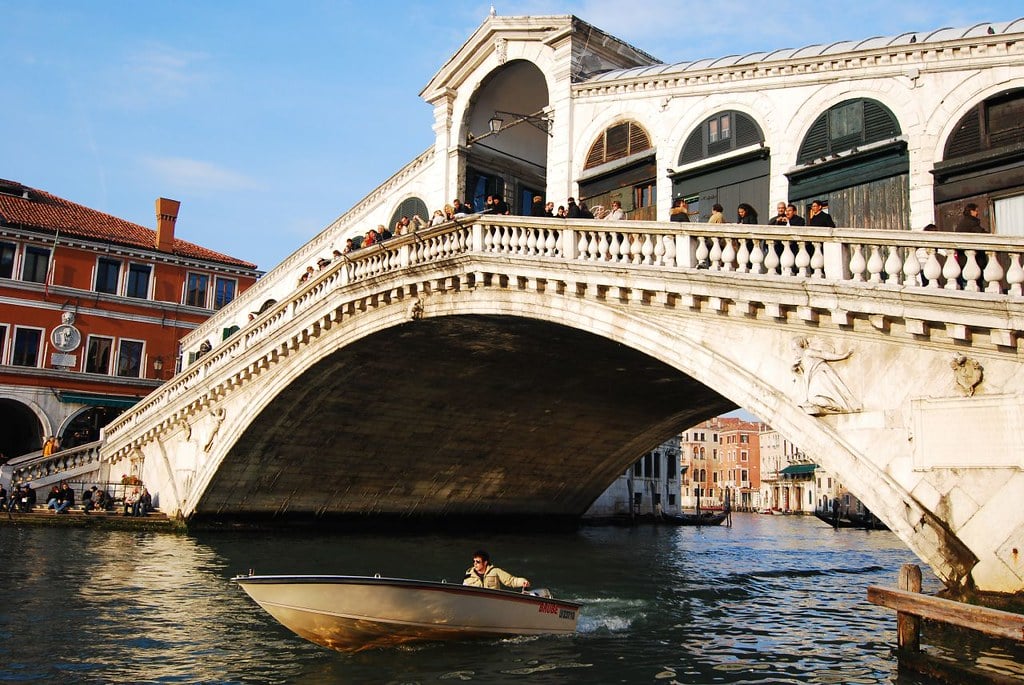
Stone took over where wood once stood when Venice sought a new Rialto Bridge near the end of the 1500s. Big names, including Michelangelo, sent plans – each one turned away. Antonio da Ponte’s idea won, though many called it dangerous.
Experts claimed such a broad stone arch could never hold. Built in 1591, it rose despite their doubts.
A crowd moves across daily, stalls lined tight along both sides. Wrong, those experts turned out.
Stretching 157 feet, the structure holds without shifting.
Where Metal and Stone Touch Sky

Steel and stone carry weight, yes. Yet every span begins with a guess shaped by numbers.
When heavy loads push or storms pull, someone once trusted those figures enough to build. Mistakes cracked some into history.
Others stood stronger than their makers dreamed. A single choice started it – a person seeing empty space where connection should be.
After that came solutions, shaped by trial and thought.
More from Go2Tutors!

- The Romanov Crown Jewels and Their Tragic Fate
- 13 Historical Mysteries That Science Still Can’t Solve
- Famous Hoaxes That Fooled the World for Years
- 15 Child Stars with Tragic Adult Lives
- 16 Famous Jewelry Pieces in History
Like Go2Tutors’s content? Follow us on MSN.