Viral Flash Games from the Early Internet
Before app stores and mobile gaming took over, flash games ruled the internet. These browser-based games lived on sites like Newgrounds, Miniclip, and AddictingGames, offering quick entertainment during school computer lab sessions and office lunch breaks.
The graphics were simple, the controls were basic, and the gameplay was often ridiculous. But they were free, accessible, and surprisingly addictive.
You didn’t need to download anything or create accounts. Just click and play.
That simplicity made flash games a defining part of early internet culture.
Line Rider

Drawing a track and watching a little sledder follow your creation sounds simple. And it was.
But the possibilities were endless. You could create basic hills or elaborate courses with loops, jumps, and perfect timing sequences.
The physics engine made everything feel satisfying when it worked and hilarious when it failed. People spent hours perfecting tracks, then shared them with friends who tried to top them.
The creative freedom meant no two experiences were the same. Some players focused on smooth, flowing tracks while others built chaotic obstacle courses designed to launch the rider into oblivion.
Bloons Tower Defense

Popping virtual targets with monkeys throwing darts shouldn’t have been as engaging as it became. But the strategy element hooked people.
You placed towers along a path, upgraded them, and watched as waves of opponents tried to get through your defenses. Each tower type had different strengths and weaknesses.
Finding the right combination and placement required planning and experimentation. The later waves ramped up difficulty, forcing you to adapt your strategy mid-game.
The sequel versions added more complexity, but the original captured something pure about tower defense gameplay.
Stick RPG

Playing as a stick figure trying to make it in a city offered surprising depth. You worked jobs, earned money, bought items, and improved stats.
The graphics were intentionally minimal, but the gameplay loop was compelling. You could follow the main objectives or just mess around, building up your character however you wanted.
The humor was dry and self-aware, poking fun at RPG conventions while still delivering solid gameplay. The simplicity meant you could finish a playthrough in one sitting, but the different paths and choices encouraged replaying.
Club Penguin

This one was technically an MMO, but it lived in your browser and defined a generation’s online experience. You created a penguin, explored a winter wonderland, played minigames, and hung out with other players.
The chat filters were strict, keeping things relatively safe for the young audience. The minigames offered enough variety that you could spend hours just playing them.
Decorating your igloo became a status symbol. The community created its own culture with meetups, parties, and inside jokes.
When it shut down, the nostalgia hit hard for everyone who grew up waddling around that virtual island.
The Impossible Quiz

This game wants you to fail. Questions seemed straightforward until you realized the answers were absurd, requiring lateral thinking or knowledge of internet culture.
Some questions had trick answers. Others required precise timing or clicking specific spots.
Memorizing the sequence became necessary because starting over from the beginning after failing late in the quiz was frustrating but kept you coming back. The humor was random and bizarre, rewarding players who didn’t take things too seriously.
It became a rite of passage—sharing how far you got or which question stumped you.
Interactive Buddy

Stress relief took an unusual form with this game. You had a ragdoll buddy that you could interact with using various tools and weapons.
The premise was dark but the execution was cartoonish enough that it felt more like venting frustration than anything disturbing. You earned money by interacting with the buddy, which you used to buy more tools.
The physics made everything entertaining as the buddy reacted to whatever you threw at it. Some people played gently. Others went full chaos mode. Either approach worked.
Fancy Pants Adventure

Smooth animation and tight controls made this platformer stand out among flash games. You controlled a stick figure with fancy pants running through hand-drawn worlds.
The movement felt fluid in a way most flash games couldn’t match. You could run up walls, slide under obstacles, and string together combos that made you feel skilled.
The levels were designed to reward exploration and experimentation. The sequels added more features, but the original captured something special about momentum-based platforming.
The doodle aesthetic gave it personality beyond its simple premise.
Kitten Cannon

Launching a kitten from a cannon to see how far it could go was exactly as absurd as it sounds. The kitten bounced off objects, collected power-ups, and eventually came to a stop.
Your distance determined your score. The randomness meant each launch played out differently, and the physics made everything unpredictable.
The game embraced its own ridiculousness without trying to justify itself. You could improve your technique slightly, but mostly you were along for the chaotic ride.
The simplicity made it perfect for quick sessions when you just needed something mindless.
Dad ‘n Me
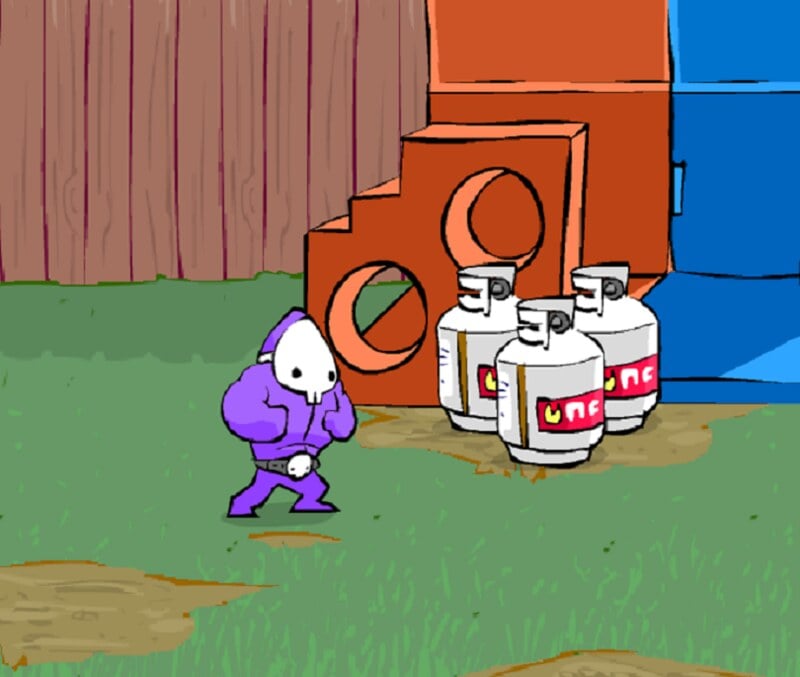
This beat-em-up captured playground aggression in flash game form. You played as a kid whose dad taught him to punch everything.
The violence was cartoonish and exaggerated, with characters flying across the screen from single hits. The art style was distinctive, and the gameplay was satisfyingly simple.
You walked around, punched kids, and caused chaos. The humor was crude and the premise was questionable, but the execution made it entertaining.
It was pure cathartic button-mashing without pretending to be anything deeper.
N

Precision platforming at its finest. You controlled a ninja navigating minimalist levels filled with mines, lasers, and locked doors.
The physics were unforgiving—momentum carried you farther than expected, and timing had to be perfect. Levels required planning your route and executing it flawlessly.
Death came quickly and often, but restarting was instant. The difficulty curve was steep, but fair.
You knew exactly why you died and how to avoid it next time. Completing a particularly tough level felt like a genuine achievement.
The replay system lets you watch your runs, showing the chaos of your attempts before the successful one.
Crush the Castle

— Illustration by opturadesign
Before Angry Birds dominated mobile gaming, this physics-based destruction game had people demolishing fortresses with a trebuchet. You adjusted the angle and power, launched projectiles, and watched as structures crumbled.
The satisfaction came from finding weak points and watching elaborate collapses. Each level presented different challenges, requiring different approaches.
The medieval theme and simple graphics didn’t get in the way of the core gameplay. The success of this game influenced an entire genre of physics-based mobile games that came after.
The Helicopter Game

Navigate a helicopter through a cave by clicking to make it rise and releasing to make it fall. The cave walls closed in, obstacles appeared, and the only goal was survival.
The concept was brutally simple, but the execution was maddeningly difficult. Your first attempts lasted seconds.
Eventually you developed a rhythm, anticipating obstacles and adjusting smoothly. High scores became bragging rights.
The game proved that you didn’t need complex mechanics to create compelling gameplay. Just a simple premise executed well with gradually increasing difficulty.
Penguin Diner

Working as a waitress penguin in an Antarctic diner shouldn’t have been as engaging as it was. Customers arrived, you seated them, took orders, delivered food, and collected payment.
Managing multiple tables required strategy and quick reflexes. Upgrades improved your efficiency, letting you handle more customers.
The time management aspect created constant pressure without feeling overwhelming. The cute graphics and upbeat music kept the mood light while the gameplay kept you focused.
It spawned sequels because the formula worked so well.
Stick Arena
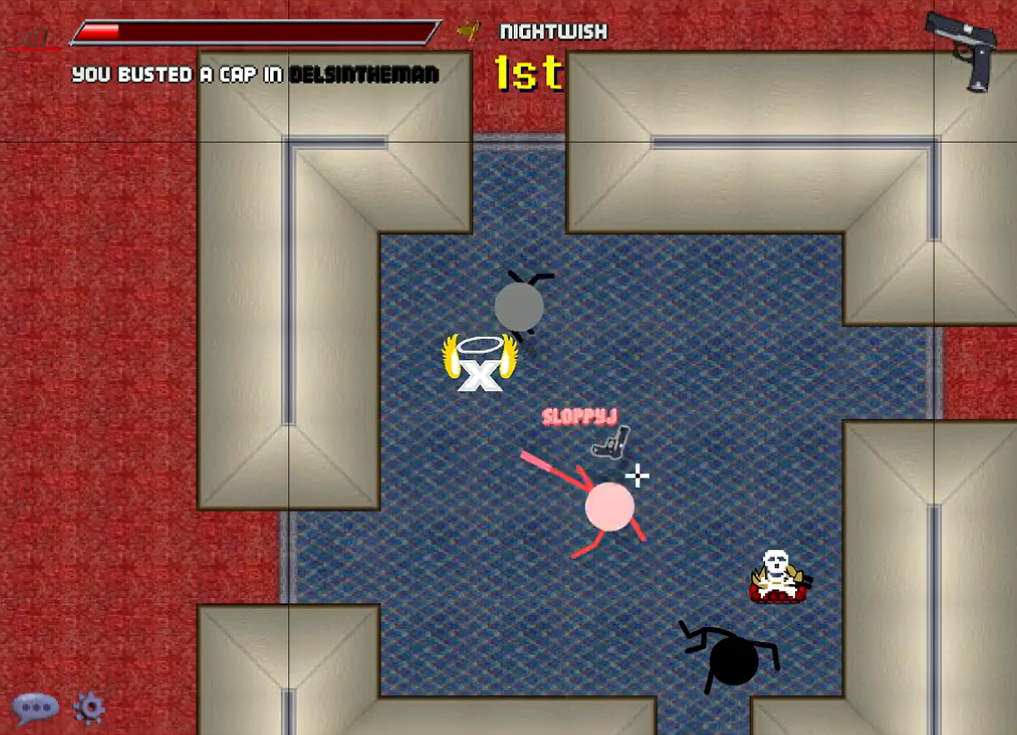
Multiplayer combat with stick figures proved that online competition didn’t need fancy graphics. The maps were simple, the weapons were straightforward, and the gameplay was fast.
You moved, shot, and tried not to die. The skill ceiling was high enough that experienced players dominated, but new players could still have fun.
The chat added a social element, for better or worse. Lag affected gameplay but you dealt with it because the core experience was entertaining.
The simplicity meant you could jump in for a quick match or play for hours.
When Flash Ruled
These games lived in a specific moment when the internet was accessible but not saturated. Gaming wasn’t as mainstream, and mobile gaming didn’t exist yet.
Flash games filled the gap between expensive computer games and nothing. They were free, instant, and everywhere.
Schools tried to block them. Offices definitely tried to block them.
But people found ways to play anyway because these games offered something valuable—quick, accessible entertainment that didn’t take itself seriously. The communities around flash game sites created their own culture.
People left comments, rated games, and shared favorites. Developers got feedback directly from players.
The barrier to entry for creating games was lower than traditional game development, so creativity flourished. Weird experimental games sat next to polished titles, and both found audiences.
The curation was minimal, which meant quality varied wildly but also meant you never knew what you’d discover.
The Archive That Remains

One day, browsers simply quit running Flash. Thanks to fans copying files, plenty of old games survived anyway.
Yet clicking around online will never again surprise you with one. These digital relics live inside special programs now, kept alive by those who remember how they shaped web culture.
Gone is the randomness of discovery, though every title still works for visitors wanting a look back. Though different, access persists – just not where it once was.
Out of those games came a whole crowd who learned early what playing could feel like. Well-made simplicity stood tall next to expensive productions, holding its ground.
Physics-driven mechanics, towers built fast, running without end – those ideas actually clicked. Touchscreen games later borrowed flashes of that old magic, shaping it anew.
Different device now, sure, but the roots still show through. Not every one of these games hit the mark.
Many felt unfinished – some now seem downright clunky. Still, they captured a stretch online where wild ideas got space to breathe, where trying things mattered more than polish.
Back then fun did not ask for payment right away or chase attention scores. A person had an odd thought, built it into play, passed it along by way of a web page.
Some of what came out back then faded fast, yet certain moments stuck around, popping up in conversations even now. Imperfect as it was, those flash game days left marks nobody can ignore.
More from Go2Tutors!

- The Romanov Crown Jewels and Their Tragic Fate
- 13 Historical Mysteries That Science Still Can’t Solve
- Famous Hoaxes That Fooled the World for Years
- 15 Child Stars with Tragic Adult Lives
- 16 Famous Jewelry Pieces in History
Like Go2Tutors’s content? Follow us on MSN.