Classic Arcade Icons That Influenced Gaming
The golden age of arcade gaming wasn’t just about inserting quarters and mashing buttons. It was a cultural shift that turned dimly lit rooms filled with glowing screens into gathering spots where friendships formed and rivalries ignited.
Those chunky machines introduced characters and gameplay mechanics that would echo through decades of gaming history, shaping everything from home consoles to modern mobile apps. The pixelated heroes and villains that danced across those screens weren’t just entertainment; they were the foundation stones of an entire industry that would grow into a multi-billion dollar empire.
So let’s take a walk down memory lane and explore the characters that changed everything. These are the icons that made people line up with pockets full of change, ready to chase high scores and bragging rights.
Pac-Man
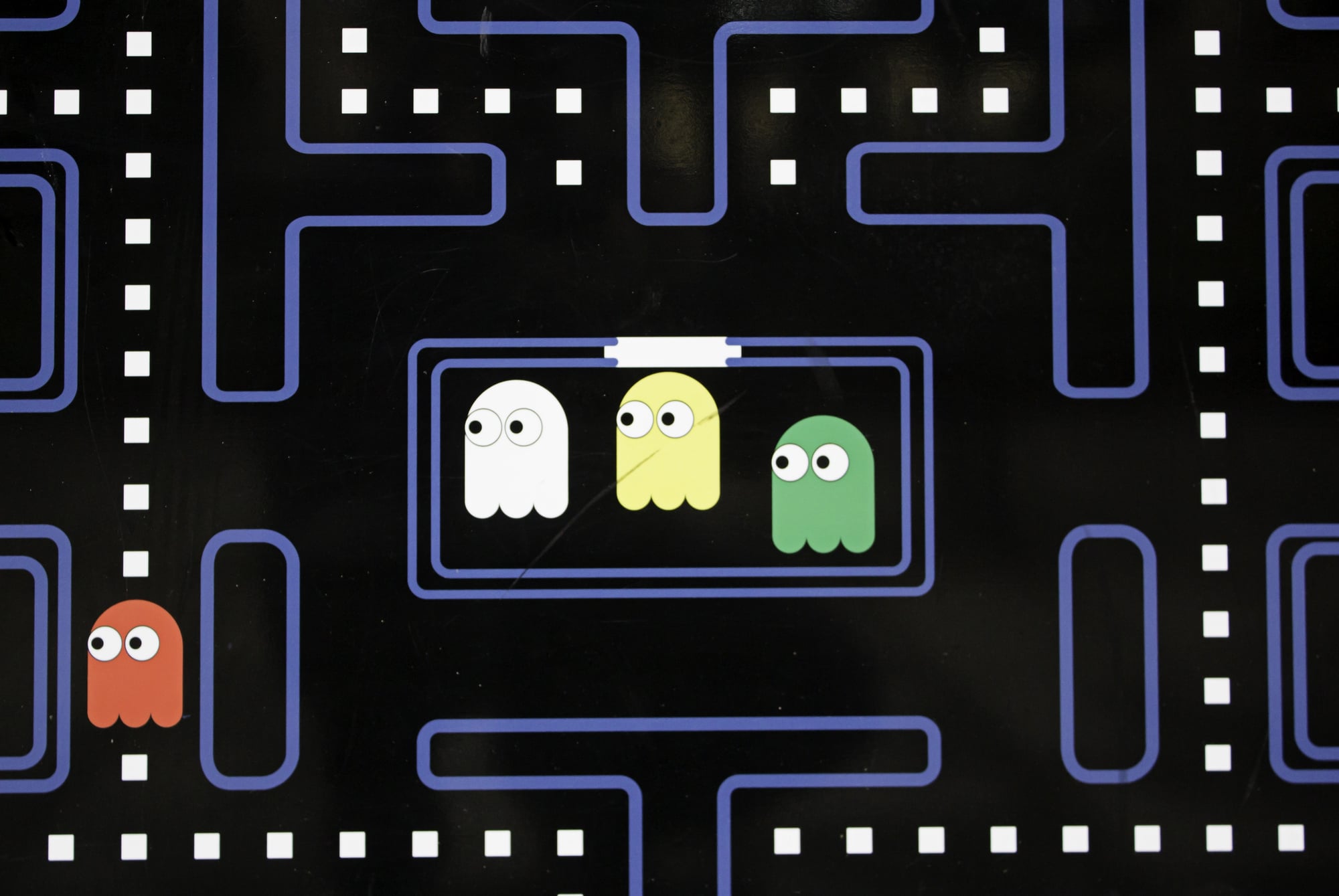
That little yellow circle munching dots through a maze became the face of arcade gaming almost overnight. Pac-Man arrived in 1980 and did something most games at the time didn’t do: it appealed to everyone, not just the typical arcade crowd.
The simple concept of eating dots while avoiding ghosts created a gameplay loop so addictive that people still recognize the “wakka wakka” sound today. The character’s design was so basic yet so perfect that it became instantly recognizable worldwide, spawning countless merchandise items and even a hit song.
Donkey Kong’s Mario

Before he became a plumber saving princesses in the Mushroom Kingdom, Mario was just “Jumpman” trying to rescue his girlfriend from an angry ape. The 1981 Donkey Kong arcade machine introduced Nintendo’s future mascot to the world, though nobody knew he’d become gaming’s most famous face.
The game’s platforming mechanics were revolutionary, requiring precise timing and strategy rather than just quick reflexes. That carpenter with the mustache (yes, carpenter, not plumber yet) would go on to appear in over 200 games, making him more recognizable than Mickey Mouse to many kids.
Space Invaders aliens

Those blocky alien ships descending in formation created one of gaming’s first truly tense experiences. Released in 1978, Space Invaders established the shoot-em-up genre and introduced the concept of increasing difficulty as enemies moved faster when you eliminated their companions.
The game was so popular in Japan that it allegedly caused a coin shortage. The simple alien designs became cultural icons, appearing on everything from t-shirts to graffiti art, proving that good design doesn’t need complexity to be memorable.
Ms. Pac-Man
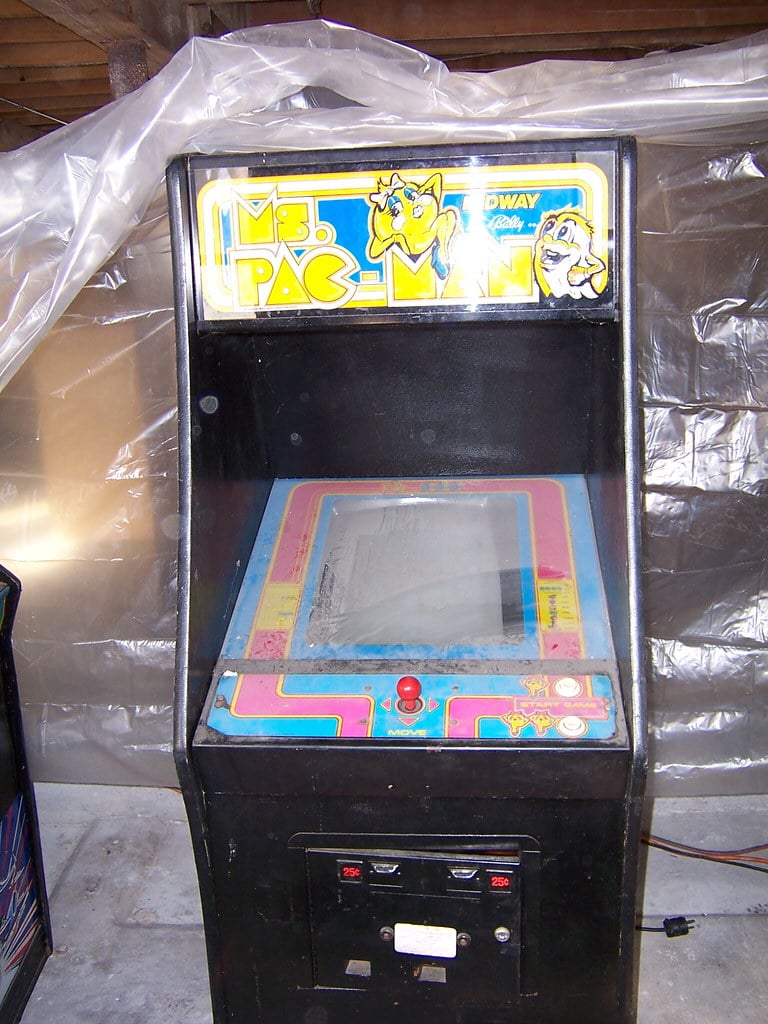
Taking the original formula and adding a bow and lipstick might sound simple, but Ms. Pac-Man proved to be more than just a feminine version of her predecessor. Released in 1982, she featured improved AI that made ghosts less predictable and more challenging.
The game actually outsold the original in America and became many players’ preferred version. She represented one of gaming’s first attempts at a strong female character, even if the execution was basic by today’s standards.
Q*bert

This orange fellow hopping on cubes looked absolutely bizarre compared to other arcade characters, and that’s exactly why people loved him. Q*bert’s isometric perspective was mind-bending in 1982, requiring players to think in three dimensions on a two-dimensional screen.
The character’s unintelligible speech (represented as cartoon swearing symbols) added personality without needing actual voice acting. His unique visual style influenced countless puzzle games that followed, proving that innovation could come from taking risks with perspective and design.
Frogger’s amphibian hero
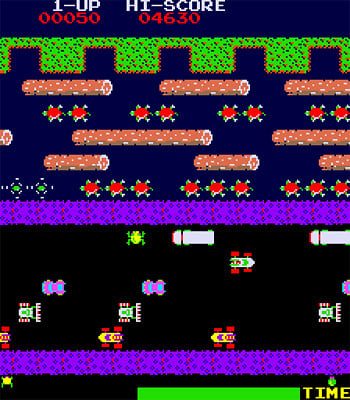
Guiding a frog across busy roads and dangerous rivers shouldn’t be thrilling, but Frogger made it absolutely nerve-wracking. The 1981 game turned a simple premise into gaming gold by perfecting timing-based gameplay.
That little green character had no special powers or weapons; survival depended entirely on the player’s ability to spot patterns and act quickly. The game’s success showed developers that compelling gameplay could trump flashy graphics or complex storylines.
Dig Dug’s Taizo Hori

Armed with an air pump to inflate enemies until they exploded, Dig Dug gave players a hero with one of gaming’s most unusual weapons. The 1982 game combined maze navigation with strategic digging, creating underground paths while avoiding or eliminating monsters.
Taizo’s method of dispatching enemies was simultaneously silly and satisfying. The character’s unique approach to combat showed that creativity in game mechanics could make even simple graphics feel fresh and exciting.
Galaga’s starfighter
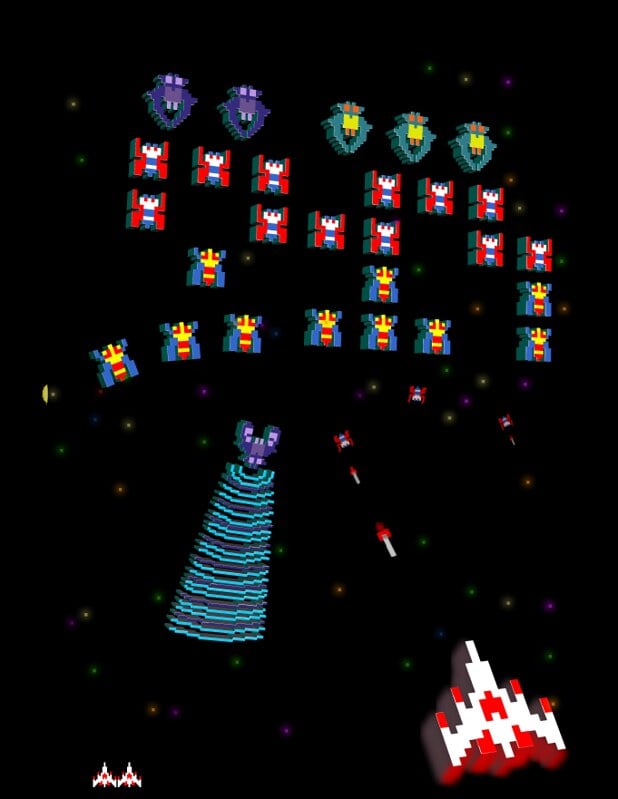
Building on Space Invaders’ foundation, Galaga introduced a ship that could be captured and rescued, doubling your firepower if you played skillfully. The 1981 game added complexity to the shoot-em-up formula with enemies that swooped and dived in formation rather than just marching downward.
That little spacecraft became synonymous with the genre, appearing in countless arcades and later finding new life on home consoles. The gameplay refinements it introduced became standard features in vertical shooters for years to come.
Centipede’s garden defender
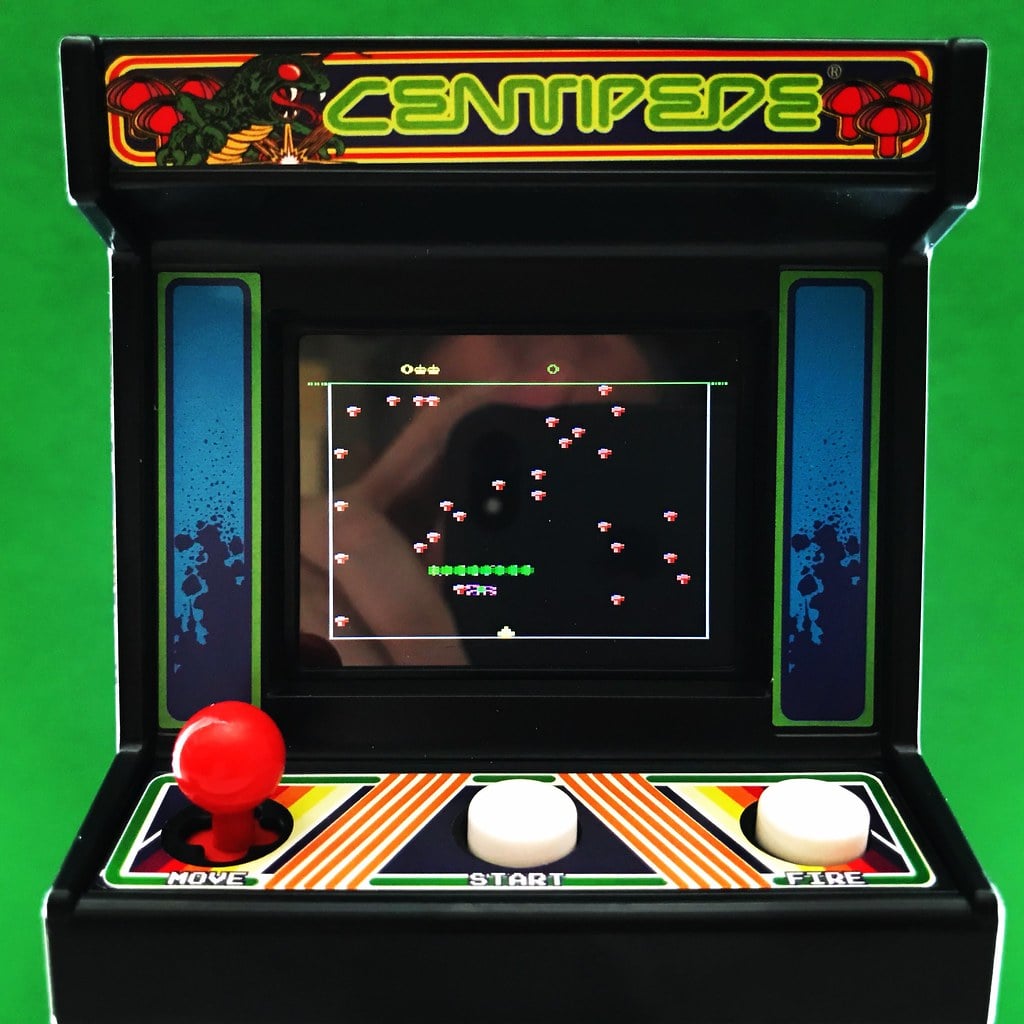
Shooting a segmented bug as it weaved through a mushroom field created frantic gameplay that kept players pumping quarters into machines. Released in 1981, Centipede gave players a small ship at the bottom of the screen defending against an increasingly chaotic insect invasion.
The game was designed by Dona Bailey, one of the first women to design arcade games, bringing a different perspective to game development. The trackball controls made aiming smooth and intuitive, setting a standard for arcade control schemes.
Donkey Kong himself

The angry barrel-throwing gorilla wasn’t just an obstacle; he was gaming’s first true antagonist with personality. His animations showed emotion and intent, making him feel like more than just a programmed challenge.
Donkey Kong’s success launched Nintendo into the American market and proved that characters could drive a game’s popularity as much as gameplay. The ape would eventually star in his own games, transforming from villain to hero in one of gaming’s most interesting character arcs.
Joust’s ostrich-riding knight
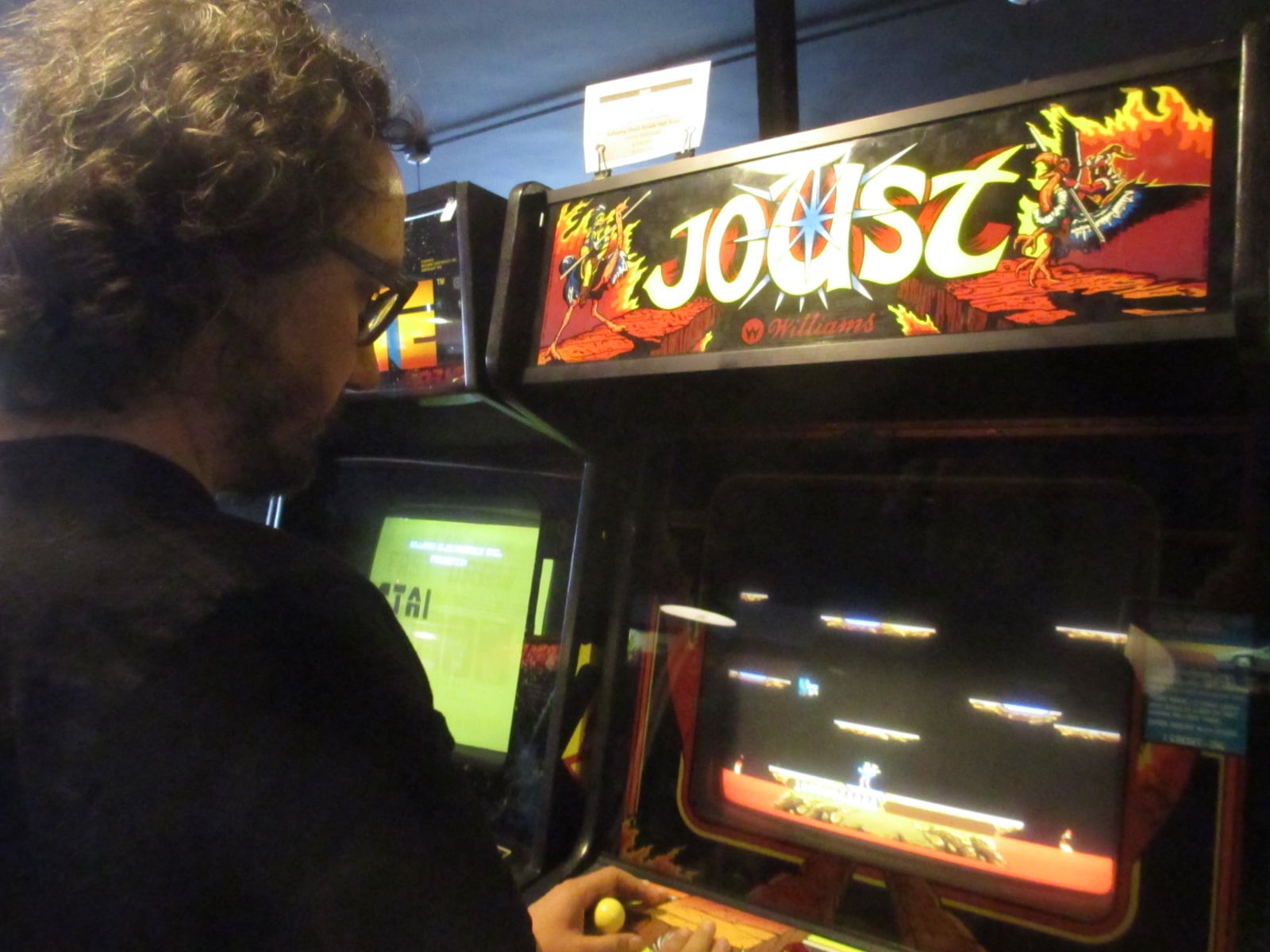
Riding a flying ostrich while jousting against enemy knights on buzzards created one of arcade gaming’s most unusual competitive experiences. The 1982 game featured momentum-based flight mechanics that took real skill to master.
Two players could compete or cooperate, adding a social element that made the game perfect for arcades. The bizarre premise worked because the gameplay was solid, teaching developers that weird concepts could succeed if execution was strong.
Defender’s spaceship

Protecting humanoids from alien abduction while flying a ship with complex controls created a steep learning curve that separated casual players from dedicated fans. The 1981 game featured a wraparound screen and required players to monitor multiple threats simultaneously.
That little ship became a badge of honor for players who could master its intricate control scheme. Defender’s influence on side-scrolling shooters was massive, establishing mechanics that games still use today.
Zaxxon’s isometric ship
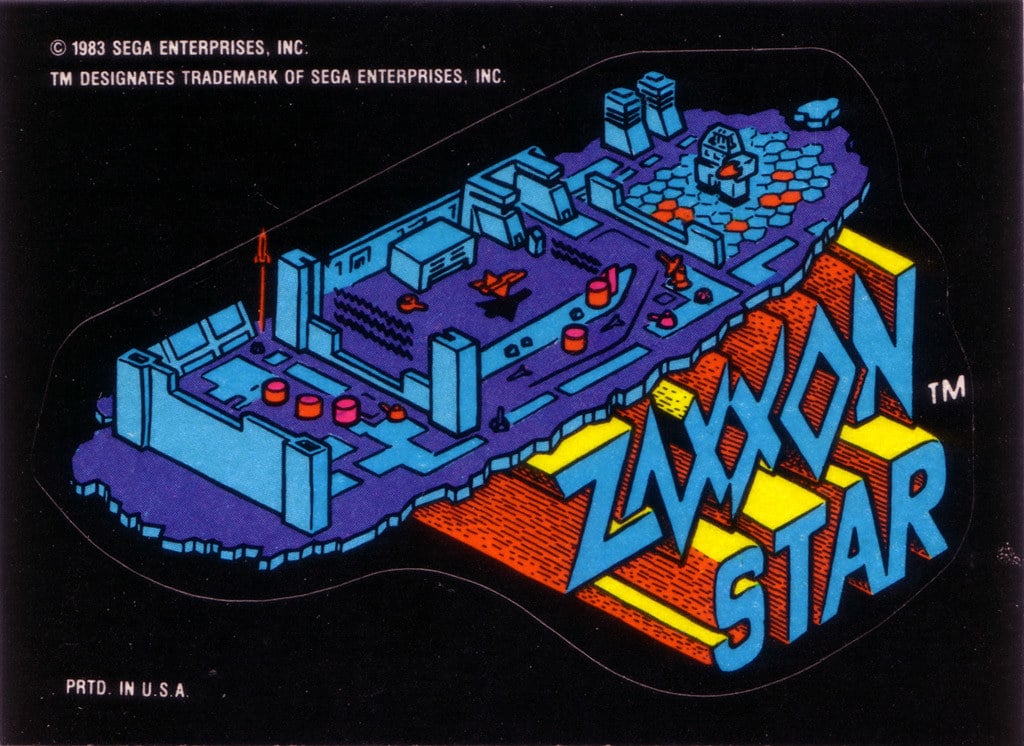
Flying a ship through space fortresses in isometric 3D was mindblowing in 1982 when most games were still flat. Zaxxon’s perspective forced players to judge altitude and depth, adding a new dimension to shoot-em-up gameplay.
The game’s visual style was revolutionary, making flat sprites appear three-dimensional through clever design. Its technical achievements pushed arcades forward and showed what was possible with creative programming.
Tron’s light cycle program

Based on the Disney film, Tron’s arcade game lets players control programs fighting inside a computer system. The light cycle battles, where players created walls of light to trap opponents, became iconic moments in both the film and gaming.
Released in 1982, the game’s vector graphics glowed brilliantly in dark arcades, creating an atmosphere that matched the movie’s digital world. It proved that movie tie-in games could be quality experiences rather than quick cash grabs.
Tempest’s claw

Navigating a vector-graphics tube while blasting enemies created a unique visual and gameplay experience. The 1981 game featured a distinctive claw-shaped ship controlled by a rotating dial, making movement feel different from standard joystick games.
Tempest’s abstract geometric battlefields were unlike anything else in arcades. The game’s difficulty ramped up dramatically, creating a challenge that kept expert players engaged for years.
Burgertime’s chef

Jumping around as Chef Peter Pepper, stacking burger bits on trays while sidestepping walking sausages felt oddly perfect. Way back in 1982, making lunch became a fast-paced challenge inside winding layouts.
Instead of weapons, he tossed pepper – slowing foes just long enough to slip past. Success came from timing, not fights.
That strange little kitchen battle proved arcades could shine without lasers or battleships.
Dragon’s Lair’s Dirk the Daring

A hero in armor, named Dirk the Daring, starred in Dragon’s Lair. Back then, in 1983, using laserdiscs to play smooth cartoon-like scenes felt like magic.
Instead of controlling every move freely, players reacted at just the right moment to save Princess Daphne. Though clumsy at times, Dirk’s journey unfolded through timed choices rather than skillful combat or jumps.
For its era, the animation stood far beyond what other arcade machines offered. Some found the way it played frustrating, yet others couldn’t look away.
Because of how it told a story with such vivid visuals, future games began thinking differently about presentation. Even with mixed opinions on how it worked, its impact quietly shaped what came next.
How those pixels shaped today’s gaming world

Step inside a current video game shop and traces of those old arcade legends pop up all around. Their inventions – things like bonus items or racing for top marks – still shape how games are built now.
You find plenty of them showing up again in fresh releases, reboots, even team-up titles, which shows folks never really stopped liking them. Fact is, the creators back then made stuff that simply did not age, figures and ideas that went way past clunky hardware limits to become core pieces of gaming history.
Right now, builders of games keep going back to these hits, picking up tips on what actually grabs players, sticks in memory, brings joy.
More from Go2Tutors!

- The Romanov Crown Jewels and Their Tragic Fate
- 13 Historical Mysteries That Science Still Can’t Solve
- Famous Hoaxes That Fooled the World for Years
- 15 Child Stars with Tragic Adult Lives
- 16 Famous Jewelry Pieces in History
Like Go2Tutors’s content? Follow us on MSN.