Historical Heists That Were Never Solved
Some crimes stick around long after the statute of limitations has expired. They become legends not because they were perfect, but because they remain incomplete stories.
The stolen art never surfaces, the money never gets traced, and the perpetrators vanish without confessing on their deathbeds or getting caught bragging at a bar decades later. These aren’t your typical unsolved cases.
These are heists where someone walked away with millions and managed to keep their mouth shut. Where entire investigations hit dead ends that stay dead; where the only evidence left behind raises more questions than answers.
The Gardner Museum Heist

Two men dressed as police officers talked their way into Boston’s Isabella Stewart Gardner Museum on March 18, 1990. They tied up the security guards and spent 81 minutes cutting paintings from their frames, including works by Vermeer, Degas, and Rembrandt.
The stolen art was worth $500 million. The thieves knew exactly what they wanted.
They ignored more valuable pieces in favor of specific works, suggesting inside knowledge or careful planning. The empty frames still hang on the museum walls today, waiting for the art to return.
The Antwerp Diamond Heist

The Antwerp World Diamond Centre was supposed to be impenetrable (or so the insurance companies believed), protected by layers of security that included heat sensors, motion detectors, and a vault door weighing 30 tons. But in 2003, a team led by Leonardo Notarbartolo bypassed every system and walked away with an estimated $100 million in diamonds, gold, and jewelry.
And here’s where the story gets interesting — because what happened next reveals just how carefully this whole operation was planned, even down to the aftermath that most thieves never think through properly. The police caught Notarbartolo, but most of the diamonds were never recovered; so while they solved part of the puzzle, the location of the actual treasure remains a mystery, which is saying something for a heist that took two years to plan.
The Great Train Robbery

The 6:03 postal train from Glasgow to London carried more than mail on August 8, 1963. Hidden among the regular cargo sat 120 mail bags stuffed with used banknotes heading to London for destruction.
A gang of 15 men stopped the train in the English countryside and made off with £2.6 million — worth about $70 million today. The thieves had inside information about the train’s valuable cargo and the route it would take; like a scene from a movie, except the consequences were real.
Most of the gang was eventually caught, but the majority of the money disappeared. Only a fraction was ever recovered, and several gang members escaped before trial.
DB Cooper

On November 24, 1971, a man calling himself Dan Cooper (later misreported as “D.B. Cooper”) boarded Northwest Orient Flight 305 from Portland to Seattle. He ordered a bourbon and soda, handed flight attendant Florence Schaffner a note claiming he had a bomb, and politely demanded $200,000 and four parachutes.
After the plane landed and Cooper got his money, he instructed the pilot to fly toward Mexico City at low altitude and speed. Somewhere over the dense forests of southwest Washington, Cooper lowered the plane’s stairs and jumped into a stormy night wearing only a business suit and a parachute; he was never seen again.
The Banco Central Burglary

Fortaleza, Brazil, seemed like an unlikely target for one of the largest bank robberies in history. But in 2005, a group of thieves spent three months digging a 256-foot tunnel from a rented house to the vault of Banco Central.
They worked only on weekends when the bank was closed, removing 3.5 tons of Brazilian currency worth $70 million. The operation required engineering skills, patience, and absolute silence about the plan.
The tunnel included electric lighting and air conditioning. By the time bank employees discovered the theft on Monday morning, the thieves had vanished along with most of the money.
The Lufthansa Heist

Jimmy Burke didn’t just rob a cargo terminal at JFK Airport — he orchestrated what newspapers called the crime of the century, though that title gets thrown around more than it should. On December 11, 1978, Burke’s crew walked into the Lufthansa cargo building and walked out with $5 million in cash and $875,000 in jewelry that had arrived on a flight from Germany.
Burke had one rule that kept him out of prison for this particular job: kill anyone who might talk. The bodies started piling up within weeks of the heist, but Burke himself was never charged with the robbery, only with the murders that followed.
The Hatton Garden Safe Deposit Burglary
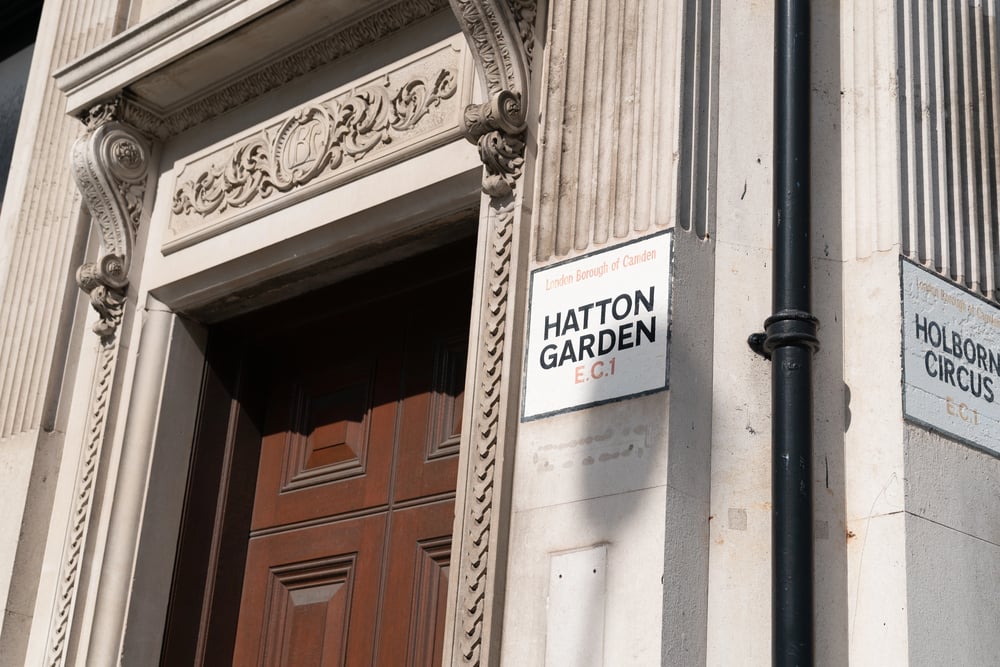
Picture this: a group of elderly men, most of them over 60, spending Easter weekend 2015 drilling through concrete walls to reach the underground vault of Hatton Garden Safe Deposit in London’s jewelry district (because apparently retirement wasn’t holding their interest the way it should have). They disabled alarms, bypassed security doors, and ransacked 73 safe deposit boxes, making off with an estimated $25 million in cash, jewelry, and precious metals.
The whole thing took them three days — which, when you think about it, is either remarkably thorough or remarkably slow, depending on how you look at these things. Several members of the gang were caught and convicted, but they never revealed what they stole from each individual box, and much of the loot was never recovered; even so, the precise inventory remains a mystery because safe deposit box contents aren’t always declared to authorities.
The Pierre Hotel Robbery
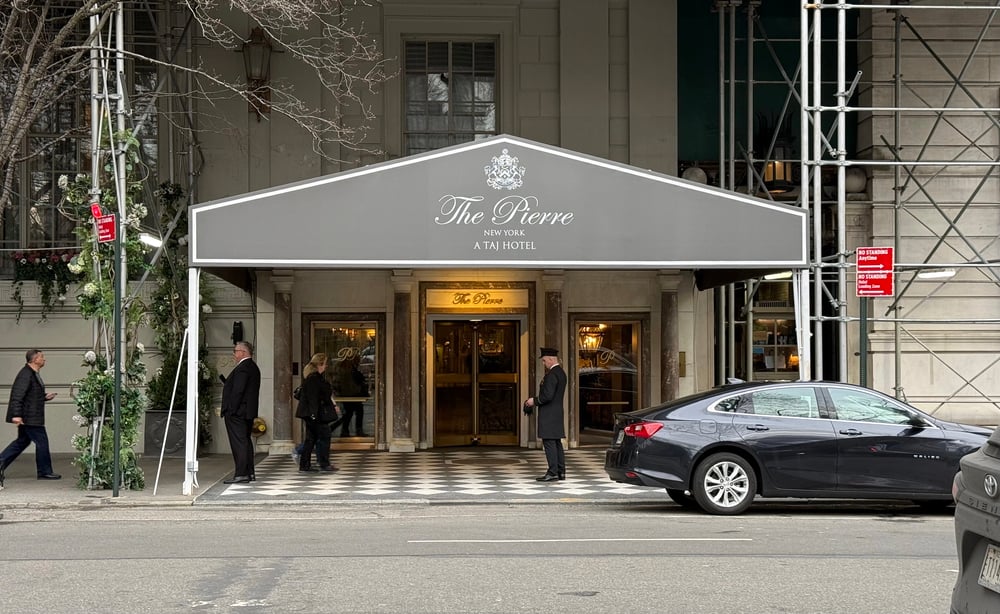
New Year’s Day 1972 started quietly at the Pierre Hotel on Manhattan’s Upper East Side. Then four men wearing tuxedos walked into the hotel as if they belonged there, took hostages, and robbed guests and safety deposit boxes of jewelry and cash worth $11 million.
The whole operation lasted four hours. The thieves knew the hotel’s layout and security procedures.
They moved through the building methodically, avoiding areas with cameras and choosing their targets carefully. Despite a massive investigation, the case was never solved.
The Brink’s-Mat Robbery

Sometimes the best-laid plans go sideways in the most profitable way possible. On November 26, 1983, six men expected to find £3 million in cash at a Brink’s-Mat security warehouse near London’s Heathrow Airport.
Instead, they discovered three tons of gold bullion worth £26 million; they took it anyway. The gold was melted down and laundered through legitimate businesses across London.
Several gang members were caught and convicted, but most of the gold was never recovered. The case spawned decades of investigations and connected dozens of other crimes.
The Millennium Dome Raid

The Millennium Dome in London housed the De Beers Millennium Collection in 2000 — including the 203-carat Millennium Star diamond worth £200 million. A gang planned to crash a speedboat through the Thames barrier, smash through the dome’s glass wall with a JCB digger, grab the diamonds, and escape down the river.
The plan was ambitious, theatrical, and completely exposed. Police had been watching the gang for months.
When the thieves struck on November 7, 2000, armed officers were waiting inside the diamond exhibition. The gang members were arrested before they could touch a single stone.
The Crown Jewels Heist Attempt

Thomas Blood nearly pulled off the most audacious theft in British history on May 9, 1671. Disguised as a clergyman, he befriended the elderly Keeper of the Crown Jewels at the Tower of London over several weeks.
When Blood returned with accomplices, they attacked the keeper and attempted to steal the Crown Jewels. Blood flattened the St. Edward’s Crown with a mallet to fit it under his coat, while his accomplices grabbed the Sovereign’s Orb and attempted to file the Sceptre in half; they were caught before escaping the Tower, but King Charles II mysteriously pardoned Blood and granted him land and a pension.
The Sweden’s National Museum Heist

Three men walked into Stockholm’s National Museum on December 22, 2000, threatened staff with a machine gun, and stole paintings worth $30 million, including works by Renoir and Rembrandt. Their escape plan involved speedboats and explosions designed to distract police.
The thieves set cars on fire around Stockholm to prevent police pursuit and escaped across the water. Eight men were eventually convicted, and some of the paintings were recovered, but the Rembrandt self-portrait worth $36 million was never found.
The Harry Winston Robbery

Four men dressed as women walked into the Harry Winston jewelry store on Paris’s Avenue Montaigne on December 4, 2008. They spoke softly, moved calmly, and robbed the store of jewelry worth $108 million in 20 minutes.
No shots were fired, no one was hurt, and no alarms went off during the robbery. The thieves had detailed knowledge of the store’s security systems and inventory.
They knew which display cases contained the most valuable pieces and which rooms to avoid. French police arrested several suspects, but most of the jewelry was never recovered.
The Schlumberger Heist

The Tiffany & Co. store in London’s Old Bond Street seemed secure enough, protected by alarms, cameras, and reinforced glass. But on April 6, 2003, two men smashed through the store’s window with sledgehammers during broad daylight and grabbed jewelry worth $30 million from the Schlumberger collection in less than five minutes.
The thieves escaped on a motorcycle through London traffic while police were still responding to the alarm. Despite extensive investigations and several arrests, the majority of the stolen jewelry was never recovered, and the case remains officially unsolved.
When the Trail Goes Cold

These crimes share something beyond their unsolved status. They represent a particular kind of criminal ambition — the belief that with enough planning, skill, or sheer audacity, someone could pull off the impossible and disappear into legend.
Most failed at the disappearing part, but the mysteries they left behind continue to captivate precisely because they remain unfinished stories. The empty frames at the Gardner Museum serve as reminders that some puzzles resist solving, no matter how many resources get thrown at them; sometimes the perfect crime isn’t perfect because it was flawlessly executed, but because it remains perfectly incomplete.
More from Go2Tutors!

- The Romanov Crown Jewels and Their Tragic Fate
- 13 Historical Mysteries That Science Still Can’t Solve
- Famous Hoaxes That Fooled the World for Years
- 15 Child Stars with Tragic Adult Lives
- 16 Famous Jewelry Pieces in History
Like Go2Tutors’s content? Follow us on MSN.



