Mascots Who Were Retired — And The Real Reasons Why
Mascots occupy a strange corner of public life. They’re part entertainer, part brand ambassador, part walking cartoon come to life.
Most mascot retirements happen for predictable reasons — budget cuts, a new agency, a corporate rebrand. But others met their end under circumstances that reveal something genuine about the moment they lived in: a cultural shift that made a beloved character suddenly uncomfortable, a legal battle that wouldn’t stop, or simply the discovery that what once seemed harmless had become impossible to defend. These are the real stories.
Joe Camel
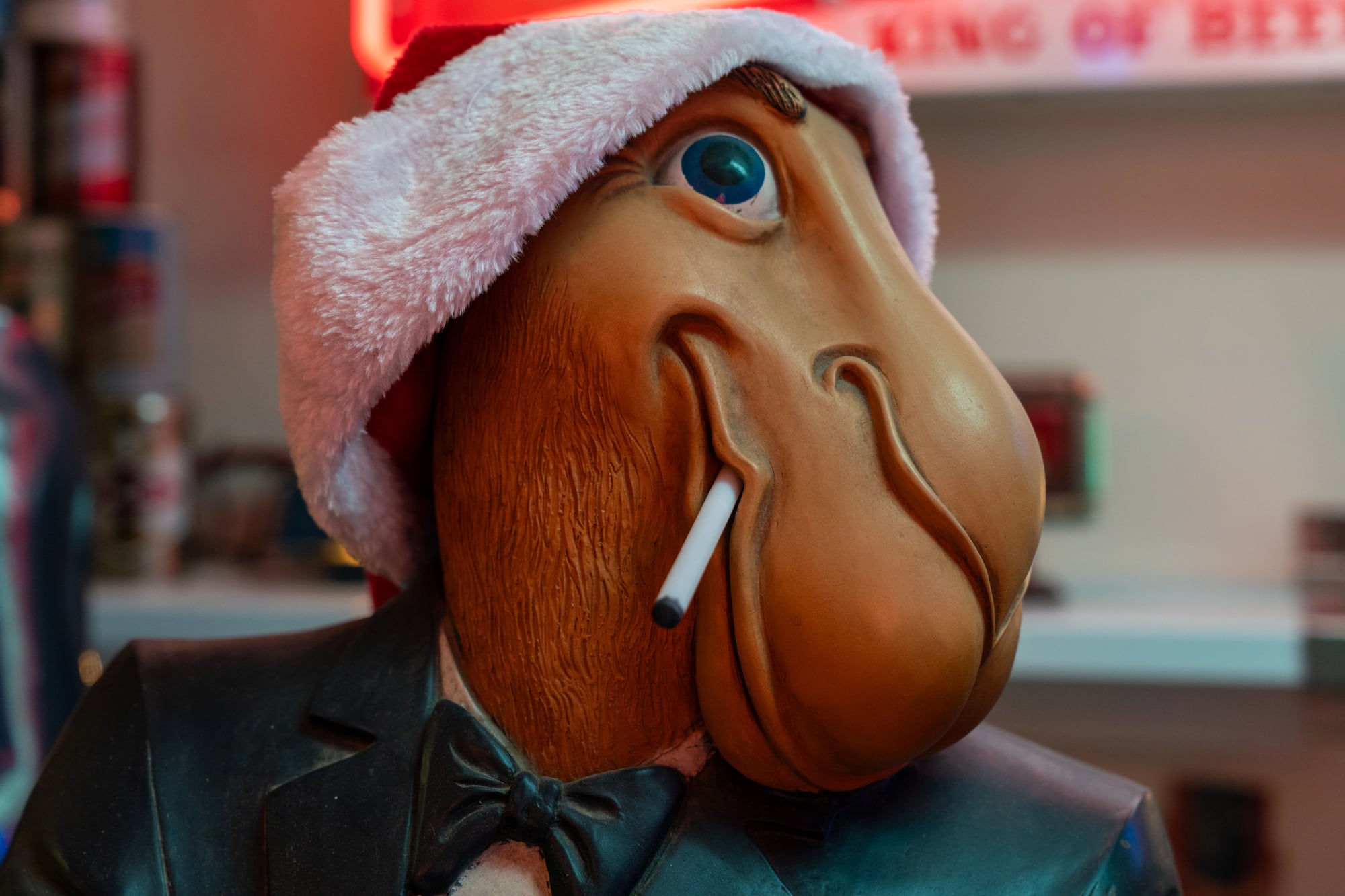
Few mascot retirements were more overdue or more fought over than Joe Camel’s. RJ Reynolds introduced the smooth cartoon dromedary in 1988, and within a few years he was more recognizable to American six-year-olds than Mickey Mouse.
That statistic, from a 1991 study in the Journal of the American Medical Association, became the hammer that broke the campaign.
The Federal Trade Commission pursued the company for years, arguing that using a cartoon character to market cigarettes was inherently aimed at children regardless of the disclaimers. After nearly a decade of legal pressure, congressional hearings, and mounting evidence that underage smoking rates had climbed alongside Joe’s popularity, RJ Reynolds retired the camel in 1997.
The company maintained to the end that Joe was aimed at adult smokers. Nobody believed them, including, eventually, their lawyers.
Spuds MacKenzie

Budweiser’s original party animal was a bull terrier named Spuds who appeared at beach parties and celebrations surrounded by people having a very good time. The campaign launched in 1987 and was an immediate hit — Spuds became a genuine pop culture phenomenon, his image on t-shirts, posters, and merchandise everywhere.
The problem was dogs. Dogs appeal to children, and children were asking for Spuds MacKenzie merchandise at an age when they had no business thinking about beer. Surgeon General C. Everett Koop criticized the campaign directly, and the backlash from parent groups grew too loud to ignore. Budweiser retired Spuds in 1989, two years after launch.
The actual dog, a female named Evie who played a male character, lived out her days in comfortable retirement and died in 1993.
The Taco Bell Chihuahua
Gidget was a twelve-pound chihuahua who became one of the most recognizable mascots of the late 1990s. “¡Yo quiero Taco Bell!” became a genuine cultural catchphrase, and Gidget appeared on merchandise, in films, and on late-night television.
She traveled first-class and opened the New York Stock Exchange.
The campaign ended in 2000 for a tangle of reasons. Hispanic advocacy groups had been objecting throughout the campaign’s run that the accent, the character, and the whole premise leaned on stereotypes about Mexican people — complaints the company largely brushed aside while sales were strong.
When same-store sales started slipping, the criticisms became easier to hear. Then came a $42 million lawsuit from two Michigan men who claimed Taco Bell had used their concept without paying, which a jury and later an appeals court confirmed.
Gidget retired, lived comfortably until 2009, and was euthanized after a stroke at age fifteen.
Ronald McDonald
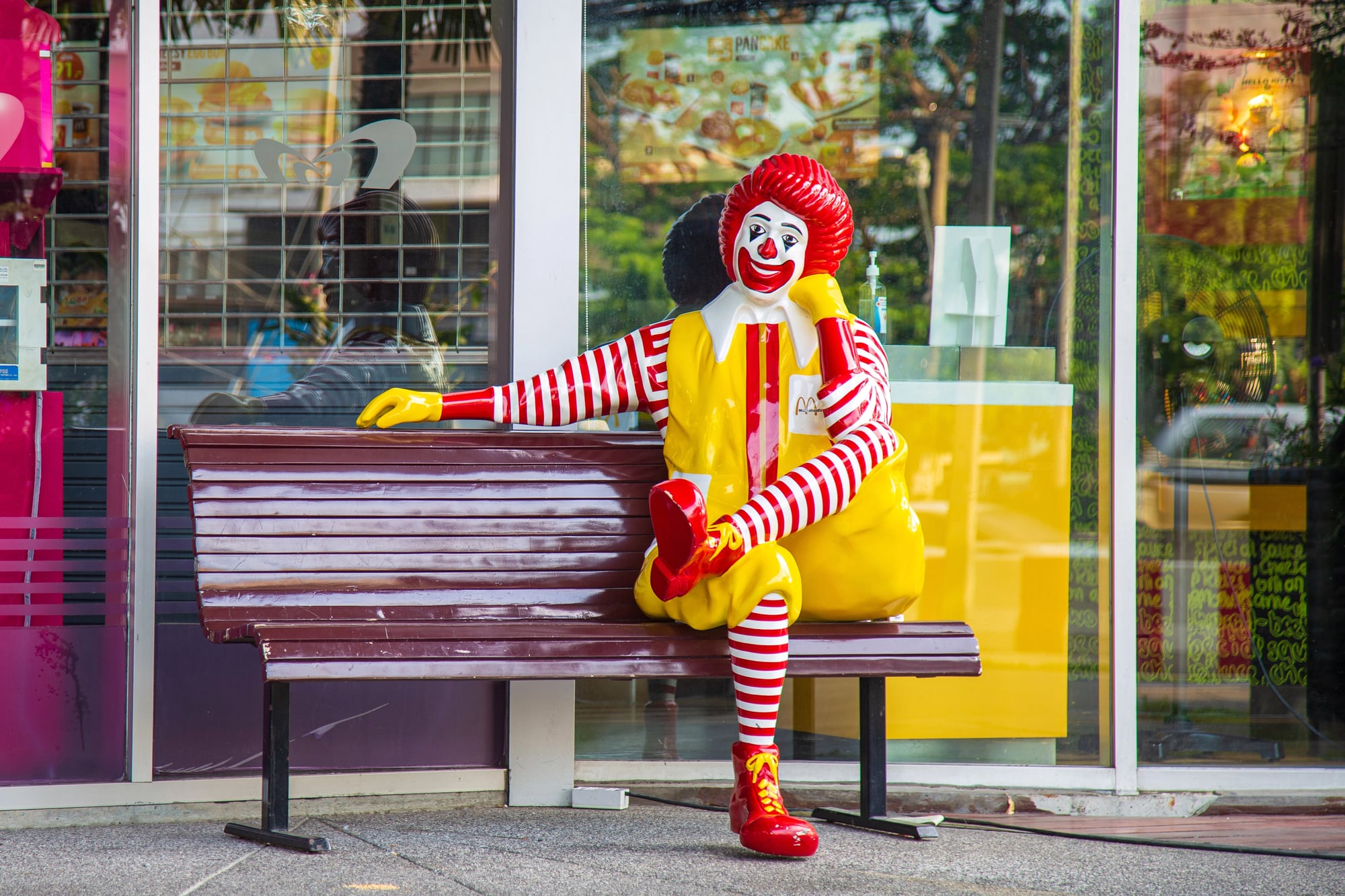
Ronald McDonald spent more than fifty years as one of the most recognizable figures in American advertising. He never officially retired, but his effective disappearance from McDonald’s marketing is among the more dramatic mascot fade-outs in recent memory.
The proximate cause was the wave of real-world clown sightings that swept the United States in late 2016, when people dressed as threatening clowns began appearing in neighborhoods, woods, and parking lots across dozens of states. McDonald’s released a statement in October 2016 acknowledging the “current climate around clown sightings” and announcing that Ronald would limit public appearances.
He never really came back. The company had been quietly reducing his role for years as the clown aesthetic drifted from friendly to frightening in the cultural imagination, and 2016 gave them the final push. Corporate Accountability International had been running a “Retire Ronald” campaign for years; the clowns in the woods finished the job.
Burger King’s The King
From 2003 to 2011, Burger King ran one of the more unusual advertising campaigns in fast food history: a silent mascot with a fixed plastic grin, enormous head, and unsettling habit of appearing without warning in people’s bedrooms and backyards. The King was intentionally surreal, and for a while the uncanny quality felt like a clever joke.
The joke eventually stopped being funny. The King became a reliable internet meme for horror, the plastic smile appearing in nightmare scenarios that had nothing to do with hamburgers.
Focus groups confirmed what the memes suggested: customers were more likely to associate The King with discomfort than with dinner. Burger King retired him in 2011, acknowledged the character had gone too far into unsettling territory, and moved on to more straightforward advertising.
He made a brief comeback in 2015 for a specific campaign but never returned to prominence.
Aunt Jemima
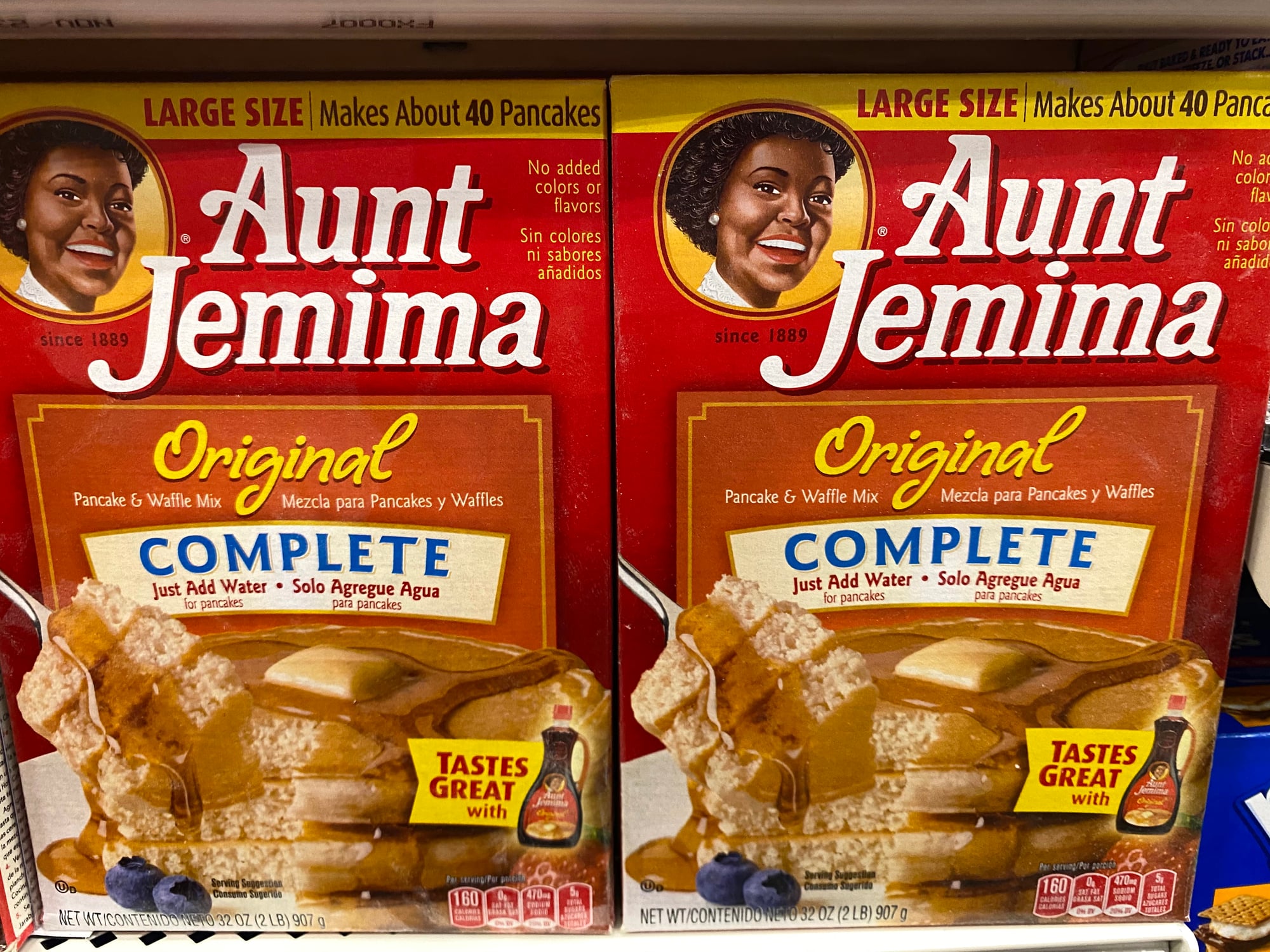
The Aunt Jemima brand had a history stretching back to 1889, and the character herself — a Black woman in a headscarf, originally based explicitly on the “mammy” stereotype from minstrel shows — had been updated and softened over the decades without anyone confronting what she actually represented.
That reckoning came in June 2020, in the aftermath of George Floyd’s murder and the national conversation about racial imagery and history that followed. PepsiCo, which owned the Quaker Oats brand, announced it would retire both the Aunt Jemima name and image “to make progress toward racial equality.”
The brand was relaunched as Pearl Milling Company in 2021 — the name the original cooperative had used before adopting the Aunt Jemima branding in 1889. The change was long overdue and long resisted; it took a specific cultural moment to make it happen.
Land O’Lakes Mia

Land O’Lakes had featured a Native American woman, known as Mia, on its packaging since the 1920s. The image had been updated over the years but retained a romanticized, stereotyped quality — a beautiful Native woman in traditional dress offering butter across a placid lake.
In February 2020, the company removed the image without detailed public explanation, with a spokesperson saying the brand wanted to “better reflect our co-op’s founding and the farmers who own it.” Minnesota Lieutenant Governor Peggy Flanagan, a member of the White Earth Band of Ojibwe, publicly thanked the company.
The timing — months before the broader wave of mascot reckonings in 2020 — made it a quiet harbinger of what was coming.
Frito Bandito
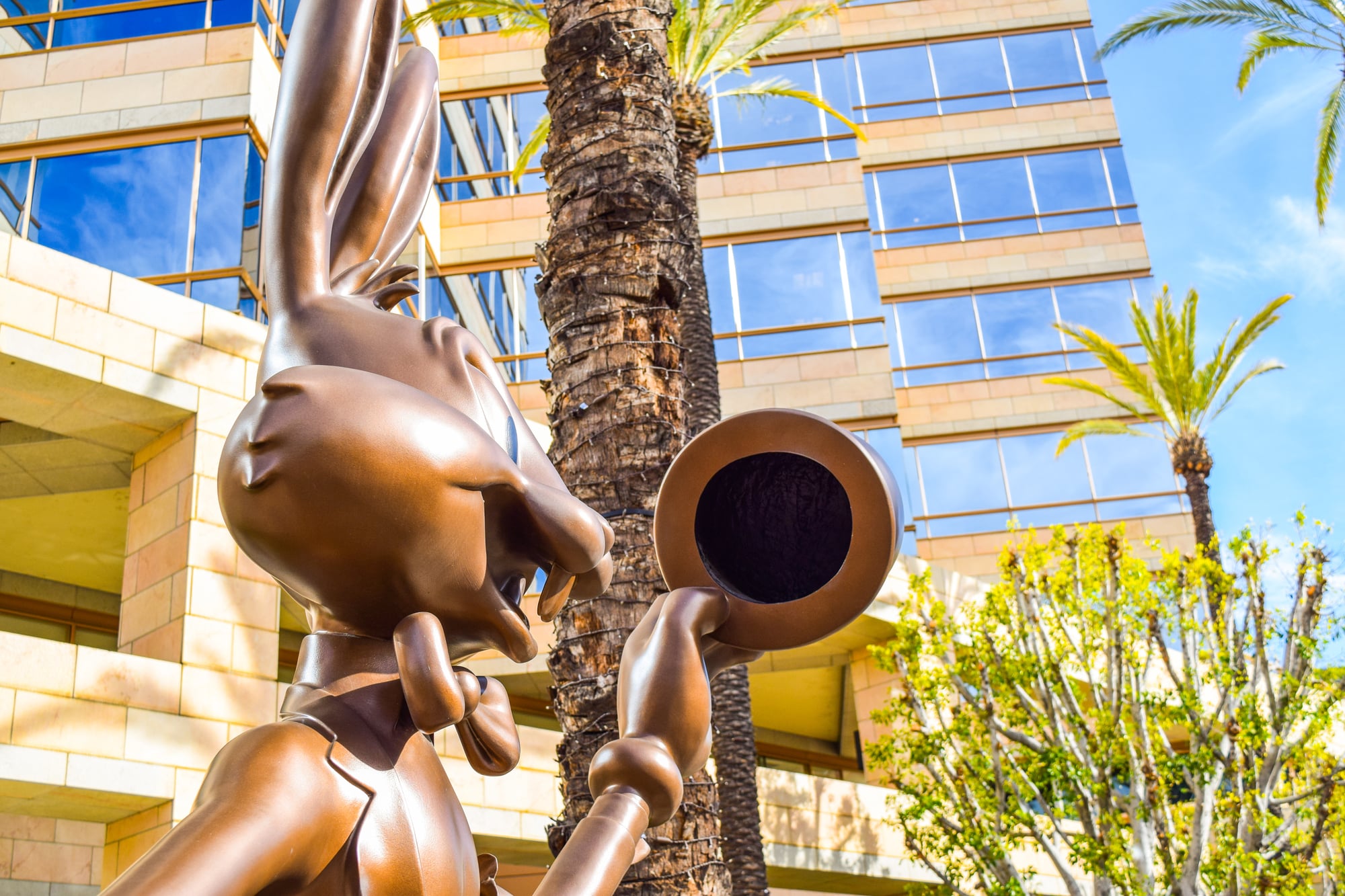
The Frito Bandito was the creation of Tex Avery, the legendary animator behind Bugs Bunny, brought in to make Fritos corn chips more entertaining. The result was a cartoon Mexican bandit — sombrero, accent, pistols — who would steal Fritos from unsuspecting people. The campaign launched in 1967 and was immediately popular and immediately offensive.
Mexican American advocacy groups objected from the start, pointing out that the Bandito relied on and reinforced the “Mexican bandit” stereotype that Westerns had spent decades embedding in American culture. Frito-Lay resisted for years, softening the character slightly but refusing to pull him.
Eventually the pressure became sufficient, and the Bandito was retired in the early 1970s. He remains a textbook example of how advertising can normalize stereotypes while a company insists it’s just having fun.
Speedy Alka-Seltzer

Speedy was a cheerful little tablet with a face and a bellhop’s cap who starred in 212 commercials between 1951 and 1964, making antacids seem almost whimsical. He was genuinely beloved, his commercials among the most watched on American television.
His retirement was less dramatic than most on this list. By the mid-1960s, Alka-Seltzer’s marketing had grown significantly more sophisticated, and the company was ready to try advertising that didn’t rely on an animated mascot.
Speedy was simply phased out in favor of live-action campaigns. He was brought back briefly in the 1970s and again later, suggesting his retirement was never total — but his golden era ended simply because marketing moved on, which is actually a more dignified exit than most mascots get.
The Erin Esurance Pink-Haired Spy

Erin was a pink-haired animated spy who appeared in Esurance’s advertising from 2004 to 2008, making car insurance feel like an action thriller. The campaign worked — she was memorable, distinctive, and effective at getting people to visit the website.
Her retirement came because she worked too well in an unintended direction. Fan communities had embraced Erin with considerable enthusiasm, producing adult-oriented fan art and fiction that spread across the early internet.
The volume and nature of this material made it impossible for Esurance to continue using the character without implicitly associating with it. In 2010, Esurance officially retired Erin and moved to more conventional insurance advertising.
The company later acknowledged that the fan response had directly driven the decision.
The Stanford Tree
The Stanford Tree was never an official mascot — it was worn by whoever was the Stanford Band’s drum major, a student-selected informal tradition. The Band was itself officially unsanctioned by the university, which created a situation where no one was quite in charge of what the tree did.
What the tree did, repeatedly, was get its wearers into serious trouble. Tree performers were suspended for showing up to games visibly intoxicated, for confrontations with opposing mascots, and in multiple incidents for conduct that resulted in university disciplinary action and at least one arrest.
The university, unable to officially control something it had never officially endorsed, eventually distanced itself from the tradition to the degree it could. The tree still appears occasionally but without the institutional protection that once gave it cover.
Mac Tonight

Mac Tonight was a cool crescent moon with sunglasses who appeared in McDonald’s late-night advertising from 1986, performing “Mack the Knife” at a piano and making a case for eating McDonald’s after dark. He was effortlessly hip in a way that was very specifically of its moment.
The character faded out for straightforward reasons that accumulated over time: the moon-man aesthetic dated quickly, the late-night dining strategy evolved, and Mac had always been more of a campaign than a permanent mascot.
His retirement was also complicated when white supremacist groups began using his image as a meme in the 2010s, which accelerated McDonald’s decision to keep him in the past. The original campaign is genuinely charming; what happened to the image later wasn’t.
Grimace’s Original Evil Form

The Grimace everyone knows is a large, friendly purple blob who loves milkshakes. The original Grimace, introduced in 1971 as “Evil Grimace,” had four arms specifically designed for stealing milkshakes and soft drinks from children. He was a villain.
Evil Grimace lasted about a year before McDonald’s creative team decided that a four-armed thief was undermining the friendly atmosphere they were building around Ronald McDonald and the McDonaldland universe.
He was reintroduced in 1972 as regular Grimace, friendly and purple, with the evil origin quietly dropped. His retconned friendliness was so successful that most people never knew the original existed.
McGruff the Crime Dog
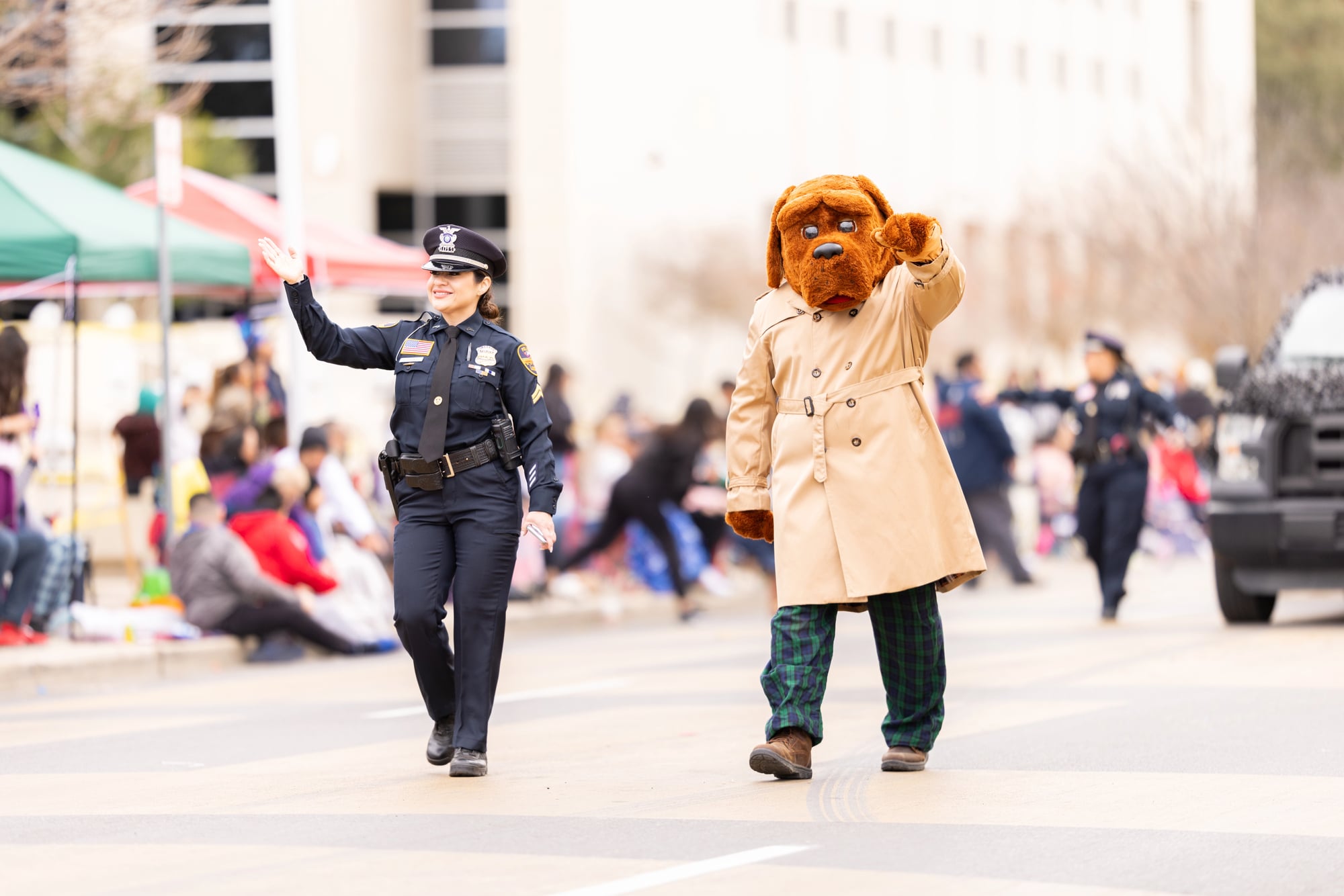
McGruff and his “Take a bite out of crime” campaign made him one of the most recognizable public service mascots of the 1980s and 1990s. He was genuinely effective — surveys showed children who grew up with McGruff remembered his safety messages into adulthood.
His story took an unexpected real-world turn in 2014, when John R. Morales — a New Orleans man who had famously performed as McGruff at school events — was convicted of drug and weapons charges, including possession of over 1,000 marijuana plants and a grenade launcher. Morales had appeared in the McGruff costume to deliver anti-drug messages to children.
The National Crime Prevention Council, which owns the character, weathered the incident but McGruff’s public profile was significantly reduced in the years that followed. The character continues to exist but operates at a considerably lower volume.
Smokey Bear
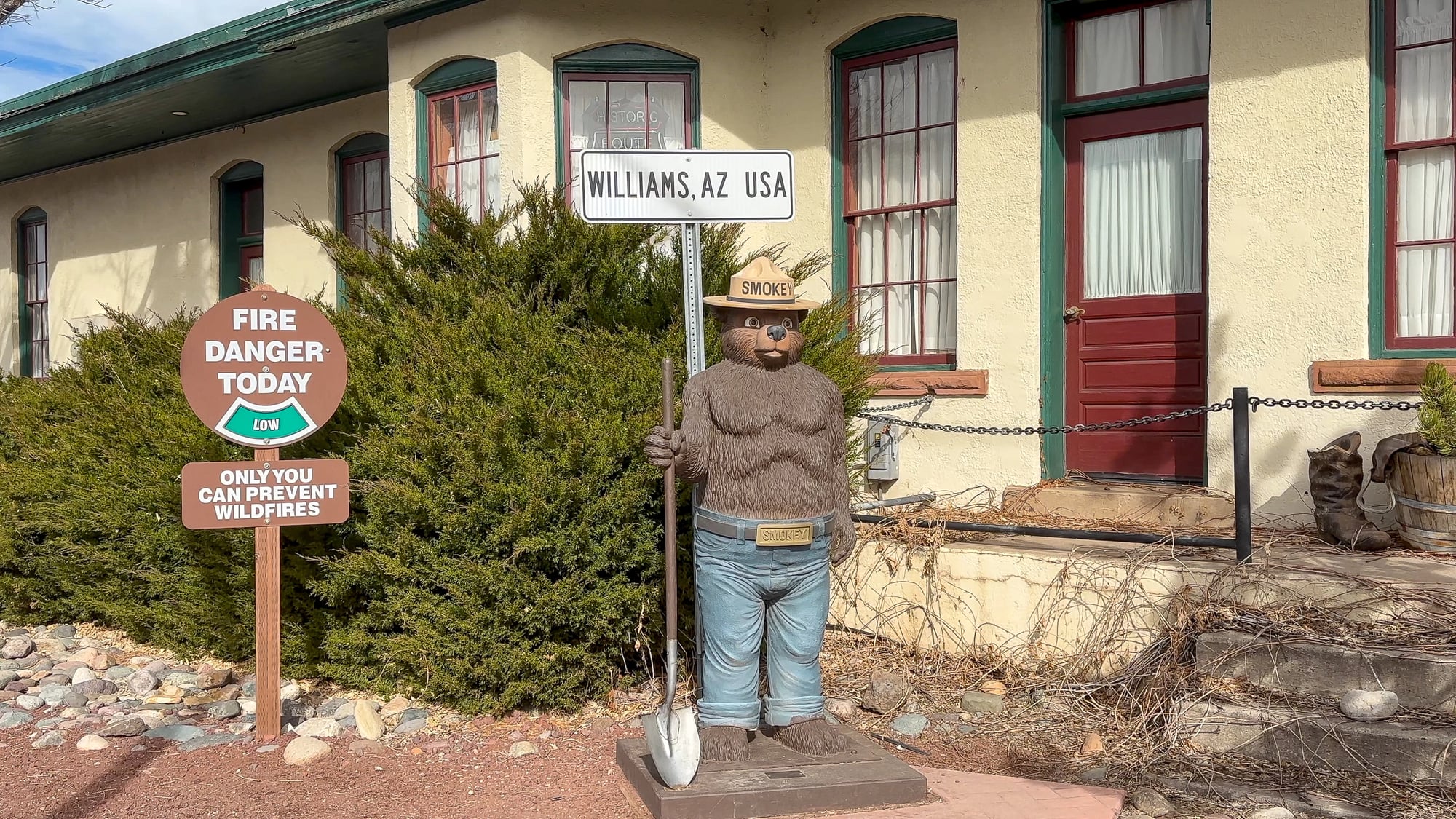
Smokey Bear is a study in unintended consequences. His “Only YOU can prevent forest fires” message, introduced in 1944, was one of the most successful public safety campaigns in American history — wildfire prevention rates improved dramatically in the decades after his introduction.
The problem was that he worked too well. By preventing virtually all fires, Smokey’s message helped create the conditions for catastrophic blazes — the buildup of undergrowth and dead timber that accumulates when natural fire cycles are interrupted.
Forest ecologists eventually began arguing that Smokey’s absolute anti-fire message was contributing to the very disasters it sought to prevent. In 2001, the message was updated to “Only YOU can prevent wildfires,” shifting focus from all forest fires to specifically unwanted ones.
Smokey continues, but his original message — simple, clear, and enormously effective — had to be made more complicated because it was too good at the job it was designed to do.
The Frito-Lay Sun Chips Bag

This entry is unusual because what was retired wasn’t a character but a package that functioned like one — loud, distinctive, and ultimately impossible to live with. In 2009, Frito-Lay launched a 100% compostable Sun Chips bag made from plant-based materials. The bag was a genuine environmental innovation.
It was also, at approximately 95 decibels, louder than a lawnmower. The compostable material crinkled with every touch, every shift, every movement, generating complaints that flooded social media and a “Sorry But I Can’t Hear You Over This Bag” Facebook group that accumulated tens of thousands of members.
Frito-Lay pulled the compostable bags in 2010, about a year after launch, in what became one of the most documented case studies in the cost of good intentions meeting poor execution. They eventually returned with a quieter version years later, but the original remains a monument to the gap between an environmentally sound idea and a product people could actually tolerate in a movie theater.
The Burger Wars Cookie Crook

In the 1970s, Cookie Crisp cereal introduced a mascot duo: the Cookie Cop, who protected the cereal, and the Cookie Crook, who kept trying to steal it. The entire campaign was built on the premise of a criminal repeatedly attempting to rob a bowl of cereal from a law enforcement officer.
The campaign ran for years, but eventually the premise aged out. The idea of making a thief the central, somewhat heroic figure in children’s breakfast advertising — with the cop as the obstacle rather than the hero — created storylines that became harder to sustain as children’s advertising evolved.
Cookie Crook was retired and replaced by a wolf character, and later a wizard, as the brand cycled through identities. The original dynamic remains one of the stranger premises in breakfast cereal history.
The Marlboro Man
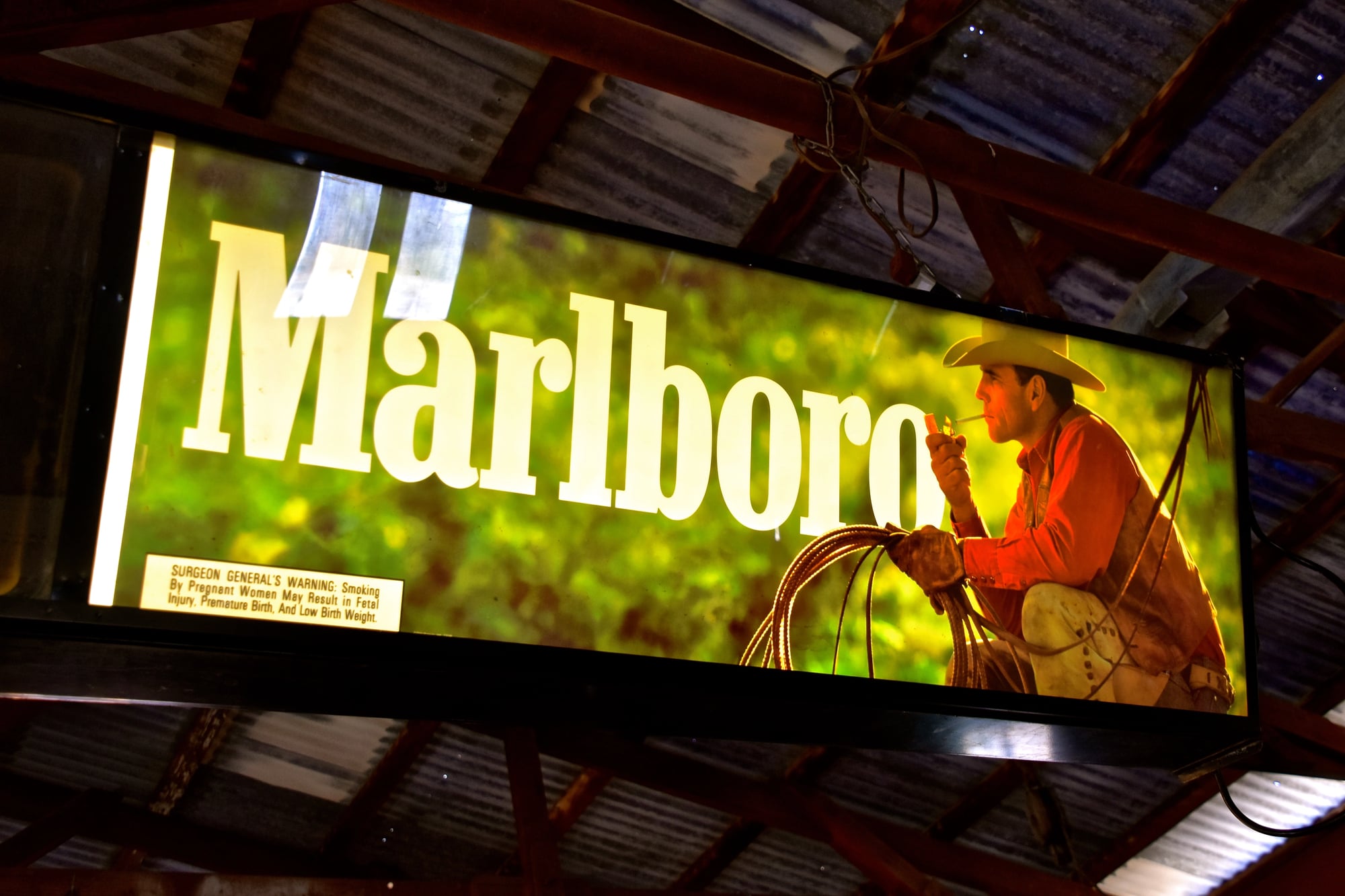
The Marlboro Man was never a specific person but a succession of rugged individuals in Western settings who made cigarettes look like part of an independent, outdoor life. The campaign, which began in the 1950s, was one of the most effective in advertising history — transforming a cigarette that had been marketed primarily to women into a symbol of American masculinity.
His retirement was written into law. The 1998 Master Settlement Agreement between major tobacco companies and state attorneys general restricted tobacco advertising significantly, ending the use of human figures in cigarette advertising.
Several of the real men who had portrayed the Marlboro Man died of smoking-related illnesses, which was covered widely and added a particular weight to the campaign’s eventual end. The Marlboro Man didn’t fade away; he was legislated out of existence.
Memories Of Mascots

The stories above share something beyond the specific reasons they ended. Almost every one of them reveals a moment when the culture caught up to something that had been there all along.
Joe Camel wasn’t suddenly aimed at children in 1997 — he had been aimed at children since 1988, and it took years of accumulating evidence for the obvious to become actionable. The Frito Bandito had been offensive since 1967. The issue wasn’t that these characters changed; it was that the world around them did.
That’s the real lesson of retired mascots: they’re timestamps. The moment a mascot becomes impossible to defend is almost always the moment a broader cultural conversation reaches a tipping point, and the mascot — visible, familiar, impossible to look away from — becomes the symbol of what has to change.
The character goes. The conversation it forced tends to stay.
More from Go2Tutors!

- The Romanov Crown Jewels and Their Tragic Fate
- 13 Historical Mysteries That Science Still Can’t Solve
- Famous Hoaxes That Fooled the World for Years
- 15 Child Stars with Tragic Adult Lives
- 16 Famous Jewelry Pieces in History
Like Go2Tutors’s content? Follow us on MSN.